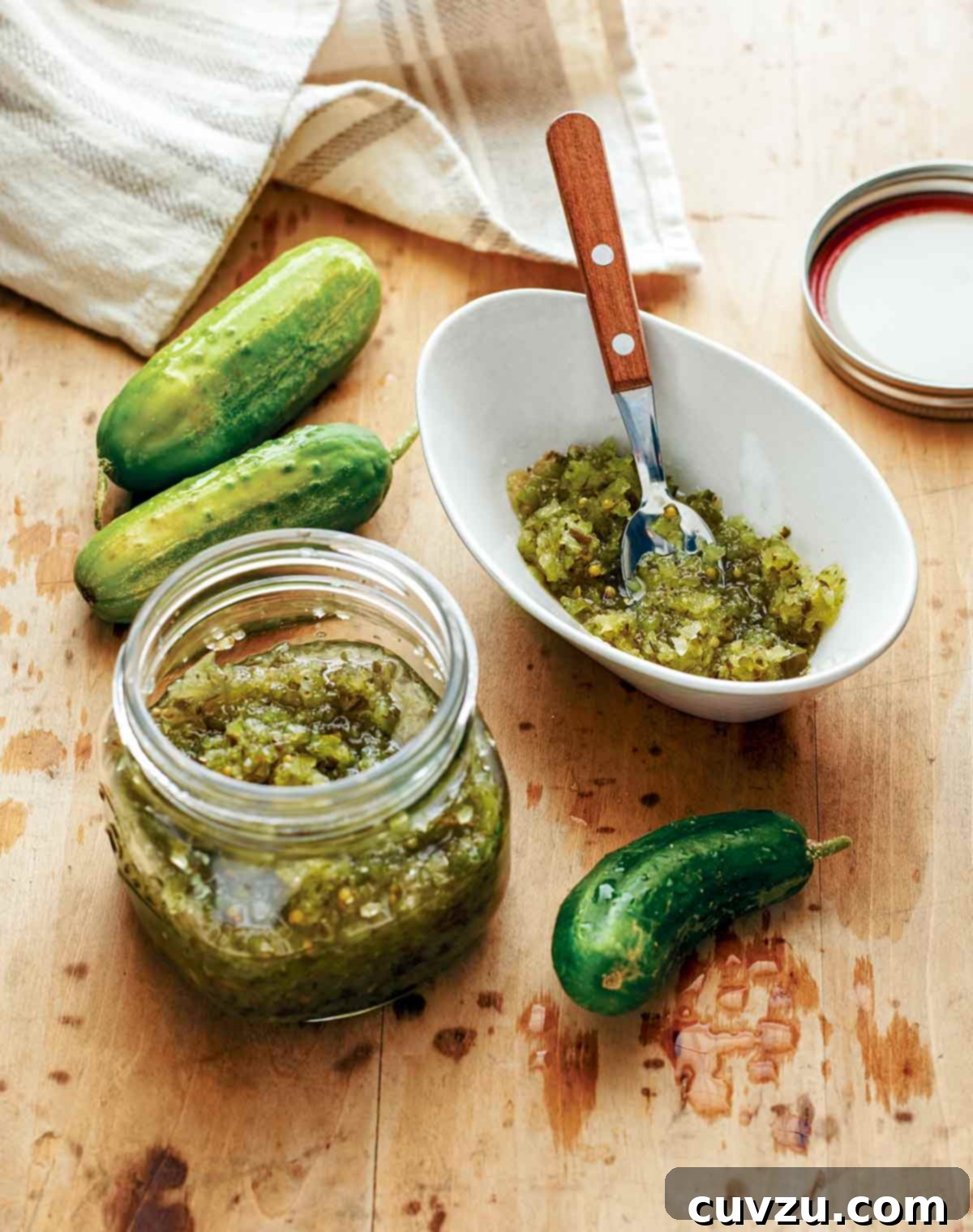
Homemade Sweet Pickle Relish: A Garden-Fresh Condiment for Every Meal
Discover the delightful world of homemade sweet pickle relish, a vibrant condiment crafted from fresh cucumbers, sweet onions, a touch of sugar, and aromatic spices like mustard and celery seeds, all perfectly balanced with tangy cider vinegar. This isn’t just any relish; it’s a superior alternative to store-bought varieties, free from artificial preservatives and bursting with garden-fresh flavor. Elevate your grilled burgers, hot dogs, and classic potato salad with this irresistible, easy-to-make condiment. Say goodbye to the ordinary and embrace the extraordinary taste of homemade!
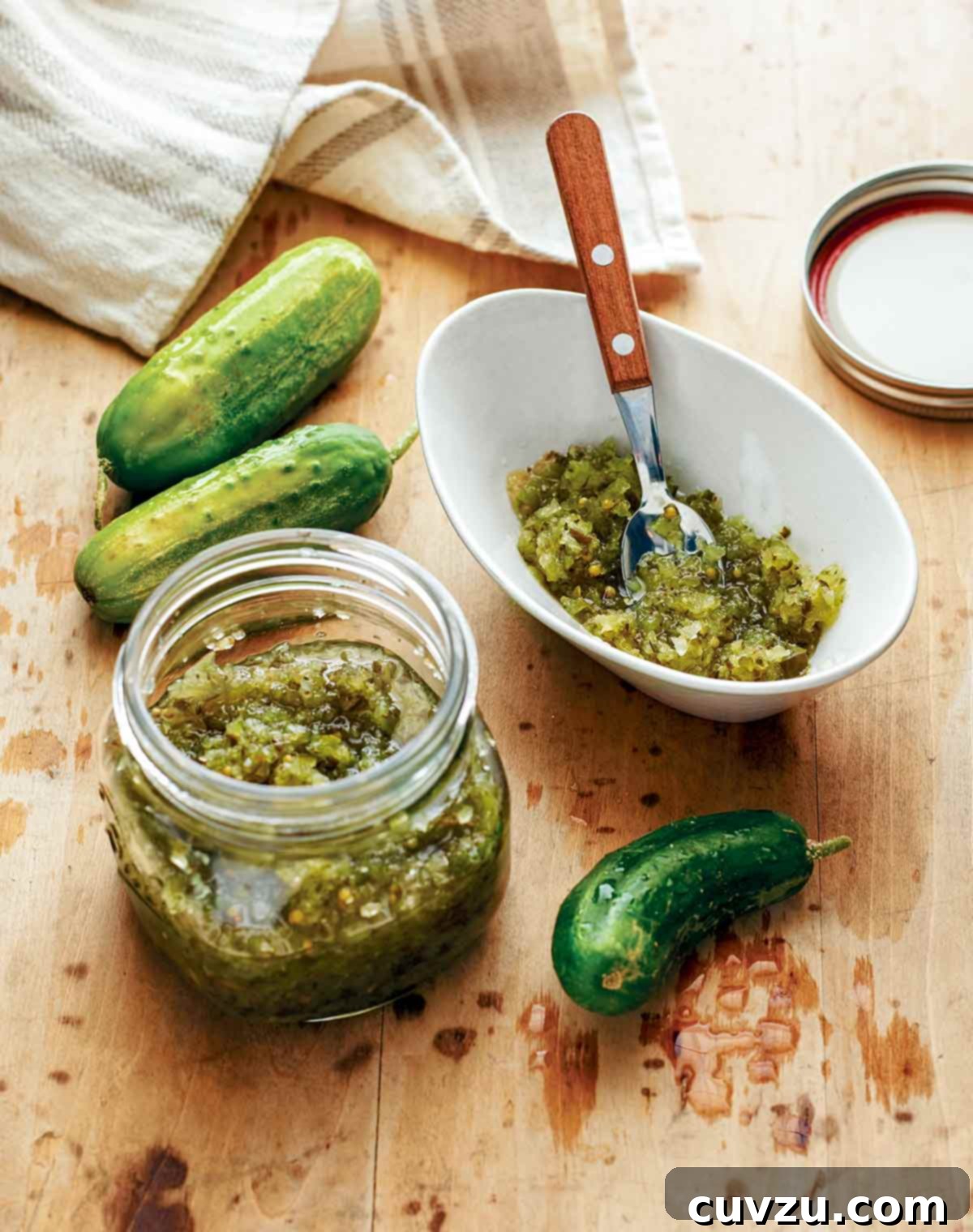
Why Choose Homemade Sweet Pickle Relish?
Late summer brings an abundance of cucumbers, and the urge to pickle them in every conceivable way can be wonderfully overwhelming. While classic dill pickles have their charm, this sweet pickle relish offers a distinct and incredibly satisfying way to transform your garden’s bounty. It’s an undeniably superior choice compared to the often preservative-laden, artificially colored jars found in supermarkets. As Linda J. Amendt wisely noted, “Once you try your hand at making this simple sweet pickle relish recipe, there’s no going back.” The difference in freshness, flavor, and texture is simply incomparable.
Crafting your own relish gives you complete control over the ingredients. You can adjust the sweetness level to your preference, select the freshest cucumbers, and avoid the artificial additives like yellow #5 that are commonly found in commercial relishes. This commitment to natural ingredients not only results in a healthier condiment but also one with a far more authentic and robust flavor profile that truly shines through in every bite.
Essential FAQs About Sweet Pickle Relish
Can I use a food processor to chop the vegetables for relish?
While the thought of speeding up the chopping process with a food processor might be tempting, we strongly advise against it for making relish. Relish, by its nature, should have a delightful, chunky texture—small, distinct pieces of cucumber and onion that provide a satisfying bite. Using a food processor, especially for a large quantity of vegetables, runs a high risk of over-processing them. Instead of a textured relish, you’re likely to end up with a watery, unappetizing mush. For the best results and the perfect consistency, embrace the traditional method: pull out your sharpest knife and a sturdy chopping block. Hand-chopping ensures you achieve the ideal finely diced pieces that give this sweet pickle relish its characteristic charm and mouthfeel.
Should I peel cucumbers when making sweet pickle relish?
For a vibrant and visually appealing sweet pickle relish, we highly recommend leaving the skins on your cucumbers. The cucumber peels are essential for imparting that characteristic bright green color we associate with classic relish. This recipe does not call for any artificial coloring, so those natural, verdant peels play a vital role in the relish’s final presentation. Beyond aesthetics, the skins also contribute to the relish’s overall texture, adding a slight firmness that complements the soft interior of the cucumber. Just ensure your cucumbers are thoroughly washed before chopping to remove any dirt or debris.
What kind of cucumbers are best for making relish?
For optimal results in making sweet pickle relish, seek out pickling cucumbers. These varieties, often labeled as Kirby or Gherkin cucumbers, are typically smaller, firmer, and have thinner skins and fewer seeds than slicing cucumbers. Their robust texture holds up beautifully during the chopping and cooking process, ensuring your relish maintains that satisfying crunch. While slicing cucumbers can be used in a pinch, they tend to be more watery and may result in a softer relish. Freshly harvested cucumbers from your garden or a local farmer’s market will always yield the most flavorful relish.
How long does homemade sweet pickle relish last?
The shelf life of your homemade sweet pickle relish depends on how it’s stored. If simply refrigerated in airtight containers without proper canning, it will last for up to a few weeks. For long-term storage at room temperature, water bath canning is essential. Properly canned and sealed jars can be stored in a cool, dry, dark place for up to one year. Once a canned jar is opened, it should be refrigerated and consumed within a few weeks. Always check seals on canned jars before opening; if a lid is unsealed or bulging, the contents should not be consumed.
Sweet Pickle Relish
David Leite
PIN Recipe
Ingredients
- 3 to 4 pounds medium pickling cucumbers, unpeeled, finely chopped (yielding 6 to 8 cups)
- 2 cups finely chopped onions, (approximately 2 to 3 medium onions)
- 3 tablespoons pickling or kosher salt (use 2 tablespoons if using Morton brand kosher salt, as it’s finer)
- 2 to 3 quarts ice cold water
- 1 1/2 to 3 cups granulated sugar, adjusting based on your desired sweetness level
- 2 cups cider vinegar
- 1 1/2 teaspoons mustard seeds
- 1 1/2 teaspoons celery seeds
Instructions
-
In a large, non-reactive bowl, carefully layer the finely chopped cucumbers, onions, and salt. Once layered, add enough ice-cold water to ensure the vegetables are completely submerged. Cover the bowl and allow the mixture to stand at room temperature for a minimum of 2 hours. This crucial step helps to draw out excess moisture from the vegetables, ensuring a crispier relish and preventing it from becoming too watery.
-
After the standing time, thoroughly drain the vegetables. Transfer them to a large fine-mesh sieve or a colander that has been lined with a single layer of clean cheesecloth. Rinse the chopped vegetables very well under cold running water to remove excess salt. Drain them again, pressing firmly on the vegetables to extract as much liquid as possible. This step is vital for the relish’s texture and flavor balance.
-
In a spacious 6- to 8-quart stainless steel pot, combine the granulated sugar, cider vinegar, mustard seeds, and celery seeds. Place the pot over medium-high heat and bring the mixture to a rolling boil. Stir constantly during this phase to ensure the sugar fully dissolves. This process should take approximately 5 minutes, creating a fragrant pickling syrup.
-
Add the thoroughly drained cucumber and onion mixture to the hot syrup in the pot. Bring the mixture back to a boil. Once boiling, reduce the heat to a simmer and continue to cook for 10 minutes, stirring frequently to prevent sticking and ensure even cooking. It’s normal for the mixture to appear somewhat watery at this stage; it will thicken as it cools. Remove the pot from the heat. Ladle the hot relish into clean, hot half-pint or pint jars, leaving a 1/2-inch headspace at the top. Remove any trapped air bubbles by gently tapping the jars or using a non-metallic utensil. Wipe the jar rims and threads meticulously with a clean, damp paper towel to ensure a proper seal. Apply hot lids and screw bands until finger-tight.
-
For Refrigerator Storage: If you plan to consume the relish within a few weeks and are not canning, simply allow the jars of relish to cool completely on the counter. Once cool, refrigerate them for up to a few weeks.
For Water Bath Canning (Long-Term Storage): To preserve the pickle relish for longer periods at room temperature, process the jars in a boiling water bath canner. Follow your canner manufacturer’s instructions carefully. Process 8-ounce (half-pint) jars for 10 minutes. For pint-sized jars, process for 15 minutes. Ensure the water covers the jars by at least 1 inch. Once the processing time is complete, carefully remove the jars from the water bath canner and let them cool undisturbed on a clean towel on your countertop for 12 to 24 hours. After cooling, check the seals by pressing the center of each lid; if it doesn’t flex, the jar is sealed. Remove the screw bands for storage. Store properly sealed jars in a cool, dry, dark place for up to 1 year.
Notes
Author’s Guidance
Cucumbers are a notoriously easy and rewarding crop to cultivate in a home garden. Utilizing freshly harvested cucumbers will always result in the most flavorful and crisp pickles—and by extension, the most delicious relish. For any preserving project that involves canning, it is paramount to use only commercially produced vinegar. Never substitute homemade vinegar, as its acidity level can vary significantly. Commercial vinegar is reliably standardized to a minimum acidity level of 5%, which is crucial for safe pickling and preventing spoilage. Always prioritize safety in your canning endeavors.

Adapted From
Blue Ribbon Canning
Buy On Amazon
Nutrition
Serving: 1 portion, about 1 tablespoon
Calories: 25 kcal
Carbohydrates: 6 g
Protein: 1 g
Fat: 1 g
Saturated Fat: 1 g
Monounsaturated Fat: 1 g
Sodium: 330 mg
Fiber: 1 g
Sugar: 5 g
Nutrition information is automatically calculated, so should only be used as an approximation.
Tried this recipe?
Mention @leitesculinaria or tag #leitesculinaria!
Expert Tips for Making the Best Sweet Pickle Relish
Achieving a truly outstanding homemade sweet pickle relish is all about attention to detail. Here are some expert tips to ensure your relish is bursting with flavor and boasts the perfect texture:
- Choose Fresh, Firm Cucumbers: The quality of your cucumbers directly impacts the relish. Use pickling cucumbers that are firm, blemish-free, and as fresh as possible. Limp or overripe cucumbers will result in a soggy relish.
- Precise Chopping is Key: As highlighted in the FAQs, avoid the food processor. Uniform, finely diced pieces of cucumber and onion are crucial for the relish’s appealing texture. Take your time to chop them evenly by hand.
- Don’t Skimp on the Salting and Draining: The initial salting step is not just for flavor; it draws out excess water from the vegetables. This moisture removal is essential for achieving a crisp texture and preventing a watery final product. Rinse well but drain thoroughly, pressing out as much liquid as possible.
- Adjust Sweetness to Your Liking: The recipe provides a range for sugar (1 1/2 to 3 cups). Start with the lower amount and taste the brine before adding more. Remember, you can always add more sweetness later, but you can’t take it away.
- Ensure Canning Safety: If you’re canning for long-term storage, meticulous attention to proper water bath canning techniques is non-negotiable. Use sterilized jars and lids, maintain correct headspace, and process for the recommended time to ensure food safety and a good seal. Always use commercially produced vinegar with a 5% acidity.
- Consider Flavor Variations: While the classic recipe is wonderful, feel free to experiment. A finely chopped red bell pepper can add a pop of color and a subtle sweetness. A pinch of red pepper flakes can introduce a gentle heat.
Creative Serving Suggestions for Sweet Pickle Relish
Homemade sweet pickle relish is incredibly versatile and can elevate a wide array of dishes beyond the expected. While it’s a quintessential companion for grilled burgers and hot dogs, its sweet and tangy profile makes it a fantastic addition to many other meals:
- Classic Sandwiches: Transform a simple ham and cheese, turkey, or even a grilled cheese sandwich with a spoonful of relish.
- Egg and Tuna Salads: Stir relish into your favorite egg salad or tuna salad recipe for an extra layer of flavor and texture. It adds a delightful zing that brightens these staples.
- Deviled Eggs: For truly exceptional deviled eggs, mix some finely chopped relish into the yolk filling. The acidity and sweetness cut through the richness of the yolks beautifully.
- Cream Cheese Dip: Serve over a block of cream cheese with crackers for a quick and easy appetizer. The sweet and tangy relish pairs wonderfully with creamy, mild cheese.
- Salsa or Dips: Incorporate into a corn or black bean salsa for an unexpected twist, or blend into creamy dips for a unique flavor.
- Barbecue Glazes and Sauces: A touch of relish can add depth and tang to homemade BBQ sauces or glazes for ribs, chicken, or pork.
- Alongside Roasted Meats: Offer as a vibrant side condiment for roasted pork loin, chicken, or even a festive holiday ham.
Recipe Testers’ Reviews

Melissa Maedgen
Melissa admitted she’d historically favored dill relish, but this sweet relish recipe proved to be a game-changer. She found it made an “excellent relish” that stood out remarkably from supermarket varieties, particularly noting the absence of artificial coloring like yellow #5. The recipe itself performed beautifully, demonstrating its reliability.
Initially, Melissa observed the relish appeared “a little watery” when ladled into jars. However, after 24 hours of cooling, it had thickened to the “just right consistency,” indicating patience is key for the final texture. She praised the flavor as “perfect,” with all components harmoniously coming through.
One specific learning point from her testing was the impact of peeling cucumbers. While she initially peeled them, she concluded she wouldn’t bother in the future. Without the peel, the relish turned out “looking pale,” reinforcing the importance of retaining the skins for that desirable vibrant green hue, as also suggested in the recipe notes.
Melissa confirmed the water bath canning instructions and times provided were “spot-on.” She also highlighted the flexibility of the recipe for those not interested in long-term preservation: skipping the water bath is perfectly fine for relish intended for refrigerator storage. However, she emphasized that canning is essential for room-temperature storage or for gifting the relish. For her batch, Melissa opted for smaller 8-ounce jars over pints, which is a practical choice for portion control.

Anna Scott
Anna, a keen gardener, found this recipe particularly timely given the daily cucumber harvest from her garden. While she regularly makes homemade pickles, she had never before considered making homemade relish, making this a welcome addition to her repertoire of cucumber uses.
She was thoroughly impressed by the relish’s wonderful flavor profile, noting the harmonious blend of cider vinegar, celery seeds, and mustard seeds. Anna made a personal adjustment to the sweetness, using only 1 1/2 cups of sugar, and found the relish to be “still plenty sweet,” suggesting that the recipe offers good flexibility for individual preferences regarding sugar content.
Anna used pint jars for her batch, confirming that the mixture fit perfectly into four pint jars. She observed that after adding the vegetables to the syrup and cooking them for 10 minutes, they became tender and lost a bit of their vibrant green color. This led her to conclude that 10 minutes of cooking was indeed “long enough” to achieve the desired texture without overcooking.
Overall, Anna expressed great satisfaction with the results of this pickle relish, delighted to add another reliable cucumber recipe to her collection. Looking ahead, she contemplated future variations, suggesting the addition of “finely chopped red bell peppers for color” alongside the onions and cucumbers, or even “a few red chile peppers for a touch of heat,” showcasing the recipe’s adaptability to creative culinary twists.
Ready to Make Your Own Sweet Pickle Relish?
With its vibrant flavor, satisfying crunch, and undeniable freshness, homemade sweet pickle relish is a condiment that truly stands apart. From garden to table, this recipe offers a rewarding culinary experience that will leave you wondering why you ever settled for store-bought. Gather your ingredients, follow these simple steps, and prepare to impress your taste buds and your guests. Enjoy the superior taste of homemade!