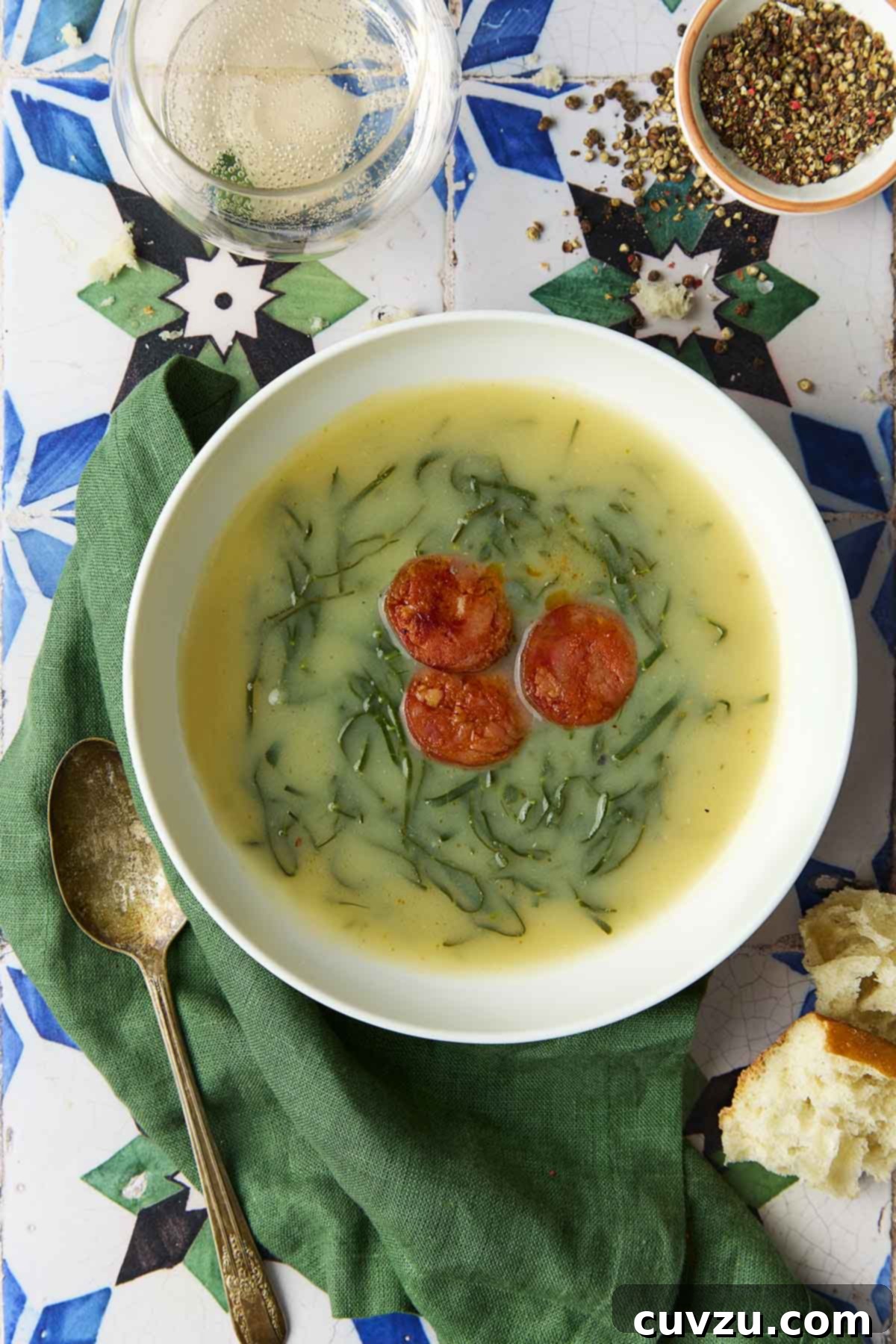
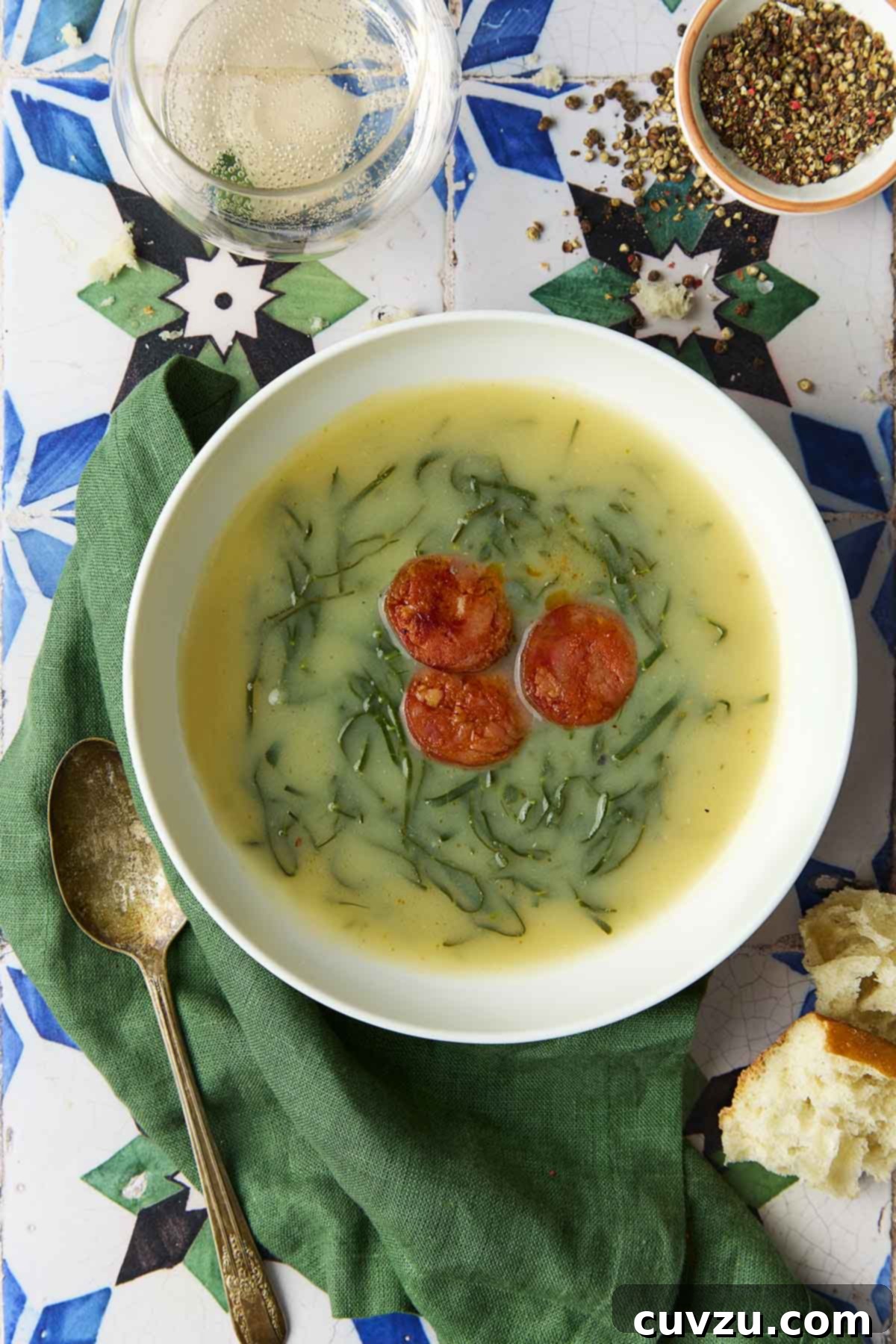
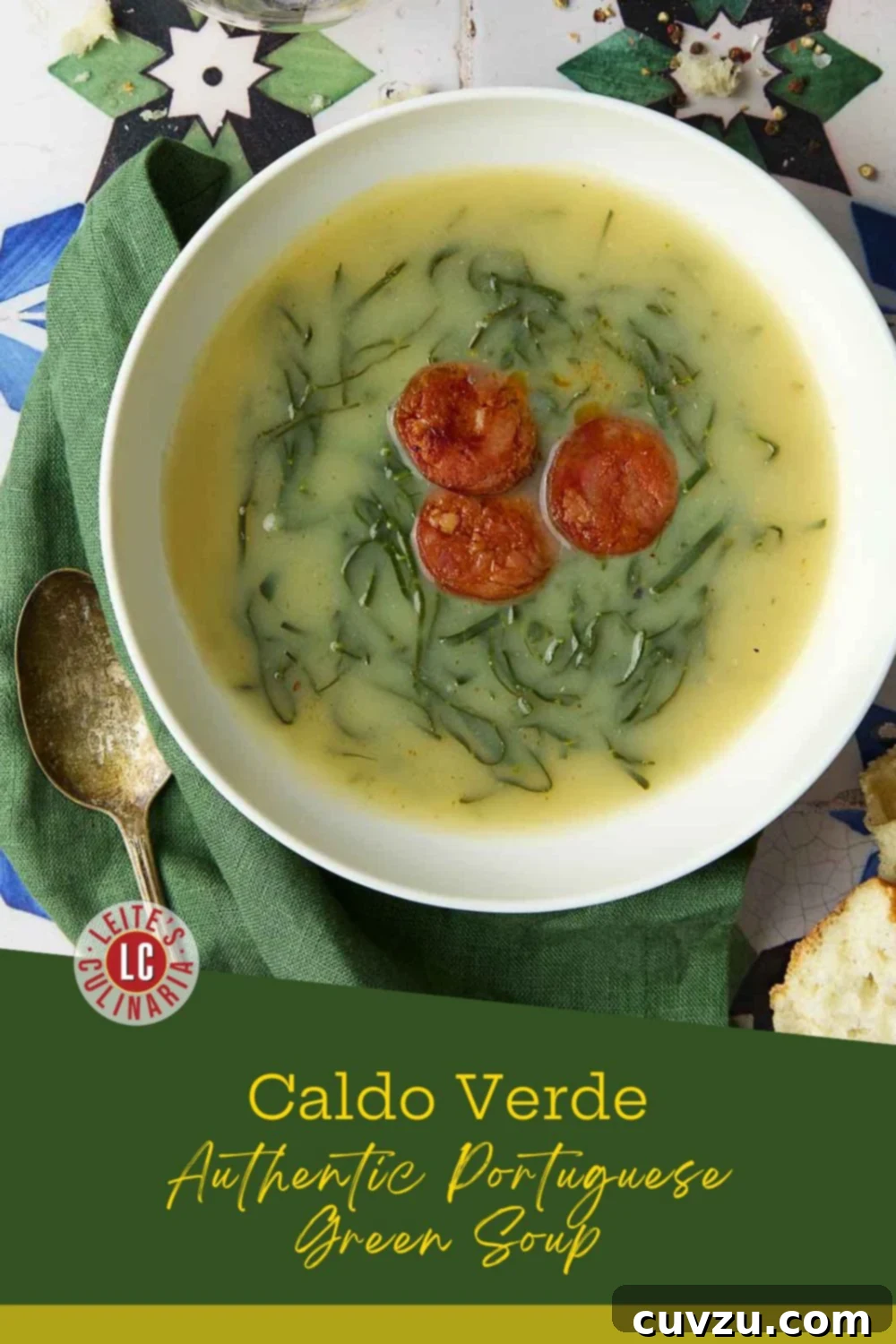
Welcome to the definitive guide for crafting the most authentic and comforting Caldo Verde, Portugal’s beloved “green soup.” This traditional Portuguese masterpiece, often referred to simply as green broth, is a heartwarming blend of humble ingredients: tender potatoes, richly flavored chouriço sausage, and thinly sliced collard greens or its popular substitute, kale. It’s more than just a soup; it’s a culinary embrace, offering profound comfort, incredible flavor, and an undeniable connection to Portuguese culture. This recipe isn’t just easy on the wallet; it’s immensely satisfying for the soul.
Caldo Verde: Quick Insights
- Essence: A classic Portuguese green soup, characterized by its creamy potato base, savory chouriço, and finely shredded dark leafy greens.
- Why You’ll Love It: Crafted from simple, accessible ingredients, this soup delivers robust, authentic Portuguese flavors, making it the ultimate comfort food for any meal.
- Preparation: Begin by browning chouriço, then sauté aromatics. Boil and purée potatoes to create a luscious base, then fold in whisker-thin kale or collard greens and simmer briefly until tender.
Caldo Verde holds a special place in the heart of Portugal, widely regarded as the nation’s unofficial national dish. Its presence is felt across the entire country, gracing tables from the elegant dining rooms of Lisbon’s finest hotels to the humble kitchens of rural farmhouses. The soup is particularly emblematic of the Minho region in northern Portugal, a place steeped in culinary tradition where Caldo Verde is an everyday staple, cherished by locals and visitors alike.
My own family roots trace back to the Azores, those nine enchanting islands nestled a thousand miles off the Portuguese coast. In our household, Caldo Verde was a more rustic affair, a testament to the simple, robust flavors of island life. However, my time living in mainland Portugal introduced me to countless variations of this “green broth,” each reaffirming my deep affection for this simple, satisfying, and profoundly authentic soup. It’s a dish that tells a story of heritage, comfort, and the pure joy of good food.
Beyond its ubiquity, Caldo Verde is remarkably versatile. It can serve as a fulfilling lunch, especially when paired with warm, crusty Portuguese rolls. Alternatively, it makes an excellent first course for a more elaborate evening meal, complementing dishes like traditional pork and clams, a hearty salt cod casserole, or my mom’s carne assada. Its adaptability makes it a perfect addition to any meal, formal or informal, bringing a taste of Portugal to your table.
Featured Review
I hesitantly prepared this Caldo Verde for my stepfather, who hails from the Azores. He scrutinized the ingredient list and confirmed its authenticity. (He’s an incredibly tough food critic, by the way, LOL!). He declared, “You can try, but it won’t taste like Tia Helena’s…” I’m thrilled to report that he absolutely ADORED this soup and immediately called Tia Carmen to rave about how delicious it was!! What a relief! So, everyone, please make this—it’s truly a fantastic recipe!
Christine

Why This Caldo Verde Recipe Excels
This Caldo Verde recipe is meticulously crafted to deliver an authentic and unforgettable experience. Blending the cooked potatoes creates an incredibly velvety and rich base, providing a luxurious mouthfeel without the need for cream or dairy. The smoky chouriço sausage infuses the entire broth with a profound, savory depth, its rendered fat becoming an integral part of the soup’s flavor profile. The secret to the greens lies in thinly slicing the kale or collards to whisker-thin slivers; this ensures they soften quickly, integrate beautifully into the soup, and retain a delicate texture without becoming fibrous. Furthermore, using a thoughtful combination of water and chicken or vegetable stock significantly boosts the overall flavor complexity, elevating the simple ingredients to something truly spectacular. Finally, browning the sausage at the beginning isn’t just for color; it allows its flavorful fat to render and enhance every single spoonful of the soup. The synergy of these simple ingredients truly creates a bowl of pure Portuguese comfort and culinary excellence.
Understanding the Traditional Greens in Caldo Verde
The choice of greens is paramount in any authentic Caldo Verde recipe. Many years ago, when contributing to the Oxford Encyclopedia of Food and Drink in America, I delved into the specifics of kale, which shed light on this very question. Traditionally, Caldo Verde is made with couve galega, also known as Galician collard greens (technically Brassica oleracea L. var. acephala, or Collard). While originating in Galicia, northwestern Spain, let there be no mistake: Caldo Verde is unequivocally a distinctly Portuguese creation. These traditional greens are characterized by their broad, dark-green leaves and notably thick, fibrous white stems, sharing a botanical kinship with other cruciferous vegetables like cabbage and broccoli.
What sets Portuguese kale or collard greens apart from their American counterparts is their impressive stature. Unlike the low-growing varieties often found in the U.S., these greens grow on robust stalks that can reach immense heights. During my travels through the Minho region, the undisputed heartland of Caldo Verde, I distinctly recall seeing men standing on six-foot ladders to harvest the leaves. This striking characteristic even earned it one of its charming nicknames: “Portuguese walking stick cabbage.” This unique ingredient not only defines the soup’s iconic “green” appearance but also contributes to its earthy, slightly bitter undertone and satisfying texture.
Essential Ingredients for Your Caldo Verde

- The Greens—Collard Greens or Kale: For an authentic texture, my preferred choice is collard greens. However, lacinato kale (also known as dinosaur or Tuscan kale) is an excellent substitute. Both varieties have flat leaves that lend themselves perfectly to being sliced into those signature filament-thin slivers, which is crucial for the soup’s traditional appearance and quick cooking. It’s best to avoid curly-leaf kale, as its frilly edges make uniform, fine slicing challenging and can create a less appealing texture in the finished soup. While collards and kale are often used interchangeably outside of Portugal, the flat-leaf varieties truly shine here.
- Potatoes—Yukon Gold is Key: Potatoes form the creamy, starchy backbone of Caldo Verde. Portugal boasts incredibly earthy, intensely yellow potatoes, and after experimenting with various types, I’ve found that Yukon Gold potatoes come remarkably close to replicating their unique flavor and texture. Their naturally buttery flavor and creamy consistency when cooked make them ideal for puréeing into the smooth, rich base that defines this soup.
- Sausage—Chouriço or Linguiça: The smoky, savory heart of Caldo Verde comes from Portuguese sausage. Thankfully, chouriço and linguiça, the royalty of Portuguese charcuterie, are now more widely available. I typically opt for a milder version to let the other flavors come through, but if you enjoy a spicy kick, feel free to choose a hot variety. Regardless, chouriço is traditionally preferred for its deep, smoky notes, which are absolutely essential to the soup’s authentic character. Spanish chorizo can also be used as an alternative, offering a similar, albeit distinct, smoky and paprika-infused flavor.
Crafting Your Caldo Verde: Step-by-Step Instructions
Follow these detailed steps to bring the authentic flavors of Portugal into your kitchen.

- In a large, heavy-bottomed pot or Dutch oven, warm the olive oil over medium heat. Add the sliced chouriço and cook, stirring occasionally, until it’s beautifully browned and crispy, typically 3 to 5 minutes. Remove the sausage with a slotted spoon, transferring it to a plate while allowing any excess fat to drain back into the pot. This rendered fat is crucial for flavoring the soup.

- Add the diced Spanish onion to the pot with the reserved sausage fat. Season lightly with kosher salt to help draw out moisture, and cook, stirring frequently, until the onion softens and becomes translucent, about 5 to 7 minutes. Stir in the sliced garlic and continue to cook for another 2 minutes, until fragrant.

- Add the roughly chopped potatoes to the pot. Pour in the cold water (or a combination of water and chicken/vegetable stock). Bring the liquid to a rolling boil over high heat.

- Once boiling, reduce the heat to a gentle simmer. Continue cooking until the potatoes are very tender and easily pierced with a fork, which should take approximately 10 to 20 minutes, depending on the size of your potato pieces. Remove the pot from the heat and allow the soup to cool slightly before proceeding.

- Once the Caldo Verde base has cooled a bit, use an immersion blender to purée the soup directly in the pot until it is smooth and velvety. Alternatively, carefully transfer the soup in batches to a standard blender and purée until smooth. (Optional: Some cooks prefer to add half of the browned chouriço slices back into the soup before puréeing to infuse even more smoky flavor into the base. The choice is yours. And regarding the traditional “one slice per bowl” rule? Feel free to discard it for more generous serving!)
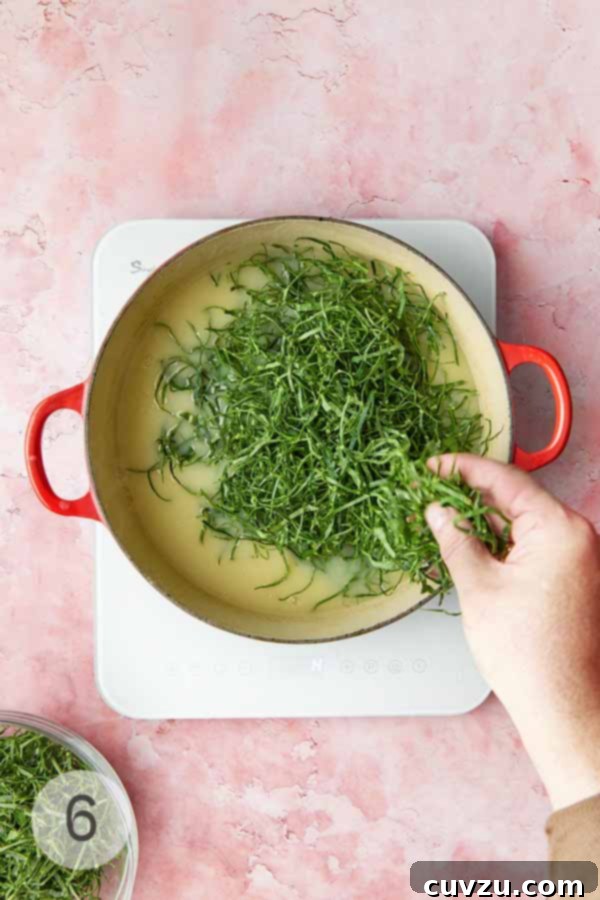
- Return the pot to medium heat. Stir in the thinly sliced kale or collard greens. Bring the soup back to a boil, then immediately reduce the heat to a simmer. Cook just until the greens are tender and slightly wilted, about 2 to 5 minutes. Overcooking the greens can make them lose their vibrant color and texture. Taste and season generously with additional salt and freshly ground black or white pepper as needed.
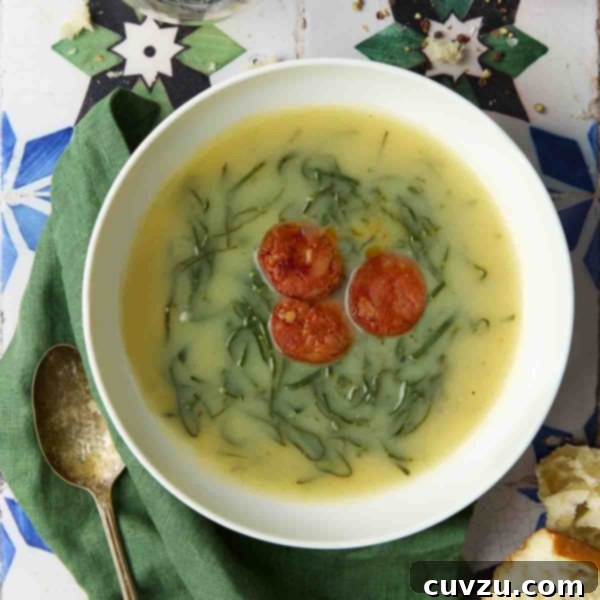
- Ladle the hot Caldo Verde into individual bowls. Garnish each serving with several slices of the reserved browned chouriço sausage. Serve immediately with a drizzle of extra virgin olive oil. Comer agora! (Eat now!)
Caldo Verde: Your Questions Answered
The literal translation of Caldo Verde is “green broth,” though it is most commonly referred to as “green soup.” However, as my dear friend and renowned Portuguese cookbook author Ana Patuleia Ortins often says, “Caldo Verde is Caldo Verde is Caldo Verde.” It refers to a very specific and cherished recipe, traditionally comprising water or stock, potatoes, kale (or collard greens), onion, garlic, and chouriço. No more, no less!
This iconic soup has its origins in the beautiful, coastal Minho region, located in the north of Portugal. It is deeply embedded in the culinary heritage of this area, a testament to its long-standing tradition.
Indeed, it is. While perhaps not officially declared, Caldo Verde is widely regarded by most Portuguese as the unofficial national dish of the country. Its pervasive presence in high-end restaurants and simple home kitchens across all regions solidifies its status as a beloved culinary symbol of Portugal.
Absolutely! A delicious vegetarian version can be easily achieved by omitting the chouriço sausage entirely and ensuring you use vegetable stock instead of chicken stock or simply water. For a vegan option, follow the vegetarian modifications and also ensure your stock is plant-based. You’ll find the soup remains incredibly flavorful and satisfying.
Pro Tips & Troubleshooting for Perfect Caldo Verde
- Achieving the Signature Shred: The visual appeal and authentic texture of Caldo Verde heavily rely on the greens. Use a very sharp knife or a mandoline to cut your collard greens or kale into whisker-thin, almost hair-like slices. This ensures they soften quickly and meld perfectly into the creamy soup without becoming chewy. If your slices are too thick, the texture will be off.
- Flavor Boost: While traditional Portuguese Caldo Verde can be made with just water, for a richer and more complex flavor, I highly recommend using a mix of half water and half chicken or good quality vegetable stock. This simple swap adds an incredible depth that enhances the overall taste profile.
- Dietary Considerations: This recipe is naturally gluten-free and dairy-free, making it suitable for a wide range of dietary needs. However, it is always crucial to double-check the ingredients list of your chosen chouriço or linguiça sausage, as some brands may contain unexpected fillers or additives that could impact these dietary restrictions.
- Don’t Rush the Purée: Ensure the potato mixture is thoroughly puréed until it is completely smooth. Any remaining lumps will detract from the luxurious, velvety texture that is a hallmark of this soup.
- Salt Adjustment: Chouriço can vary significantly in its saltiness. It’s best to season the soup gradually. Add a little salt with the onions, then taste after the potatoes are cooked and puréed, and again after the greens are added. Adjust to your preference.
Storage & Reheating Caldo Verde
Refrigerator Storage: Once your delicious Caldo Verde has completely cooled to room temperature, ladle it into an airtight container. It can be safely refrigerated for up to 4 days, with flavors often deepening overnight.
Freezer Storage: For longer preservation, Caldo Verde freezes beautifully. Allow the soup to cool fully, then portion it into freezer-safe containers or heavy-duty resealable bags. It can be stored in the freezer for up to 3 months. For best results, thaw frozen soup overnight in the refrigerator before reheating.
Reheating Instructions: To reheat, gently warm the soup in a small pot over medium heat, stirring occasionally to prevent sticking. If the soup has thickened considerably upon chilling (which is common due to the potato starch), simply add a splash of water, chicken stock, or vegetable broth until it reaches your desired consistency. Avoid boiling rapidly to maintain the delicate texture of the greens.
Explore More Stellar Soup Recipes
Portuguese Bean Soup
5 hrs 30 mins
Split Pea Soup with Ham Hock
2 hrs 30 mins
Matzo Ball Soup
3 hrs 15 mins
Butternut Squash Soup
3 hrs
Once you’ve experienced the comforting embrace of this fantástica Caldo Verde, your culinary journey into the world of soups will truly begin to rev up. If you’re yearning for more soulful dishes from my homeland, you absolutely must try another hearty and authentic Portuguese bean soup that’s just as satisfying and rich in flavor. And for a taste of pure, unadulterated nostalgia, nothing quite beats a classic split pea soup with smoky ham hock, a timeless comfort. Sometimes, though, only the ultimate comfort of a truly great matzo ball soup will do, a tender, light delight for the senses. And when you’re in the mood for something a bit more modern yet equally comforting, this velvety curried butternut squash soup with a hint of spice is an absolute showstopper, perfect for a cozy evening.
Share Your Experience: Write a Review
If you create this recipe, or any other dish featured on Leite’s Culinaria, we encourage you to share your thoughts by leaving a review, a star rating, and your best photo in the comments section below. We cherish hearing from you!–David
Featured Review
Ah, David, thank you for this recipe and for the Leite’s Culinaria site in general. When we returned from a wonderful trip to Portugal, I was desperate for a taste to remind me of our journey, and this was easy and absolutely perfect! Obrigada!
Wendi
Caldo Verde
Ingredients
- 1/4 cup extra-virgin olive oil
- 10 ounces chouriço, linguiça, or Spanish chorizo, sliced into 1/4-inch (6-mm) coins
- 1 large Spanish onion, diced
- Kosher salt, to taste
- 2 garlic cloves, sliced; feel free to add a third or fourth, as Portuguese cuisine often celebrates generous amounts of garlic
- 6 medium Yukon Gold potatoes, peeled and roughly chopped (Yukon Golds are preferred for their similarity to Portugal’s traditional yellow potatoes)
- 8 cups cold liquid, either cold water or a blend of half homemade chicken stock (or canned chicken broth) and half water
- 1 pound collard greens or kale, stems removed and leaves cut into very, very thin slices (whisker-thin)
- Freshly ground black or white pepper, to taste
Instructions
- In a large pot over medium heat, warm the 1/4 cup extra-virgin olive oil. Add the 10 ounces chouriço, linguiça, or Spanish chorizo, sliced into 1/4-inch coins, and cook until lightly browned on both sides, 3 to 5 minutes.
- Remove the sausage slices from the pot using a slotted spoon and transfer them to a plate, ensuring that any rendered fat drains back into the pot. This flavorful fat will infuse the soup.
- Add the 1 large Spanish onion, diced, to the pot. Sprinkle with kosher salt and cook, stirring occasionally, until the onion is softened and translucent, about 5 to 7 minutes. Stir in the 2 garlic cloves, sliced, and cook for 2 minutes more until fragrant.
- Add the 6 medium potatoes, peeled and roughly chopped, to the pot. Pour in the 8 cups cold water (or a combination of water and chicken stock/broth). Bring the liquid to a boil, then reduce the heat to a gentle simmer. Cook until the potatoes are almost tender, 10 to 20 minutes. Remove from the heat and allow the soup to cool slightly.
- Once the Caldo Verde base has cooled a little, purée it directly in the pot using an immersion blender until smooth and velvety. Alternatively, carefully transfer the soup in batches to a standard blender and purée until smooth. (You may choose to add half of the browned sausage to the soup before puréeing for an even deeper smoky flavor throughout the base. The choice is yours!)
- Return the pot to medium heat. Add the 1 pound collard greens or kale, cut into very thin slices, to the soup. Bring the soup back to a boil, then reduce the heat and simmer until the greens are tender and slightly wilted, typically 2 to 5 minutes. Season with more kosher salt, if needed, and freshly ground black or white pepper to taste.
- Ladle the hot Caldo Verde into individual serving bowls. Garnish each bowl with the remaining slices of chouriço. Serve immediately and enjoy! Comer agora!
Notes
- Storage Considerations: Store any leftover Caldo Verde in an airtight container in the refrigerator for up to 4 days. The flavors often deepen and improve overnight.
- Freezing for Later: This soup freezes exceptionally well. Allow it to cool completely before portioning into freezer-safe containers or resealable bags. It can be stored in the freezer for up to 3 months. Thaw in the refrigerator overnight before reheating.
- Reheating & Adjusting Consistency: Reheat the soup gently in a saucepan over medium-low heat, stirring occasionally. If the soup has thickened too much upon cooling or freezing, thin it to your desired consistency with a splash of additional broth or water.
- Dietary Information: This Caldo Verde recipe is naturally gluten-free and dairy-free. However, always review the ingredient list of your chosen sausage brand to confirm no unexpected fillers or additives are present.

An LC Original
View More Original RecipesExplore More with AI
Nutrition Information
Nutrition information is automatically calculated, and therefore should only be used as an approximation.
Recipe Testers’ Reviews
Jessie Hagan
This Caldo Verde, or green soup, recipe was absolutely delicious and quite nutritious! It provided wonderful warmth for our bellies. Even my children, who are generally good eaters, thoroughly enjoyed this recipe.
Despite my best efforts, my local store only carried loose chorizo without casing, making it impossible to slice into medallions. Instead, I browned the chorizo loose in step 1 for 5 minutes, carefully removing it with a slotted spoon while reserving all the flavorful fat in the pot. I then added all of the browned chorizo back into the soup before puréeing it with my immersion blender until it achieved a wonderfully velvety smooth consistency.
While I didn’t allow the soup to cool overnight, I can certainly imagine how an overnight rest would further meld the flavors. This recipe was quite straightforward to prepare, utilizing accessible ingredients (aside from the casing-free chorizo) and offering a delightful combination of flavors that was a new experience for us. This soup is surprisingly filling.
It even sparked a fun food discussion in our home about Portugal and its native ingredients, which was a lovely bonus. I truly appreciate that you credited Portugal directly in the recipe title. This is, as my kids would enthusiastically declare, “a definite do again!”
Cath Ramsden
This Caldo Verde recipe yields a hearty, satisfying, and incredibly filling soup. It is, without a doubt, one of the best soups I’ve ever tasted, bursting with depth and exquisite flavor. Simply delicious.
I prepared the full amount of greens as directed, but when it came time to add them, I opted to use only about half. Had I added the entire quantity, I believe it would have resembled more of a “kale with a chorizo sauce” rather than a true soup. Using half the greens resulted in a perfect balance—a delicious soup packed with kale, yet still distinctly a soup.
I used Cavolo Nero for the greens and initially added just 1/4 teaspoon of salt, uncertain about the inherent saltiness of the chorizo. After adding the chorizo and tasting the broth, I adjusted the seasoning, ultimately incorporating a total of 3/4 teaspoon of Maldon salt.
I allowed the soup to cool completely, then refrigerated it overnight, enjoying it for lunch the following day. The rest truly enhanced the flavors; it was so much better than on the first day. The addition of the blended chorizo and the overnight rest genuinely transformed this into something quite special. The next day, the whole chorizo slices were still firm but pleasantly softened by the soup, adding a wonderful textural contrast that was very enjoyable.
As I was the only one eating it, one bowl proved sufficient for lunch. I’ve portioned the remainder into individual Tupperware containers for freezing, which accounts for another 7 servings, bringing the total to 8 generous servings.
L. Mitchell
Kale soup? Caldo Verde? Green Soup? Whatever you call it, this soup is wonderfully hearty and homey, and incredibly, it’s ready in under an hour! Despite employing my sharpest knife and best kitchen skills, I wasn’t able to achieve the super-thin kale shreds the recipe described. Consequently, the final presentation wasn’t quite as elegant as the photograph, but this in no way diminished the exceptional flavor of the finished soup.
For my version, I used a mild chorizo sausage, Yukon Gold potatoes (which I didn’t bother peeling as their skins were paper-thin), curly kale, and my own homemade chicken stock. I did sprinkle in a bit of crushed red pepper flakes towards the end of cooking, but I would advise holding off on the final seasoning until you can truly assess how much heat and salt your specific sausage is contributing to the overall flavor profile.
Served alongside a fresh salad and classic grilled cheese sandwiches, this soup made for a fantastic casual supper.
I opted to add half of the browned chorizo back into the soup before blending and was careful not to over-process the mixture using my immersion blender. Discovering occasional slices of sausage and a few stray potato cubes amidst the creamy base provided delightful little surprises. This soup was truly fantastic. However, I believe much of its success hinges on the quality of your chorizo and stock. I’ve made variations before using Polish sausage or kielbasa and boxed stock, and while it was good, it simply didn’t achieve the same level of a “10” out of 10 experience.
Kristen P.
Simple yet profoundly satisfying and incredibly budget-friendly! I confess, when I first encountered this Portuguese kale soup recipe, my expectation was that it might be somewhat bland or lacking in robust flavor. To my delightful surprise, that was certainly not the case. This soup, despite featuring a relatively short ingredient list and minimal herbs, was incredibly satisfying and boasted a pleasantly nuanced flavor profile.
I made the conscious choice to blend some of the chorizo directly into the soup, an excellent decision that I believe significantly enhanced the overall flavor. I used a Spanish chorizo, and the complex depth of its flavor truly imparted that certain something that would have been noticeably absent without it. My husband also thoroughly enjoyed it, and his favorite aspect was its thick, rich consistency, achieved entirely without the addition of cream or any dairy products.
I also felt that the kale greatly contributed to the overall experience. Even though the kale was heated and wilted within the soup, it remarkably retained a delightful bite or “toothsomeness,” providing a lovely textural contrast to the creamy soup base. This soup would be absolutely delicious on a cool fall or winter day and stands out as a very budget-friendly recipe to boot!
In the future, I might consider incorporating other flavor enhancers, such as smoked sweet paprika, to introduce a slightly different flavor dimension. I also think serving it with a garlicky, cheesy crostini would be an exquisite pairing! I allowed the soup to cool until the next day, and it was even better then. The soup thickened considerably as it cooled, becoming even more substantial.