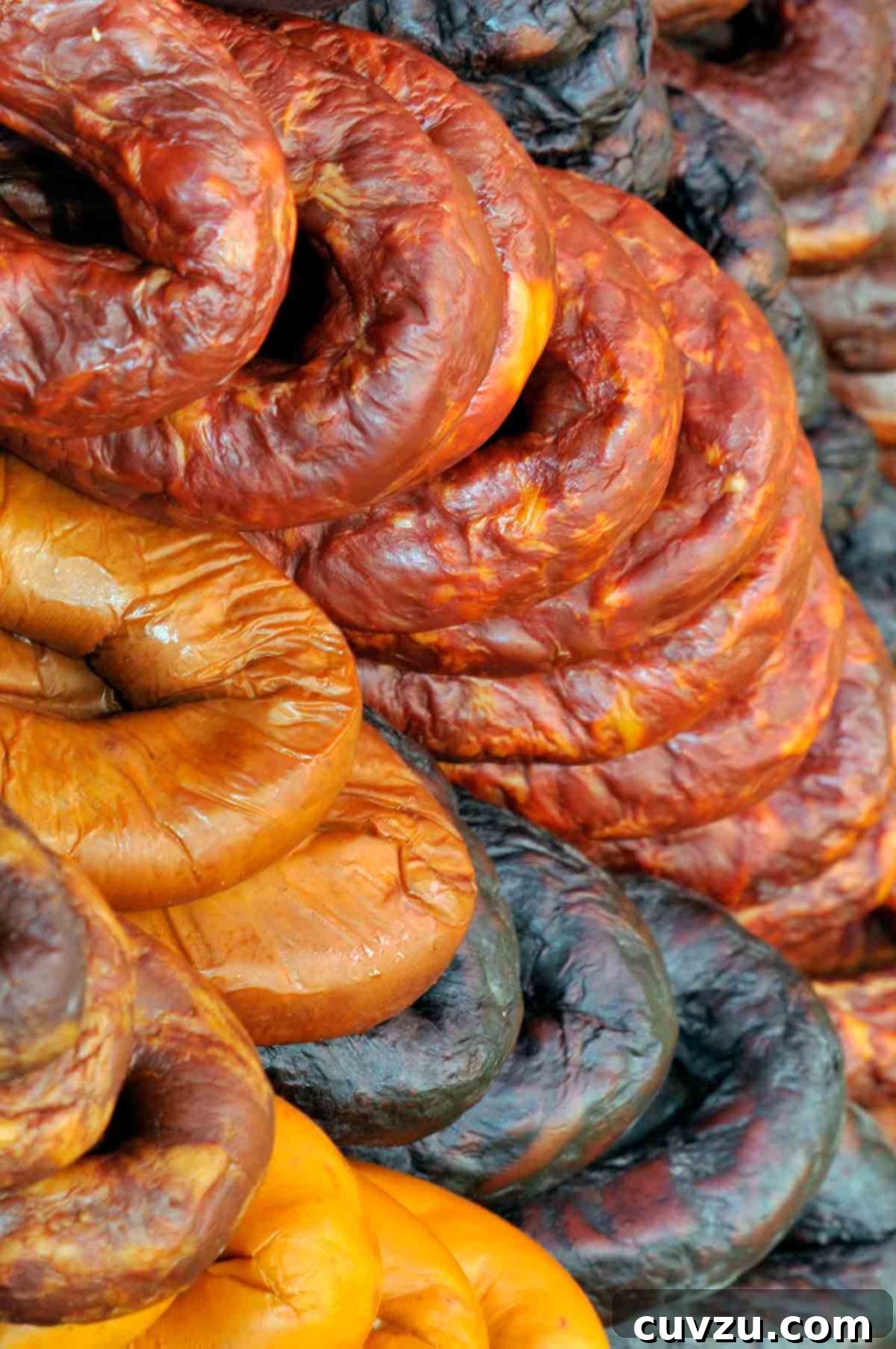
Delving into the vibrant world of Portuguese cuisine often leads one to its heart: an exquisite array of dry-cured, smoked sausages. These aren’t merely food items; they are a profound reflection of Portugal’s history, culinary ingenuity, and deep-rooted traditions. From the bustling markets of Lisbon to the serene villages of the Alentejo, Portuguese sausages, known collectively as enchidos, are a culinary staple, embodying centuries of flavor and craftsmanship. This comprehensive guide will navigate the unique characteristics of the most beloved Portuguese pork sausages, providing insights into their production, distinct flavors, and the best ways to savor them. Prepare to discover the beloved art of Portuguese charcuterie.
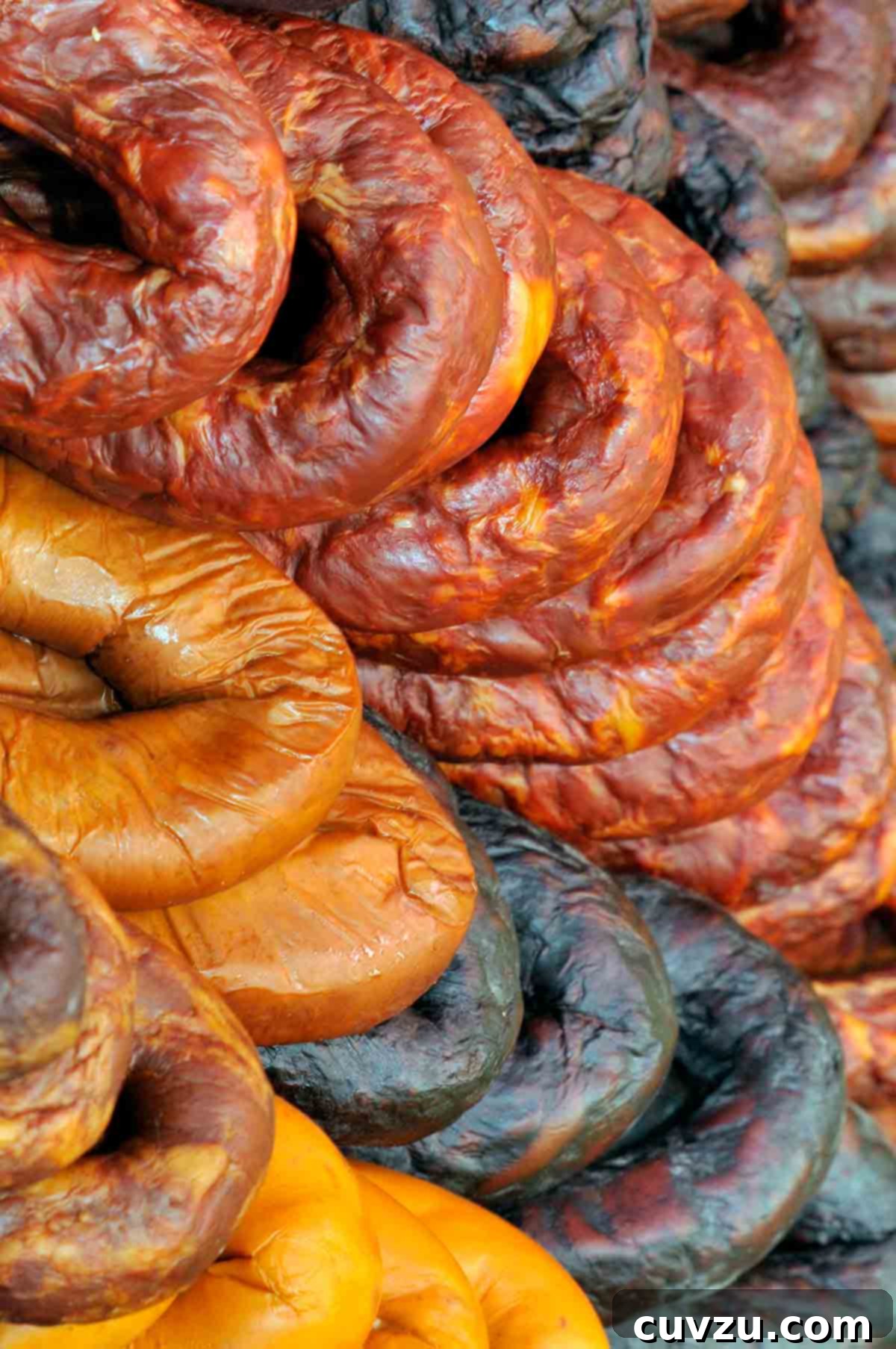
If the symbol of working-class prosperity in the United States was once a “chicken in every pot,” then without question, in Portugal, it’s a dry-cured smoked sausage in every pan. So deeply ingrained are sausages and hams in Portuguese culture that, until very recently, nearly every rural household prided itself on crafting its own. This tradition continues to thrive in many families. For instance, my Uncle Joe, dedicated to preserving our family’s culinary heritage, even constructed a smoker the size of a minivan in Somerville, Massachusetts. There, my Aunts Irina, Exaltina, and Lourdes gather several times a year, meticulously preparing our family’s truly incomparable sausages, ensuring the legacy endures for generations.
How to Buy Authentic Portuguese Sausages
When seeking out the finest Portuguese sausages at your local market or specialty store, a discerning eye and a keen sense of touch are your best allies. Authenticity and quality are paramount. First, always feel the sausage; it should be firm to the touch, not soft or spongy. A soft texture often indicates an excessive use of fillers, diminishing both flavor and quality. Similarly, avoid overly bloated links, which may suggest they are waterlogged. True artisanal sausages boast a distinctive bumpy texture and a dry, sometimes slightly wrinkled skin. You might even notice a harmless white bloom on the casing, which is a natural sign of proper curing and fermentation, akin to the bloom on fine aged cheeses. Most importantly, a deep, inviting smoky aroma should emanate from the sausage, a testament to its traditional curing process. If you find yourself uncertain, do not hesitate to consult the butcher, whose expertise can guide you to the finest selections. Always prioritize sausages that display these characteristics for the most authentic and flavorful experience.

Chouriço (show-rhee-soo): The Heart of Portuguese Charcuterie
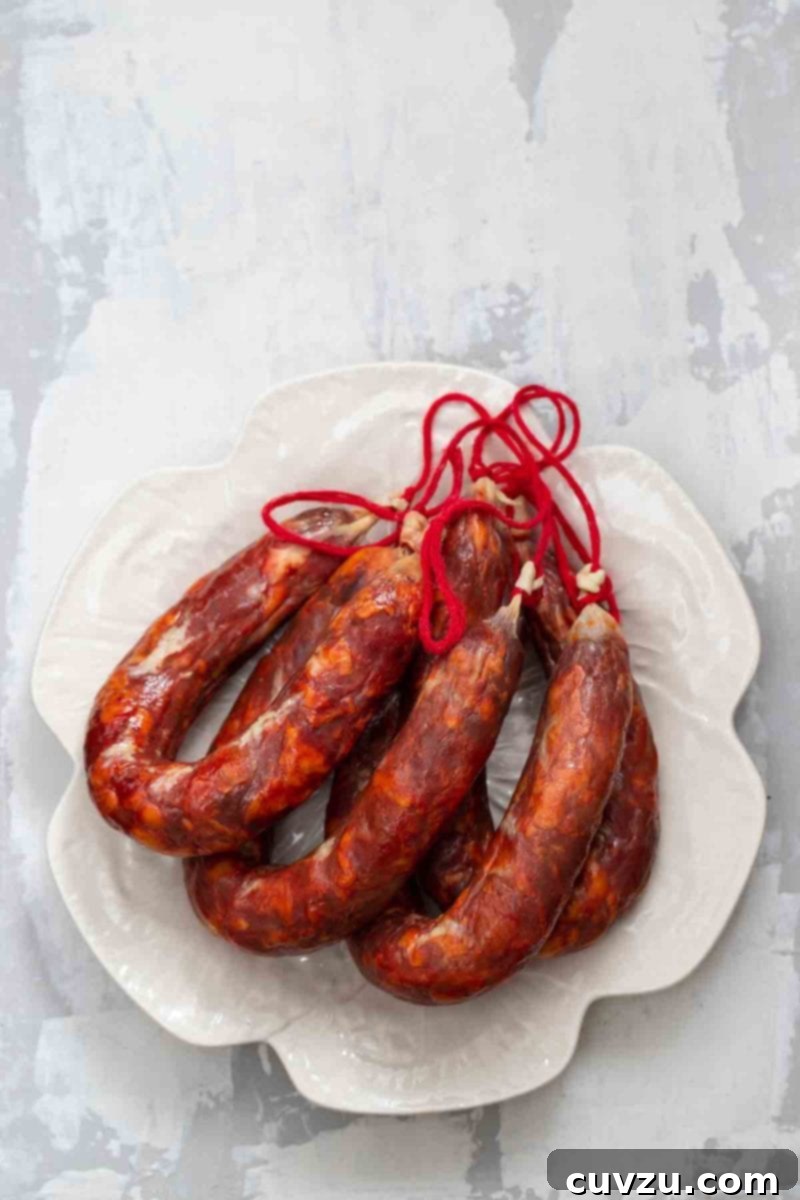
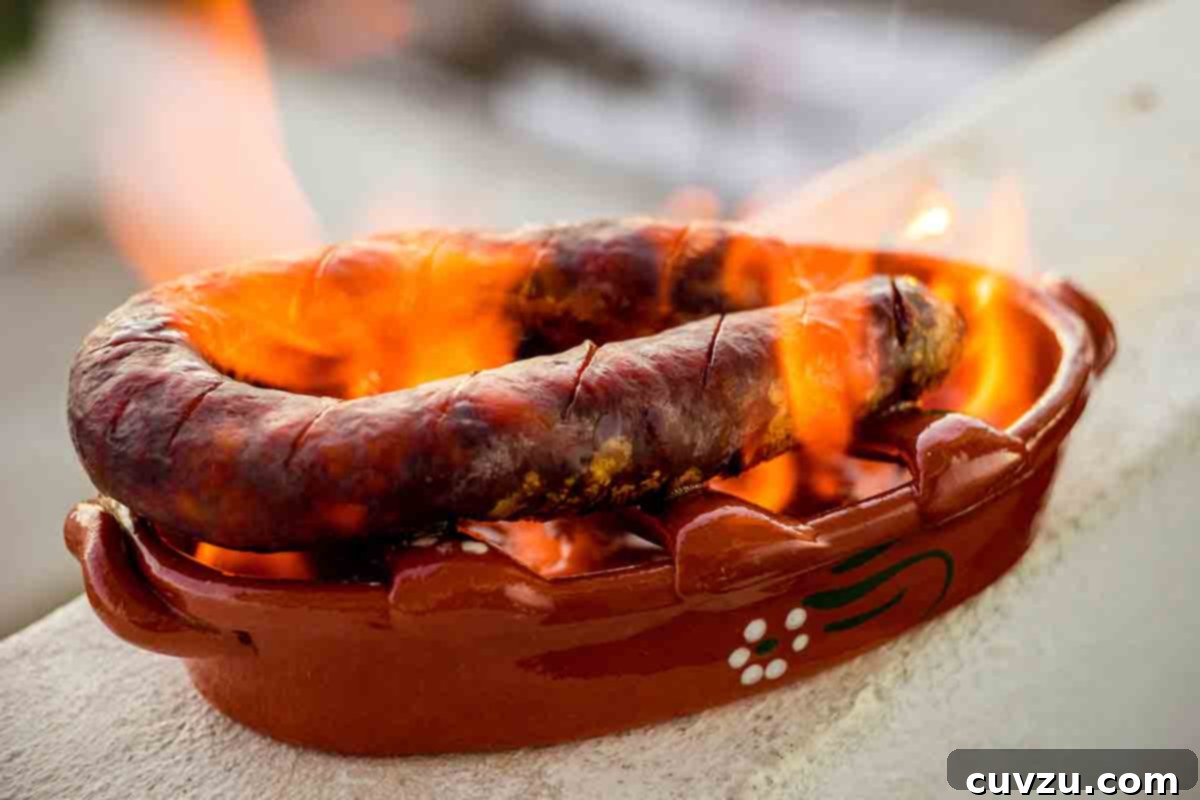
In my extensive experience, chouriço stands as the most favored and ubiquitous sausage across Portugal. This iconic link is crafted from generous chunks of pork loin, blended with a judicious amount of added fat – the precise proportions often being a closely guarded secret of each artisan producer. Its distinctive flavor profile is built upon a foundation of ample paprika, pungent garlic, a splash of red or white wine, and often a kick of fiery piri-piri sauce. The preparation involves a meticulous two-step process: first, it is air-dried to develop its texture, then heavily smoked, typically over oak or chestnut wood, which infuses it with its characteristic deep, earthy aroma and rich taste. This robust sausage is incredibly versatile in the kitchen. Cooks traditionally serve chouriço boiled, grilled to perfection, pan-fried until crispy, or roasted to bring out its complex flavors. A truly theatrical presentation, popular at festive gatherings, is the “fireman’s sausage,” or chouriço à bombeiro. A link of chouriço is placed in a special ceramic holder, generously doused with aguardente – a powerful Portuguese distilled spirit – and then dramatically set ablaze. Amidst a spectacular whoosh of flame and exclamations from delighted guests, the sausage skin chars and blisters, while the meat inside takes on a subtle sweetness as it absorbs the spirited liquor. This spectacle is not only a culinary treat but also a memorable cultural experience.
Homestyle Chouriço (.80 pound), $7.99 from Portugalia Marketplace
Linguiça (leen-gwee-suh): A Close Cousin with Distinctive Charms
Some Portuguese purists might experience a slight jolt upon reading this, but the truth remains: the distinctions between chouriço and linguiça are often minimal, especially in their fundamental composition. Both are crafted from essentially the same core ingredients – pork, paprika, garlic, and wine – and follow similar curing and smoking methodologies. Yet, a persistent debate exists among aficionados. Some adamantly assert that linguiça is inherently spicier, though my own culinary adventures have led me to encounter chouriço so potent it could blister one’s lips. Others maintain that linguiça features a finer grind of meat or is notably leaner than chouriço. However, these claims do not consistently hold true across all producers or regions. After more than a decade of inquiry and countless conversations across two continents, I’ve concluded that any subtle differences in flavor, texture, or spice level are typically attributable to the individual producer’s unique recipe and methods, rather than a nationally accepted, rigid categorization.
The sole truly consistent and identifiable distinction between the two lies in their diameter: linguiça is invariably thinner because it is traditionally encased in the small intestines of a pig, while chouriço, utilizing the larger intestines (or sometimes beef casings), results in a greater diameter. One other common misconception worth clarifying is that linguiça is not made from tongue, despite “língua” being the Portuguese word for tongue; it’s a pure pork product. Linguiça truly shines as a star ingredient in Porto’s arguably most famous and indulgent sandwich, the Francesinha. This formidable “Little Frenchie” is an architectural marvel of flavor, boasting generous layers of sliced ham, succulent linguiça, and tender roasted beef, all lovingly smothered in a blanket of melted cheese and then draped with a rich, spicy tomato-beer sauce. And, as any true Portuense will tell you, it simply isn’t a Francesinha without a hearty side of crispy French fries to complete the experience.
For both chouriço and linguiça, if Portuguese varieties are unavailable, you can substitute with Spanish chorizo, but it is crucial to select the dry-cured version; Spain also produces a raw, fresh chorizo that is quite different. Be forewarned, however: Spanish links can often be significantly fattier than their Portuguese counterparts, so it’s advisable to drain or skim any excess fat during cooking. Regarding the casing, whether you choose to leave it on or remove it before cooking is entirely a matter of personal preference.
Linguiça (1 pound), $5.99 from Portugalia Marketplace
Morcela (mord-sal-ah): The Richness of Portuguese Blood Sausage
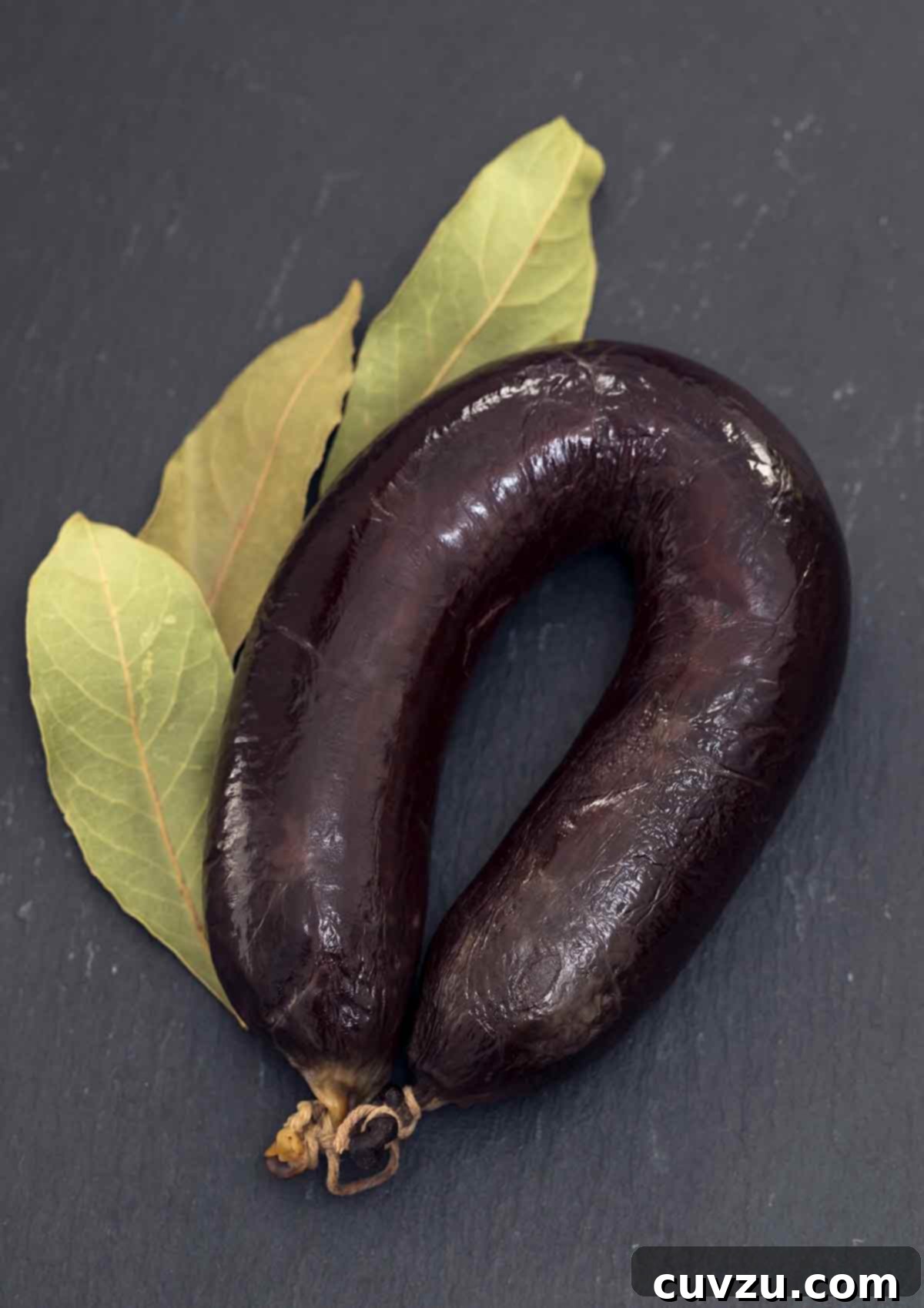
Yes, morcela, famously known as blood sausage or blood pudding, is indeed made with, as its name suggests, blood—typically pig’s blood. Now, before you conjure up cinematic flashbacks of a certain horror movie, let me assure you that morcela is a profoundly beloved culinary tradition, cherished by many throughout Portugal. My own family, for instance, is absolutely nuts for it! (I happily admit I remain one of the few holdouts, having yet to fully embrace its unique appeal.)
The practice of utilizing every part of the pig is deeply embedded in Portuguese rural life. When my father was growing up on the verdant island of São Miguel in the Azores, my grandfather meticulously raised a pig each year. The annual slaughter, or matança, which traditionally took place in early December, was a pivotal event that provided an entire year’s worth of food for all seven members of the Leite household. Nothing was ever wasted, and that, naturally, included the blood. The morcela most familiar to Azoreans is distinct for containing no actual meat; instead, it is a rich concoction of pork fat, blood, finely chopped onions, potent garlic, and a blend of aromatic spices. This unique composition makes it, understandably, quite rich and intensely flavorful.
However, morcela is not confined to the Azores; you can find it in countless variations across the entirety of Portugal. In some regions, skilled sausage makers enhance it with warm spices like cloves, earthy cumin, fragrant nutmeg, and/or a generous dose of pepper. In other areas, you might encounter morcela de arroz, a delightful blood sausage studded with cooked rice, adding an interesting texture. Throughout the sun-drenched Alentejo, a region in the south of Portugal renowned for its traditional cuisine, producers often prefer to cure their morcela by boiling it rather than smoking, resulting in a distinct texture and flavor profile. And if that weren’t enough diversity, certain regions proudly produce morcela that incorporates actual pork meat, meticulously marinated in blood, offering yet another dimension to this fascinating sausage.
Morcela frequently makes a hearty appearance in classic Portuguese stews such as feijoada (a robust stew of pork, sausages, and beans) and cozido (a comforting Portuguese version of a pot-au-feu, a boiled dinner featuring various meats, sausages, and vegetables). Beyond stews, cooks also prepare morcela fried until crisp, grilled over an open flame, or gently sautéed, often serving it alongside golden fries, fluffy rice, or perfectly cooked eggs. A particularly beloved Azorean pairing sees morcela sharing a plate with slices of fresh, sweet pineapple – one of São Miguel’s most famous and delightful crops, offering a surprising and delicious contrast to the sausage’s richness.
Morcela (.75 pound), $5.99 from Portugalia Marketplace
Alheira (al-yay-dah): A Sausage Born of Resilience and Ingenuity
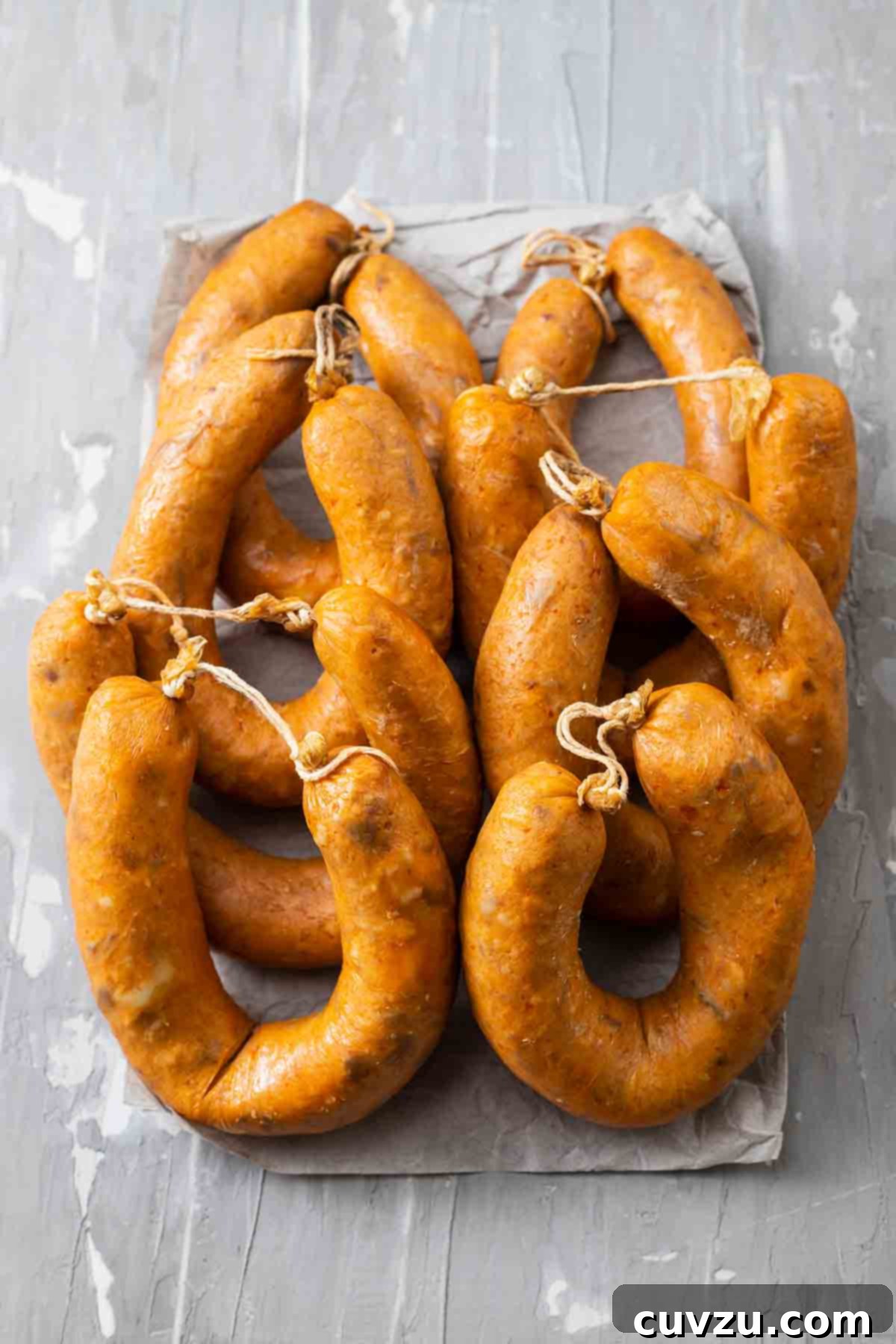
Alheira occupies a truly unique and poignant place within the esteemed canon of Portuguese sausages. It is one of only two traditional sausages whose very existence was born out of profound political and religious necessity. Its fascinating origin dates back to 1497 when King Manuel I of Portugal issued a decree compelling all Jews in the country to convert to Catholicism or face immediate expulsion to distant and often inhospitable lands, including former Portuguese colonies on the western coast of Africa. Many Jews who chose to remain and convert, aptly known as conversos, found themselves trapped in a perilous dilemma. They desperately wished to secretly uphold their Judaic traditions and practices, particularly the dietary laws of kosher, while outwardly presenting themselves as devout Christian subjects to avoid persecution by the Inquisition.
One of the most challenging traditions to maintain in a country that unapologetically celebrates and consumes pork was the strict avoidance of pig products. At the time, nearly every Portuguese home possessed a small fumeiro, or smokehouse, where pork sausages were visibly hung to cure. The absence of these smoking pork links in a converso’s fumeiro would undoubtedly raise suspicious eyebrows among hostile neighbors, vigilant priests, and the watchful authorities, potentially leading to dire consequences. To cunningly circumvent this scrutiny and covertly adhere to their kosher dietary laws, these conversos devised an ingenious solution. They began to cleverly season other non-forbidden meats, such as various game birds and poultry, along with substantial amounts of bread, using the very same wine and spice combinations – particularly garlic and paprika – that characterized traditional chouriço and linguiça. These innovative mixtures were then stuffed into casings and smoked, effectively creating a visually convincing, albeit pork-free, sausage. Thus, hostile neighbors, suspicious priests, and the authorities remained none the wiser, allowing the conversos to preserve their heritage in secret.
In contemporary Portugal, alheira is no longer kosher in its common preparation, having evolved to incorporate various combinations of pork, duck, chicken, quail, hare, and rabbit, often alongside the traditional bread component. Typically served either fried or grilled, resulting in a wonderfully blistered and charred skin, alheira is a universally beloved dish enjoyed throughout the entire country. Its rich history and delicious flavor make it a perennial favorite, often accompanied by a fried egg and fries.
A testament to its cultural and culinary significance, two of Portugal’s finest alheiras have been granted protected status under the Indicação Geográfica Protegida (IGP) designation. This means their superior quality and esteemed reputation are intrinsically linked to the specific geographical areas where they are produced: Alheira de Vinhais, originating from the Bragança district in northern Portugal, and Alheira de Barroso-Montalegre, found in the rugged Trás os Montes region. These IGP labels assure consumers of their authenticity and adherence to traditional production methods.
Alheira (~1 pound), $7.99 from Portugalia Marketplace
Farinheira (fa-reen-yay-dah): The Flour Sausage of Northern Portugal
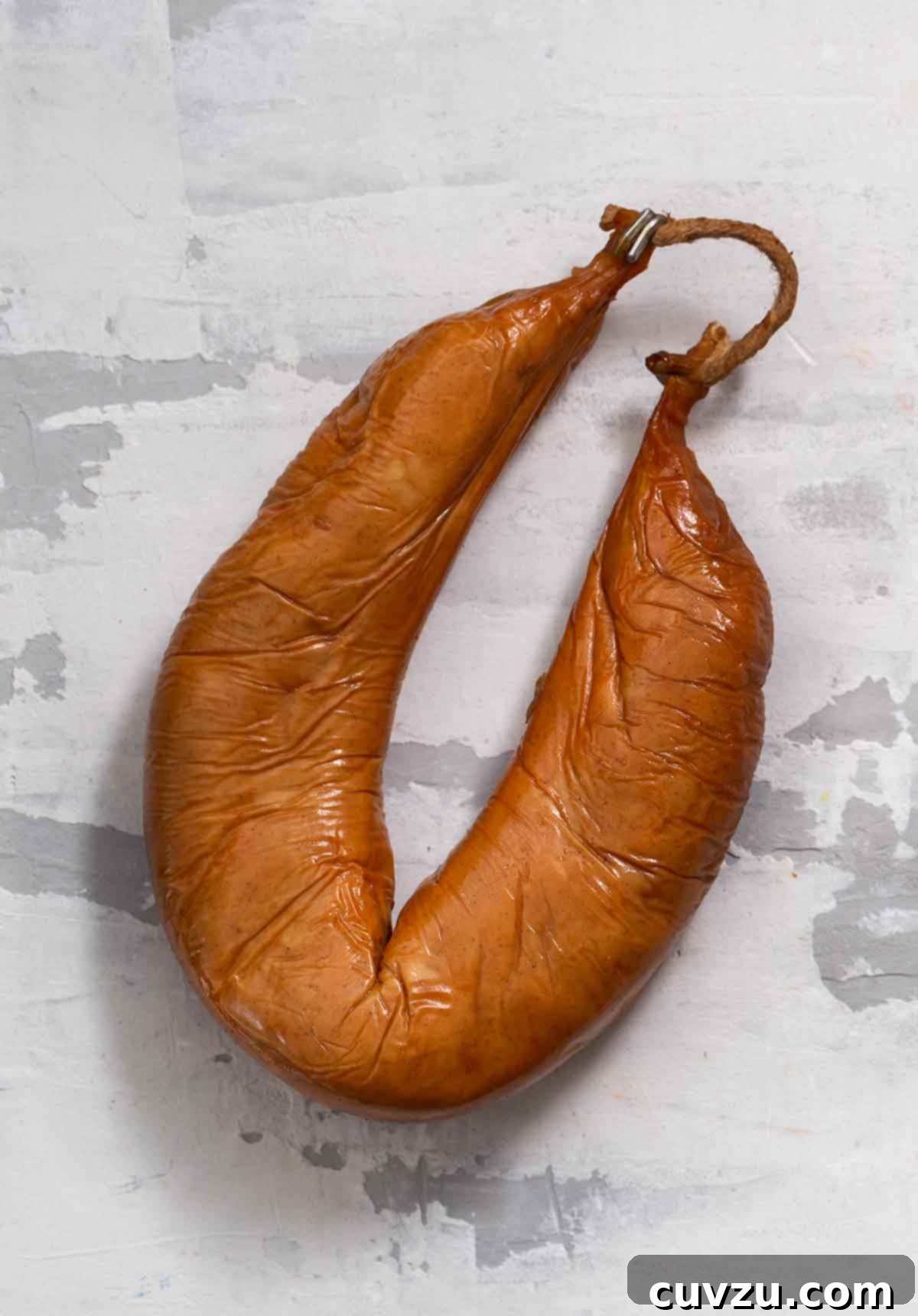
Farinheira is the other distinctive Portuguese sausage that emerged directly from historical necessity, sharing a poignant origin story with alheira. Like its counterpart, farinheira was ingeniously created by Jewish communities who fled persecution in Spain during the late 15th century and sought refuge in Northern Portugal. Faced with the same pressing need to conceal their avoidance of pork from the watchful eyes of the Inquisition, they developed this unique sausage as a clever means to feign conformity.
Its very name, “farinheira,” is derived from the Portuguese word “farinha,” meaning “flour,” which highlights its most unusual main ingredient. Originally conceived without any pork, to adhere strictly to kosher dietary laws, the filling of farinheira nowadays typically consists of a rich blend of wheat flour thoroughly mixed with abundant pork fat, a splash of white wine, aromatic garlic, and a generous amount of paprika. Once this distinctive mixture is carefully stuffed into natural casings, the entire sausage undergoes a traditional smoking process, usually over oak firewood, which imparts its characteristic golden hue and deep, nuanced flavor. Without the dominant meatiness found in chouriço or linguiça, farinheira offers a wonderfully unique taste profile – it’s often described as having a sweeter, milder flavor with a delightful tangy undertone from the wine and paprika.
Due to the significant proportion of flour in its composition, farinheira possesses a remarkably soft and almost spreadable texture, setting it apart from its firmer charcuterie cousins. Consequently, it is almost never sliced and cooked in rounds like chouriço or linguiça. Instead, cooks traditionally add whole links of farinheira to hearty, brothy dishes such as the aforementioned feijoada or cozido, where it slowly melts and enriches the stew. Another very popular preparation involves removing it from its casing, breaking it up in a skillet, and gently sautéing it until fragrant and lightly browned. This crumbled farinheira is then often spread generously on toasted bread, serving as a delectable petisco, or small bite, perfect for sharing. One particularly cherished dish is ovos mexidos com farinheira – scrambled eggs artfully combined with the rich, savory crumbles of farinheira, a comforting and flavorful meal.
Farinheira (~0.66 pound), $6.99 from Portugalia Marketplace
Salpicão and Paio: The Lean, Ready-to-Eat Delights
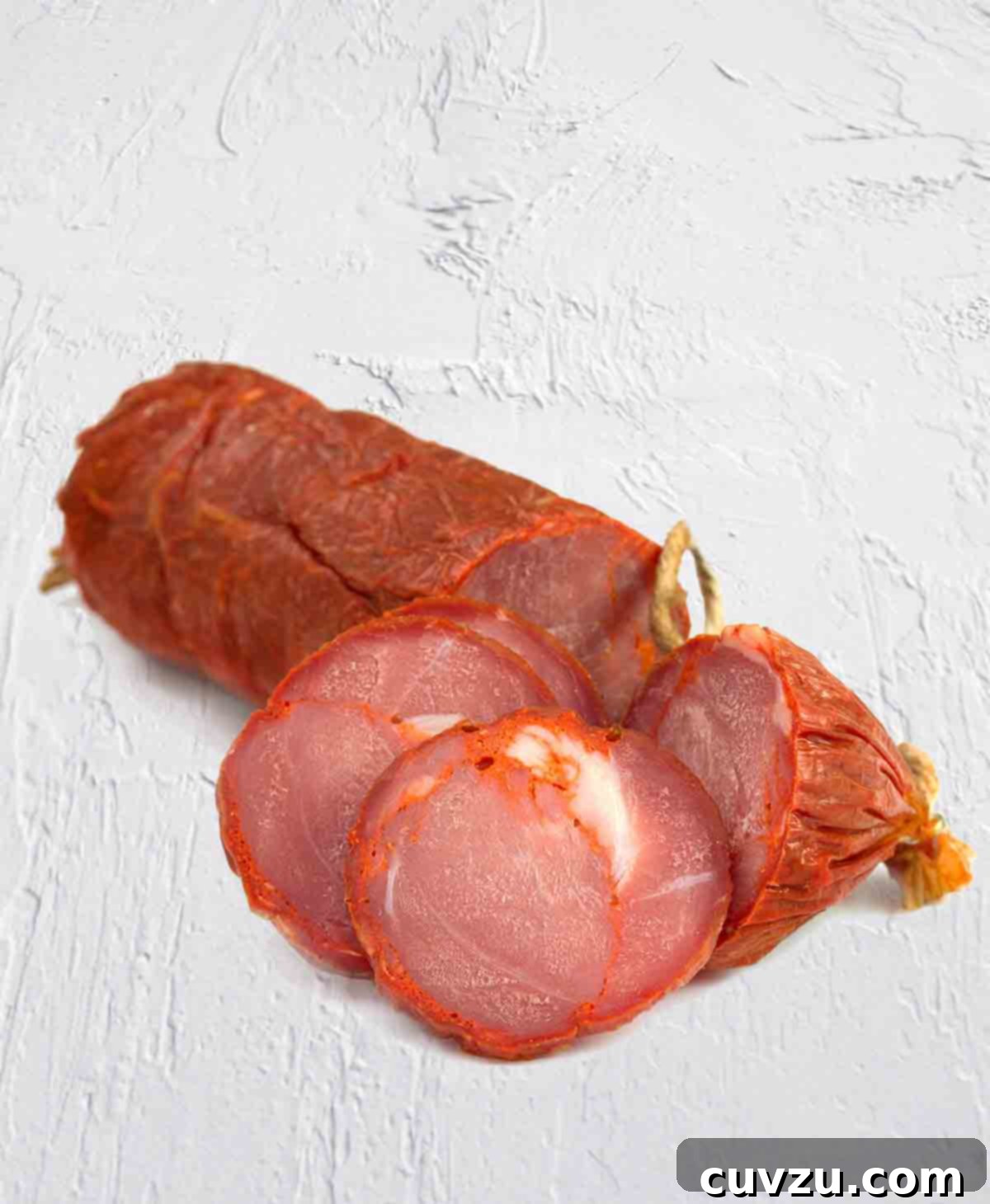
Salpicão and paio are delightful kissing cousins in the Portuguese charcuterie family, distinguished by their leaner profile and the fact that they are typically ready to eat, much like a cured ham. Unlike most other smoked Portuguese sausages, which are traditionally crafted from chunks of fattier pork shoulder, these two exquisite links are made from the prized pork loin. This gives them a texture and flavor akin to a robust Canadian bacon, but with a distinctive Portuguese sass and a more intense curing. Their leaner meat ensures they are less greasy and perfect for enjoying thinly sliced.
Salpicão is characterized by its blend of premium pork loin with rich red wine, aromatic bay leaf, pungent garlic, sweet paprika, and a touch of salt. The curing and smoking process imbues it with a complex, savory taste that is both delicate and bold. Paio, on the other hand, boasts a slightly different flavor profile. It combines pork loin with either vinegar or wine, garlic, salt, and paprika or massa de pimentão – a savory, salty paste made from sweet red peppers. While their ingredients share similarities, the major visual distinction between them is that paio tends to be significantly larger in diameter, often resembling a thicker, more substantial log of cured meat.
In the sun-drenched Alentejo region, a true gem of Portuguese charcuterie is paio branco (white paio). This particular variety is crafted exclusively from the revered Alentejan pigs, often referred to as porco preto, or black pigs. These fortunate animals are allowed to roam freely, feasting on cork oak acorns in the vast montado forests, a diet that imparts a uniquely distinctive, slightly sweet, and nutty flavor to their meat. Unlike its paprika-infused counterparts, paio branco does not contain paprika or massa de pimentão, which accounts for its lighter, almost pale color, hence its descriptive name “white paio.” Both salpicão and paio are best enjoyed thinly sliced, either as part of a traditional charcuterie board, tucked into a crusty roll, or simply savored on their own as a flavorful appetizer, showcasing the purity of their cured pork loin.
Salpicão (~1 pound), $8.99 from Portugalia Marketplace
Presunto (preh-zoon-too): Portugal’s Crown Jewel of Cured Ham
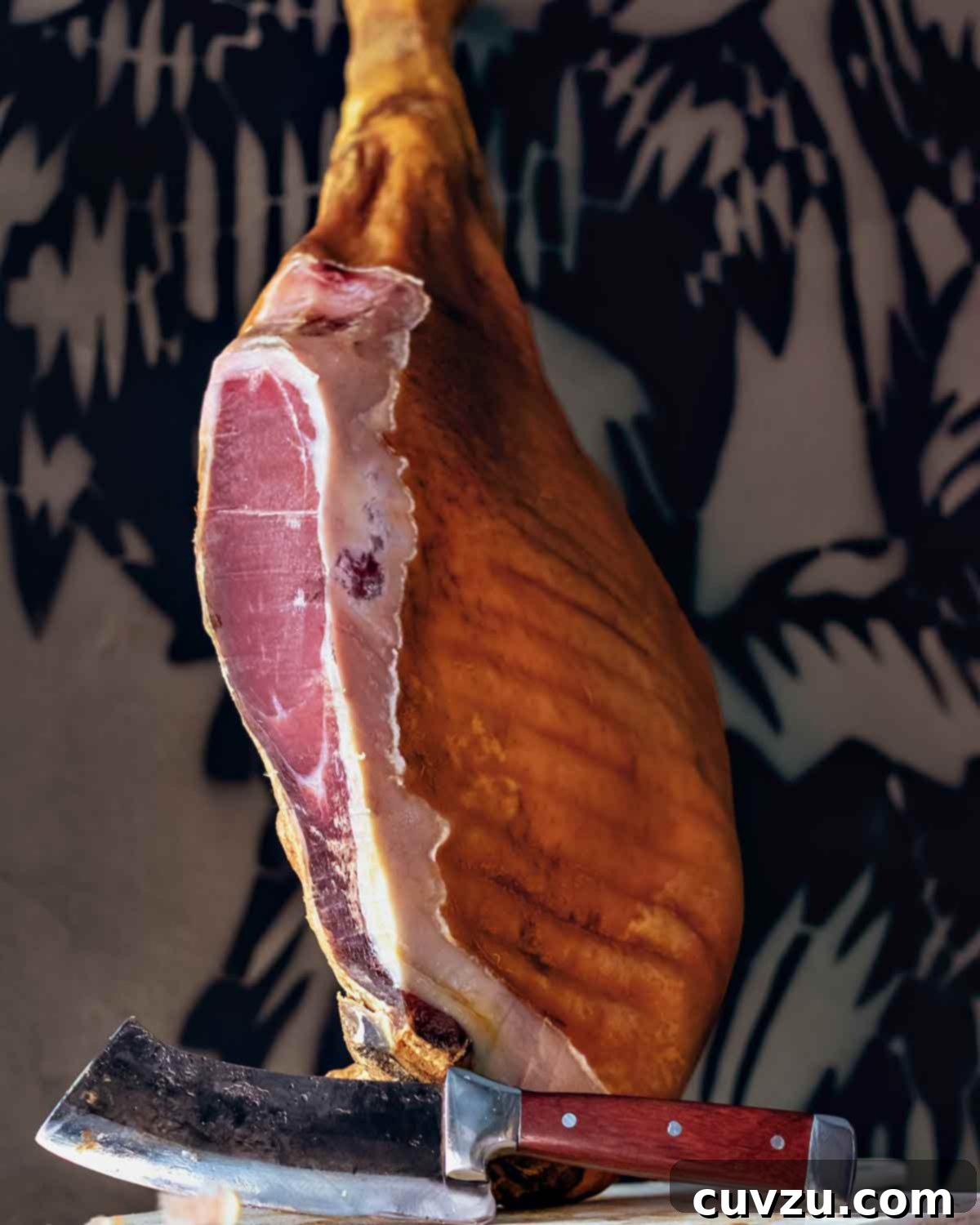
While not technically a sausage, presunto, the magnificent dry-cured ham of Portugal, unequivocally deserves a prominent spot in any discussion of Portuguese charcuterie, as it truly has few rivals in the world. Its unparalleled supremacy stems from a combination of exceptional raw material and an arduous, time-honored curing process. The foundation of the finest presunto begins with pigs that are allowed to luxuriate and gorge themselves for up to sixty days on the rich, nutritious cork oak acorns – precisely the same diet responsible for the distinctive flavor of paio branco. This specialized diet infuses the meat with remarkable marbling and a unique, complex flavor profile even before the curing begins.
The laborious transformation into presunto involves a multi-stage process: an initial quick-salting, followed by careful rinsing, a prolonged period of deep salting to extract moisture, and finally, an extended natural air drying and aging process. This meticulous craft results in sublimely silky meat, boasting a deep red-purple hue, superb marbling that melts in the mouth, and encased by a layer of opalescent ivory fat that contributes immense flavor. It is a masterpiece of charcuterie.
Portugal’s two most revered regions for presunto production are distinct in their methods and prized for their unique outcomes. In the north, the towns of Chaves and Lamego, nestled in the Trás-os-Montes region, are renowned for rubbing their hams with a fragrant coating of sweet paprika and olive oil before undergoing a gentle smoking process. This imparts a subtle smokiness and a beautiful reddish tint. Conversely, the sun-drenched Alentejo in the south prefers to keep its hams uncoated and unsmoked, allowing the pure, unadulterated flavor of the acorn-fed meat to shine through. For the Alentejan presunto, the hoof is typically left attached, serving as an authentic mark and a proud testament that it originates from the famous porco preto, or black pig, the king of Iberian swine.
Presunto is most exquisitely enjoyed when served in impossibly thin, almost translucent slices, allowing its complex flavors to fully bloom on the palate. It is a star on its own, a sophisticated addition to sandwiches, and a perfect accompaniment to fresh seasonal fruits like melon or figs. Beyond simply being eaten raw, its rich flavor profile makes it a fantastic ingredient in cooking, where it adds remarkable depth and a delightful salty bite. Consider adding thinly sliced presunto to elegant cheese platters, incorporating it into fluffy omelets for a gourmet touch, or scattering it over fresh salads. For a rustic yet refined treat, cut presunto into small cubes, fry them until crispy, and sprinkle over warm baked potatoes for an unforgettable experience.
Longevity and Storage: Maximizing Your Portuguese Sausage Enjoyment
Understanding the proper storage for your Portuguese sausages is key to preserving their unique flavors and extending their shelf life. The firmer varieties, such as the robust chouriço, the slender linguiça, the lean salpicão, and the substantial paio, are designed for longevity due to their dry-cured nature. When stored correctly in a cool, dry place – ideally a pantry or a cellar with good air circulation – these sausages can last for several months. However, it’s important to be vigilant for mold growth, which, while sometimes harmless on the exterior of cured products, can indicate spoilage if it’s widespread or has an unusual color. Always inspect them before consumption.
In contrast, the softer, more perishable sausages like the rich morcela, the bread-based alheira, and the flour-filled farinheira have a shorter shelf life. These varieties are best enjoyed within approximately one week of purchase to ensure optimal freshness and flavor. For longer-term storage, all types of Portuguese sausages, regardless of their firmness, can be safely frozen. When properly wrapped to prevent freezer burn, they can maintain their quality for up to six months. Thaw them slowly in the refrigerator before use to retain their texture and flavor. Adhering to these storage guidelines will ensure you can savor the authentic taste of Portuguese charcuterie whenever the craving strikes.
Don’t Toss the Oil You Cook the Sausages In! A Taste of Tradition
When I was a child, my beloved grandmother, VoVo Costa, and I communicated through a charming medley of cobbled-together Portuguese and English, a delightful language we affectionately dubbed “Portglish.” Every so often, her melodic voice would echo from her bustling kitchen, “Barry, David, Wayne! Quer sheeps?” “Sheeps” was her endearing, uniquely accented attempt to pronounce “chips,” a term she used interchangeably with French fries. My cousins and I, without fail, never refused this rare and cherished treat.
Whenever VoVo would fry chouriço or linguiça, she practiced a time-honored tradition that epitomized the Portuguese commitment to zero-waste cooking and maximizing flavor. Instead of discarding the deeply orange, flavor-infused oil rendered from the sausages, she would carefully pour it into a glass jar and store it in the refrigerator. Over time, she would accumulate enough of this precious, garlicky, smoky liquid. Then, on a special day, she would peel some fresh potatoes, meticulously cut them into thick, rustic wedges, and lovingly fry them in this saved chouriço oil. The resulting potatoes were a revelation: they emerged from the pan a beautiful orange hue, imbued with the unmistakable taste of garlic and a profound smokiness that only came from the sausage. It was a simple dish, yet profoundly rich in flavor and tradition.

Even now, every time I fry Portuguese sausage, my thoughts invariably drift back to Vovo, standing gracefully at her stove, her thin, reedy voice softly singing along to the soulful fado music playing on the radio. And I think of those unforgettable, orange-tinged fries, tasting of history and love. In those moments, a sense of peace settles upon me, and somehow, the world rights itself, if only for a fleeting moment. This simple act of preserving and reusing the flavorful oil is more than just a culinary tip; it’s a living connection to a cherished past and a testament to the enduring richness of Portuguese culinary traditions.