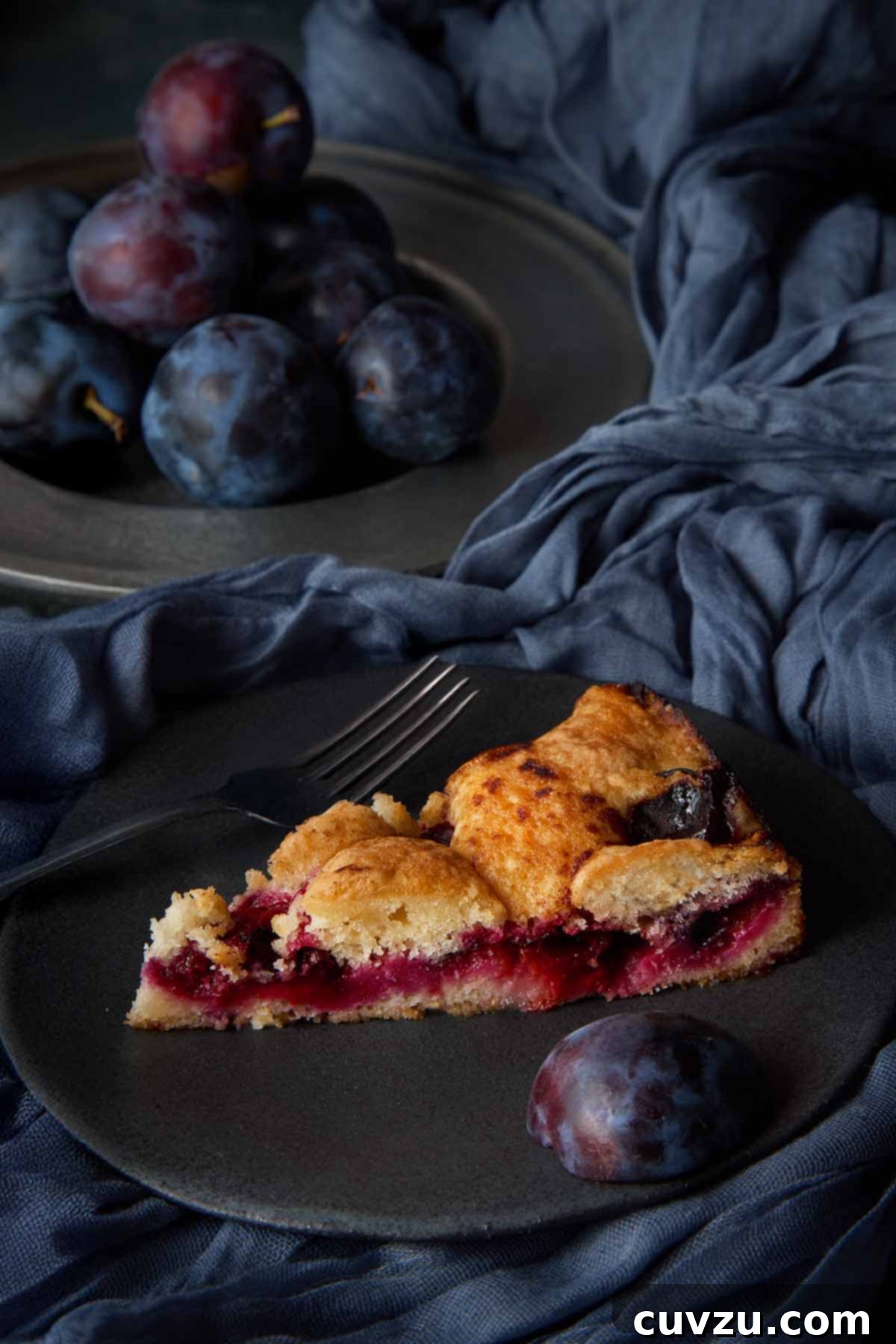
This jammy, sweet-tart plum torte from Marian Burros is more than just a recipe; it’s a culinary legend, famously the most requested dish from The New York Times. And for utterly compelling reasons. It’s an effortlessly elegant way to celebrate the bounty of summer, crafted from a simple handful of everyday pantry ingredients. Prepare to fall in love with a dessert that embodies warmth, comfort, and timeless deliciousness.
Quick Overview: The Beloved Plum Torte
- What makes it legendary: This is the iconic Marian Burros plum torte, the ultimate crowd-pleaser from the NY Times archives. It’s a beautifully straightforward, buttery cake that gracefully puffs up around luscious, sweet-tart plums, creating a dessert that feels both rustic and incredibly elegant.
- Why you’ll adore it: Beyond its exquisite taste, its charm lies in its foolproof nature. It requires only a few basic pantry staples, demands no complicated techniques, and adapts seamlessly to almost any stone fruit you have on hand. It’s truly a recipe for everyone.
- How to create this masterpiece: Begin by spreading a quick, simple batter into your chosen pan. Arrange halved plums on top, then generously sprinkle with a cinnamon-sugar blend, and a bright squeeze of fresh lemon juice. Bake until the cake turns golden, and the fruit transforms into a bubbling, fragrant masterpiece.
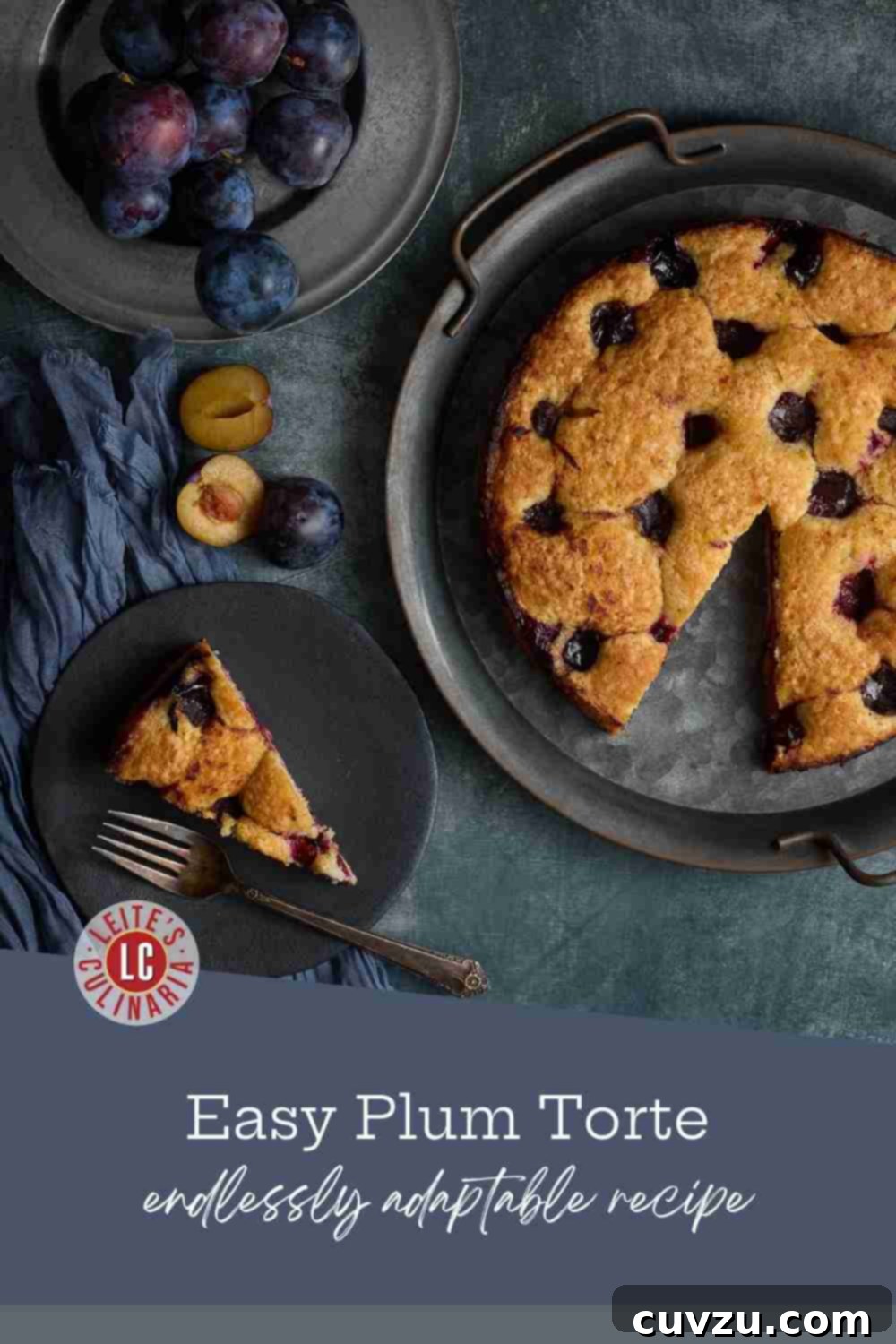
The Enduring Legacy of the New York Times Plum Torte
Few recipes achieve the iconic status of Marian Burros’s Plum Torte. Published in The New York Times on September 21, 1983, in her “Food Notes” column, this deceptively simple dessert quickly captivated readers, going on to become the most requested recipe in the newspaper’s venerable history. Its allure is undeniable: an easy-to-master technique combined with readily available ingredients delivers a show-stopping result every single time.
My own journey with this extraordinary plum torte recipe began way back in 1994, during my early baking classes. A cherished friend shared a photocopy of Marian Burros’s original New York Times article, and from that moment, I was hooked. That first summer, I baked it an almost unbelievable number of times, experimenting with a kaleidoscope of different fruits. This versatility earned it the affectionate nickname in my household: “The Acme Torte,” a nod to its ability to be the quintessential version of whatever fruit tart I desired.
Over the decades, I’ve lovingly refined and personalized the recipe, primarily by enhancing the spice profile, both within the batter and as a fragrant topping. These minor adjustments amplify the torte’s inherent charm, making it even more aromatic and comforting. It’s a testament to the original recipe’s robust foundation that it welcomes such subtle evolution while retaining its beloved essence.
One particular trick I’ve discovered, especially useful when working with plums that might be a little lackluster in flavor, is to lightly salt the cut sides of the plums and allow them to rest for about half an hour. This seemingly counter-intuitive step works wonders, subtly suppressing any bitterness and significantly enhancing both the natural sweetness and the overall texture of the fruit as it bakes. It’s a small detail that makes a noticeable difference.
I wholeheartedly encourage you to embrace the spirit of experimentation with this recipe. Feel free to play, adapt, and make it uniquely your own. You’ll find some of the most popular and ingenious variations outlined further down the page.
Featured Review
“The plum torte recipe was a huge hit at our dinner party last night! Instead of the 9” springform, I used 6 mini springforms, which I purchased years ago at Zabar’s. Everyone had their own torte to enjoy. The cake was golden and the plums gave it the wonderful juicy flavor. Easy recipe to throw together…Keep those great recipes flowing my way.”
— Leonard La Magna

The Culinary Secrets Behind This Recipe’s Success
The legendary status of this plum torte is no accident of luck; its unparalleled success stems from a few remarkably clever and straightforward details that combine to create pure baking magic.
It all begins with the distinctly thick, rich, and buttery batter. This dense foundation isn’t just for show; it crafts a robust base that steadfastly resists becoming soggy, even when laden with juicy fruit. The result is a plush, tender crumb that perfectly cradles and supports the plums, ensuring every bite is a harmonious blend of cake and fruit.
The ingenious topping is equally critical to its triumph. A generous sprinkling of cinnamon sugar over the plums prior to baking performs a crucial task: it skillfully draws out their natural, vibrant juices. This process creates delectable pockets of intensely jammy fruit, which in turn infuse the surrounding cake with a deep, complex flavor that is simply irresistible. This interaction is key to the torte’s signature moistness and its rich, fruity essence.
Finally, a finishing squeeze of fresh lemon juice is the ultimate touch. This bright citrus element doesn’t just add a zesty note; it masterfully balances the inherent sweetness of the plums and the richness of the butter. This crucial acidity elevates the natural plum flavor, allowing it to truly shine and preventing the torte from being overly sweet. It’s these thoughtful, simple details that elevate this torte from a mere dessert to a true culinary icon.
Ingredient Spotlight: What You Need for the Perfect Plum Torte
Crafting the perfect plum torte begins with understanding your ingredients. While this recipe is forgiving, selecting and preparing your components thoughtfully will elevate your baking experience and the final taste of your torte.
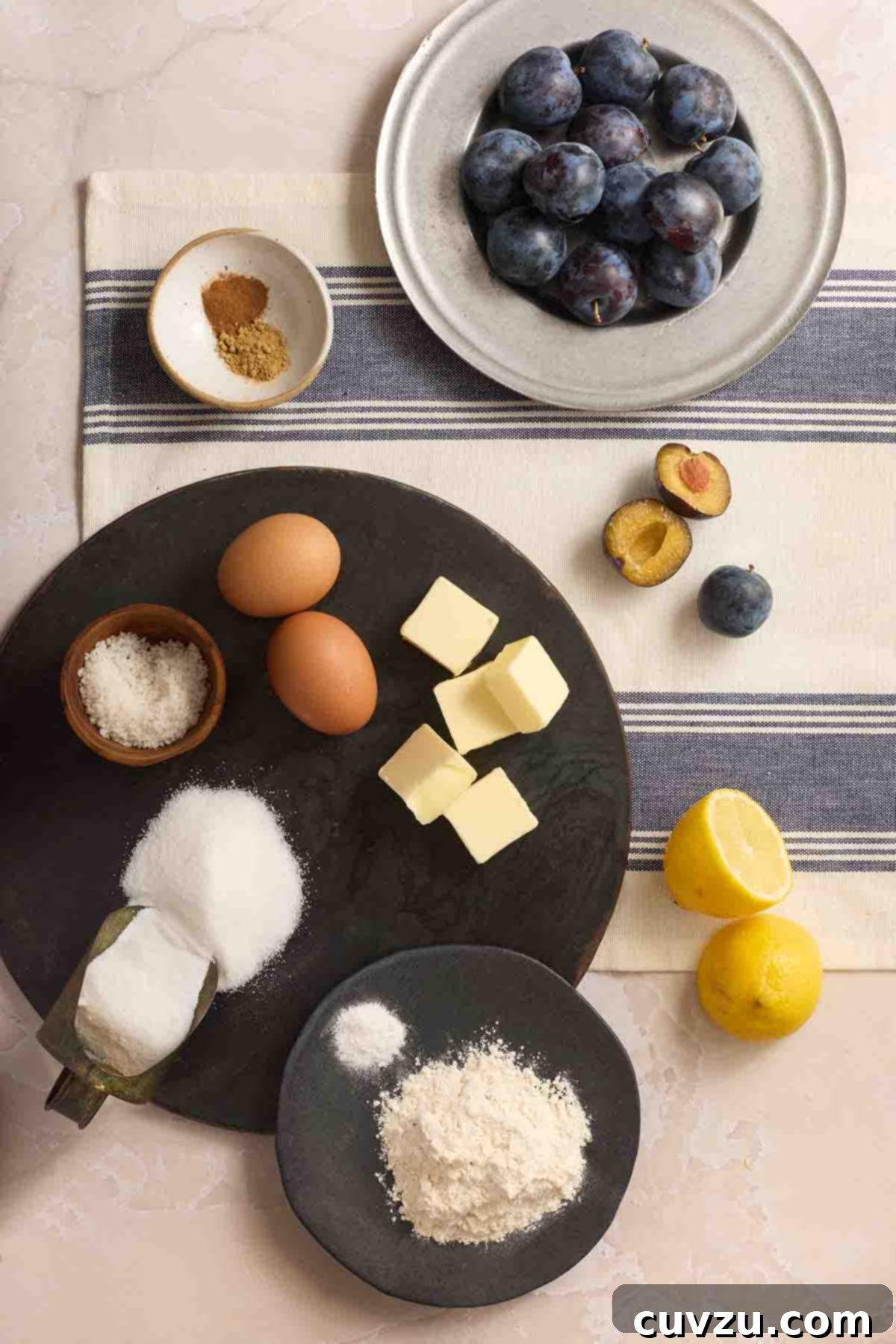
- Plums: The Star of the Show
For an absolutely sublime torte, seek out Italian prune plums if they are available. These smaller, sweeter plums boast a denser flesh and lower moisture content, making them ideally suited for baking as they hold their shape beautifully and create that perfect jammy texture. If Italian prune plums are elusive, don’t despair! Larger red plums work wonderfully; simply quarter them to ensure even distribution and baking. - Eggs and Butter: The Foundation of Flavor and Texture
The secret to a smooth, cohesive, and perfectly emulsified batter lies in the temperature of your key dairy ingredients. Always ensure your eggs and butter are at room temperature. Cold ingredients won’t properly incorporate into the batter, leading to a lumpy texture and a less uniform rise. Plan ahead and let them sit out for an hour or two before you begin baking. - Lemon: The Balancing Act
Fresh lemon juice is more than just a flavor enhancer; it’s a critical element for balancing the torte’s overall profile. Its bright tartness cuts through the sweetness of the plums and the richness of the butter, preventing the dessert from tasting cloying. For an added layer of aromatic complexity, consider grating a teaspoon of lemon zest directly into your batter – it truly makes the flavors sing. - Spices: A Touch of Warmth and Depth
While cinnamon is a classic pairing with plums, my personal addition of ground ginger introduces a wonderful warmth and a more profound, nuanced flavor to the torte. If you’re a true spice enthusiast, feel free to experiment further! Nutmeg, cardamom, allspice, or even a hint of mace can all contribute to a truly unforgettable aromatic experience. Check the recipe notes for more inspiration on how to customize your spice blend.
Unleash Your Creativity: Popular Variations on Plum Torte
Marian Burros’s classic plum torte owes much of its enduring popularity to its incredible adaptability. It’s a culinary canvas, inviting home bakers to put their own unique spin on the beloved original. Over the years, countless readers have developed clever and delicious variations. Here are five of the most popular ways to truly make this torte your own:
Experiment with the Pan
The beauty of this recipe is its flexibility with bakeware. While a 9-inch springform pan is standard, almost any 8- to 10-inch oven-safe dish will work beautifully. This includes traditional pie plates, sturdy Pyrex dishes, or even a cast-iron skillet. Opting for a smaller pan, such as an 8-inch, will result in a taller, denser, and often moister cake, as the batter and fruit have less surface area to spread. Don’t be afraid to use what you have!
Embrace Other Stone Fruits (or Berries!)
As I mentioned, when I first discovered this recipe decades ago, I affectionately dubbed it the “Acme Tart” precisely because of its remarkable compatibility with a wide array of fruits. Don’t limit yourself to plums! Apricots, peaches, and nectarines are fantastic stone fruit alternatives, offering similar sweet-tart profiles. Apples and pears can also be used, especially firmer varieties that hold their shape. For a burst of summer sweetness, berries (like blueberries or raspberries) or even cherries can be wonderful – just be sure to drain any excess moisture if using frozen or canned fruit to prevent a soggy bottom. This torte truly shines with whatever seasonal bounty you have available.
Infuse Different Flavor Profiles
While the original is perfect, adding subtle flavorings can completely transform the character of your torte. A splash of vanilla extract or almond extract enhances the sweetness and depth. Citrus zest, beyond just lemon, such as orange or lime, can introduce a new layer of brightness. For those who love warm spices, consider adding cardamom or a hint of freshly grated nutmeg directly into the batter. Even an unexpected whisper of fresh rosemary or thyme can create an intriguing, sophisticated counterpoint to the fruit’s sweetness. Let your palate be your guide!
Explore Different Flours
For those looking to adjust the texture or dietary aspects of the torte, experimenting with different flours is a great option. Substituting a portion of the all-purpose flour with almond meal will yield a finer, slightly richer crumb and a delicate nutty flavor. Cornmeal can add a pleasant rustic texture. If you’re going gluten-free, a good quality all-purpose gluten-free flour blend can often be swapped in directly, though you might need minor adjustments to liquid content. For a heartier, more wholesome version, try using whole wheat pastry flour, which offers a robust flavor without being too heavy.
Batch It for Later or a Crowd
This recipe is wonderfully amenable to scaling. It doubles or even triples with ease, making it ideal for feeding a larger gathering or preparing ahead for future enjoyment. The torte freezes exceptionally well, allowing you to bake one for immediate pleasure and stash another (or several slices) away for a quick, comforting dessert on a busy weeknight. This makes it a fantastic recipe for meal prepping or holiday baking.
Visual Step-by-Step Guide: Crafting Your Perfect Plum Torte
Follow these straightforward steps, complete with visual cues, to bake the ultimate Marian Burros plum torte with confidence.
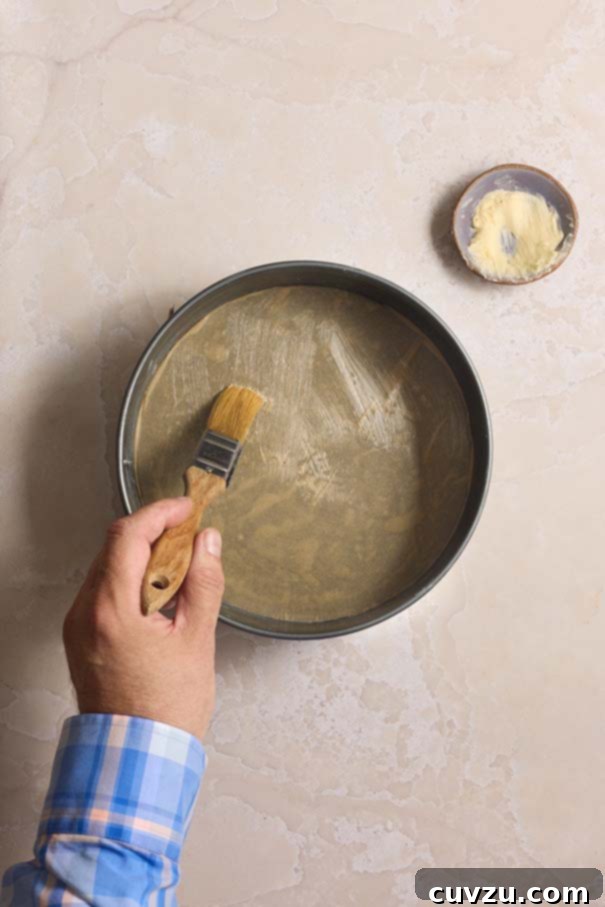
- Prepare your pan: Generously butter a 9-inch springform pan. Line the bottom with a circle of parchment paper, then butter the parchment as well. This ensures a clean release.
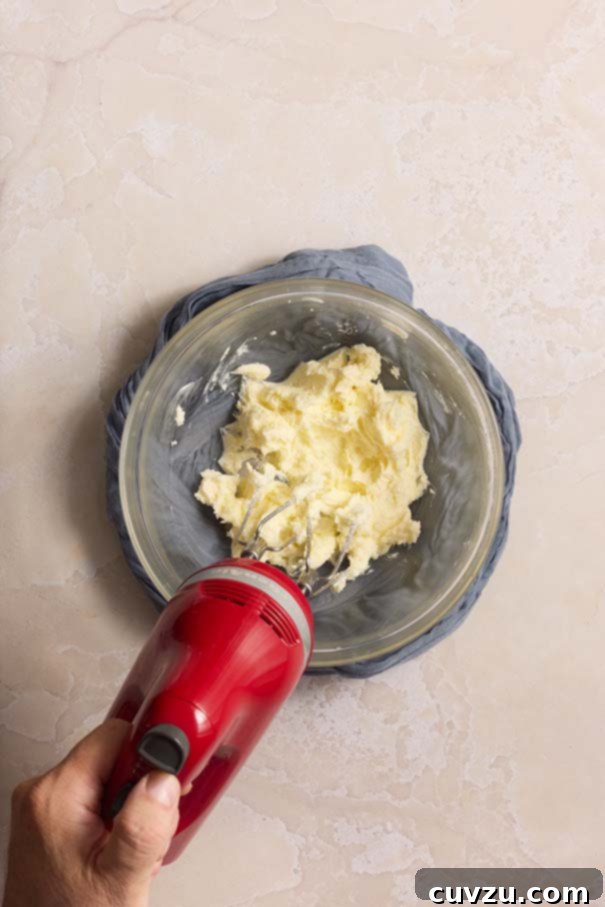
- Cream butter and sugar: In a mixing bowl, beat the room temperature butter and sugar together until the mixture is visibly lightened in color and fluffy in texture.
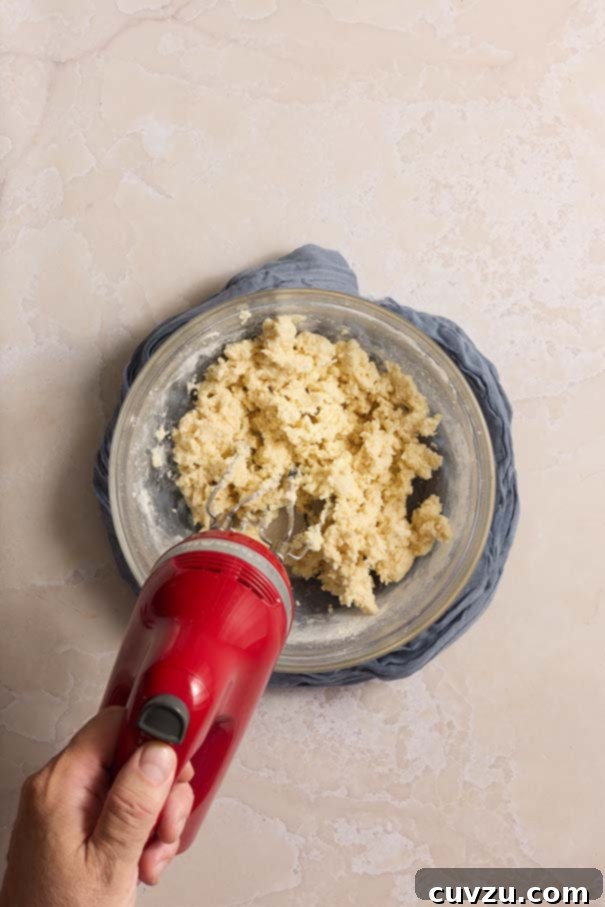
- Combine dry ingredients: Gradually beat in the flour, baking powder, and a pinch of salt until they are just combined, creating a thick batter.
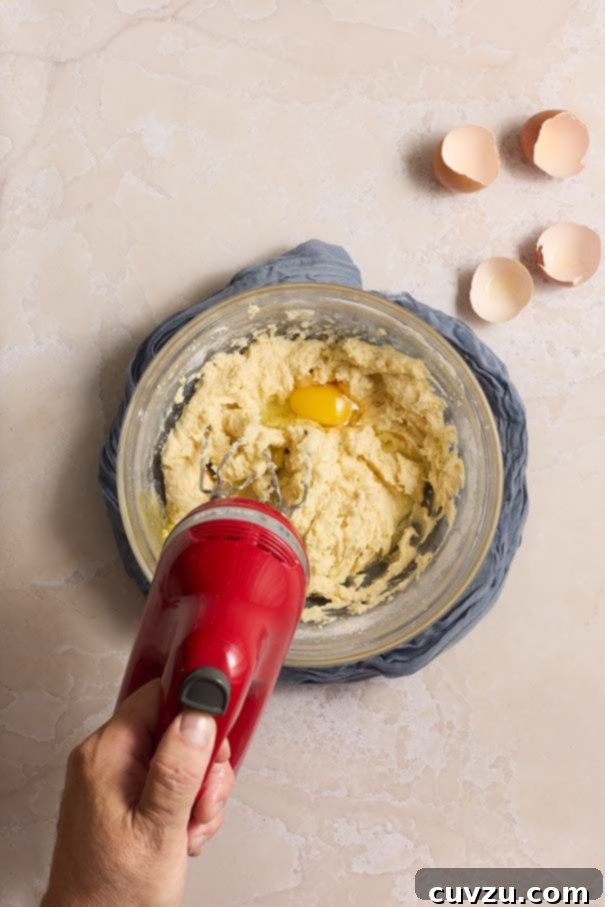
- Incorporate eggs: Add the eggs one at a time, beating after each addition until the batter is smooth and fully combined.
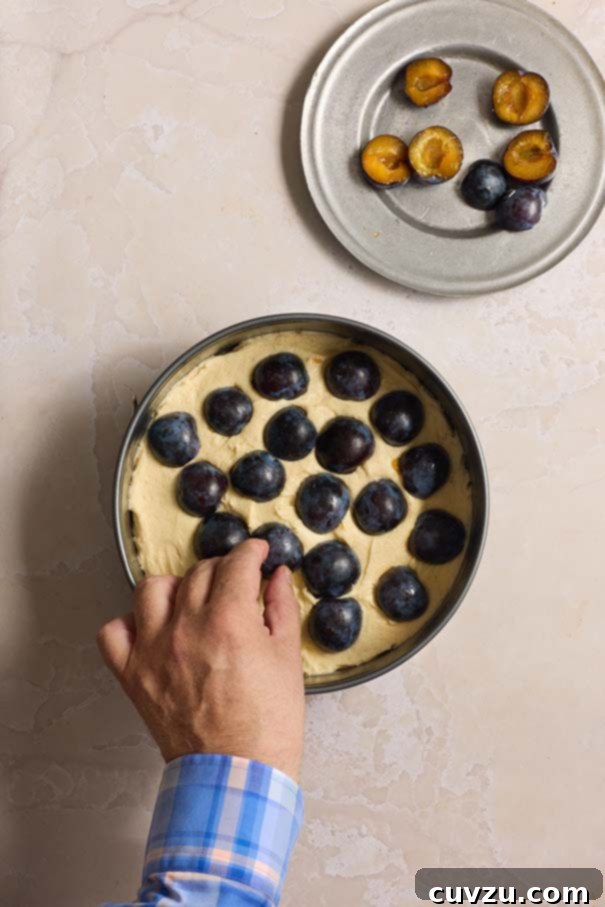
- Arrange the plums: Spoon the thick batter into the prepared pan and smooth the top evenly. Carefully arrange the plum halves, cut-side down, on top of the batter in an attractive pattern.
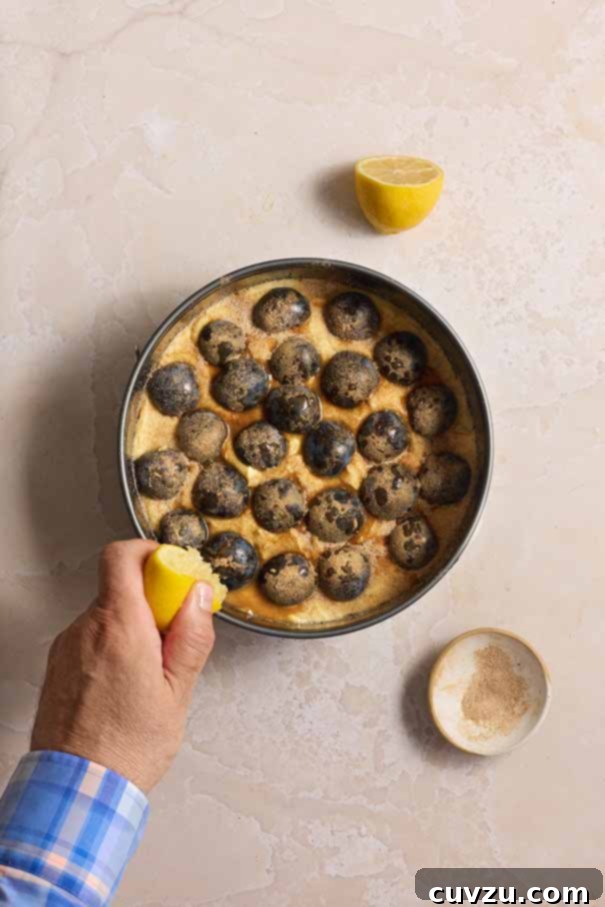
- Season and bake: Sprinkle the plums generously with the cinnamon-sugar mixture. Then, squeeze the juice from half a lemon over the entire top, adjusting the amount to the natural tartness of your fruit. Bake at 350°F (175°C) for 50-60 minutes, or until golden and bubbly.
Your Plum Torte Questions, Answered
Got burning questions about this beloved dessert? You’ve got questions, and I’ve got clear, helpful answers. Here’s everything you need to know about Marian Burros’s legendary plum torte.
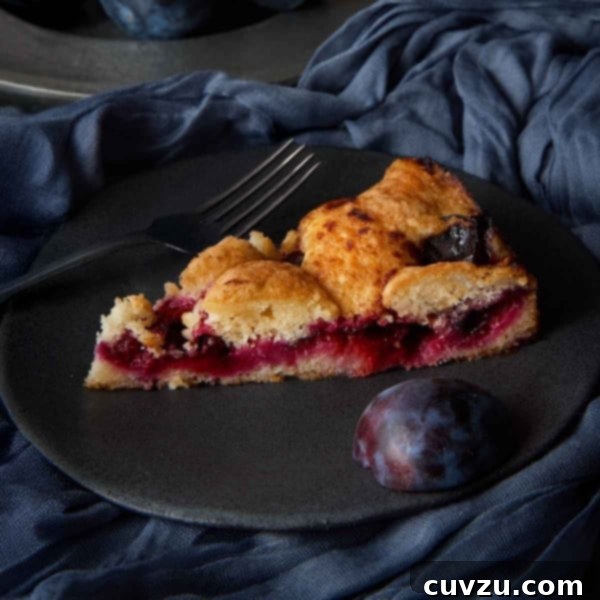
At its heart, a plum torte, particularly this famous iteration, is a quintessential simple, rustic, single-layer cake. The batter is purposefully dense and wonderfully buttery, often likened to a rich pound cake. It serves as a perfect foundation for the fresh plums that are nestled on top. As it bakes, the plums soften and melt into a luscious, intensely flavorful jammy layer, creating a delightful contrast with the tender cake. The true magic lies in its understated elegance and simplicity—it’s refined enough to grace a formal dinner party yet effortlessly easy to whip up for an impromptu weeknight craving.
Ah, the age-old culinary conundrum! In classic European baking tradition, a “torte” typically refers to a rich, often multi-layered cake made with very little or no wheat flour, frequently relying instead on ground nuts, breadcrumbs, or even fruit purées for its structure. These tend to be shorter, denser, and more exquisitely rich than their fluffy, leavened “cake” cousins common in American baking. However, culinary terminology is beautifully fluid and evolves over time. While Marian Burros’s recipe is named a “torte,” and it certainly embodies some of that classic richness, it’s technically more akin to a simple, rustic cake. But let’s be honest, “Plum Cake” simply lacks the sophisticated, alluring ring of “Plum Torte,” doesn’t it? Sometimes, it’s best not to overthink the labels and simply enjoy the deliciousness!
This recipe is indeed the stuff of culinary legend. It was famously created by the esteemed food writer and cookbook author Marian Burros. It made its debut in The New York Times on September 21, 1983, featured in her popular “Food Notes” column. Burros presented it as an inspired way to utilize the season’s ripe purple plums, which she highlighted as her “Buy of the Week.” Its immediate and widespread appeal led it to become an unprecedented phenomenon, earning the title of the most requested recipe in the newspaper’s history. Its enduring popularity is a powerful testament to the timeless appeal of a truly simple, utterly foolproof, and perfectly delicious recipe that resonates with home cooks everywhere.
While you certainly can use frozen plums, a word of caution is in order. The freezing process naturally breaks down the cell walls of fruit, causing them to release significantly more liquid during baking compared to fresh plums. If you opt for frozen plums, I strongly recommend thawing them completely before you begin and thoroughly draining off any excess juice. This step is crucial to prevent a soggy cake. The texture of your baked torte might be a little softer and more intensely jammy, but rest assured, the flavor will still be absolutely fantastic and a comforting treat, especially outside of plum season.
Plum Torte Pro Tips & Troubleshooting for Success
Achieving plum torte perfection is easier than you think, especially with these insider tips and quick solutions to common baking questions.
☞ The Unexpected Magic of Salting Your Plums
Plums, much like wine grapes, can exhibit a surprising range of quality and sweetness. If your plums are tasting a bit bland or even slightly bitter, here’s a pro trick: lightly (and I emphasize lightly) sprinkle the cut sides of the halved plums with a pinch of salt. Let them sit for about 30 minutes before baking. This simple step works wonders by drawing out excess moisture and concentrating their natural sugars, which in turn suppresses any bitterness and beautifully enhances their inherent sweetness and overall flavor. It’s a game-changer for less-than-perfect fruit.
☞ Understanding Fruit Juiciness and Baking Time
If you’re using exceptionally ripe and juicy plums, you might notice that the center of your torte seems a little custardy or moist when it first emerges from the oven. While this can be delightfully jammy, it can also mean the cake needs a little more time to set. Super juicy fruit can extend the required baking time by up to 10 minutes (or even a bit more). Trust your instincts and the visual cues: bake until the cake portion is golden brown and a clean wooden skewer or toothpick inserted into the cake (not directly into a plum) comes out clean. A little bubbling around the edges of the fruit is a good sign, but ensure the cake itself is fully cooked.
☞ The Non-Negotiable Step: Lining Your Pan
For a flawless release and presentation every single time, do not skip lining your springform pan. Start by generously buttering the entire interior of the pan. Then, cut a circle of parchment paper to fit the bottom and place it in the pan. Finally, butter the parchment paper as well. This triple layer of preparation—butter, parchment, butter—creates a non-stick barrier that guarantees your beautiful plum torte will unmold easily and perfectly, leaving you with a clean-edged masterpiece ready for serving.
Perfect Pairings: What to Serve with Your Plum Torte
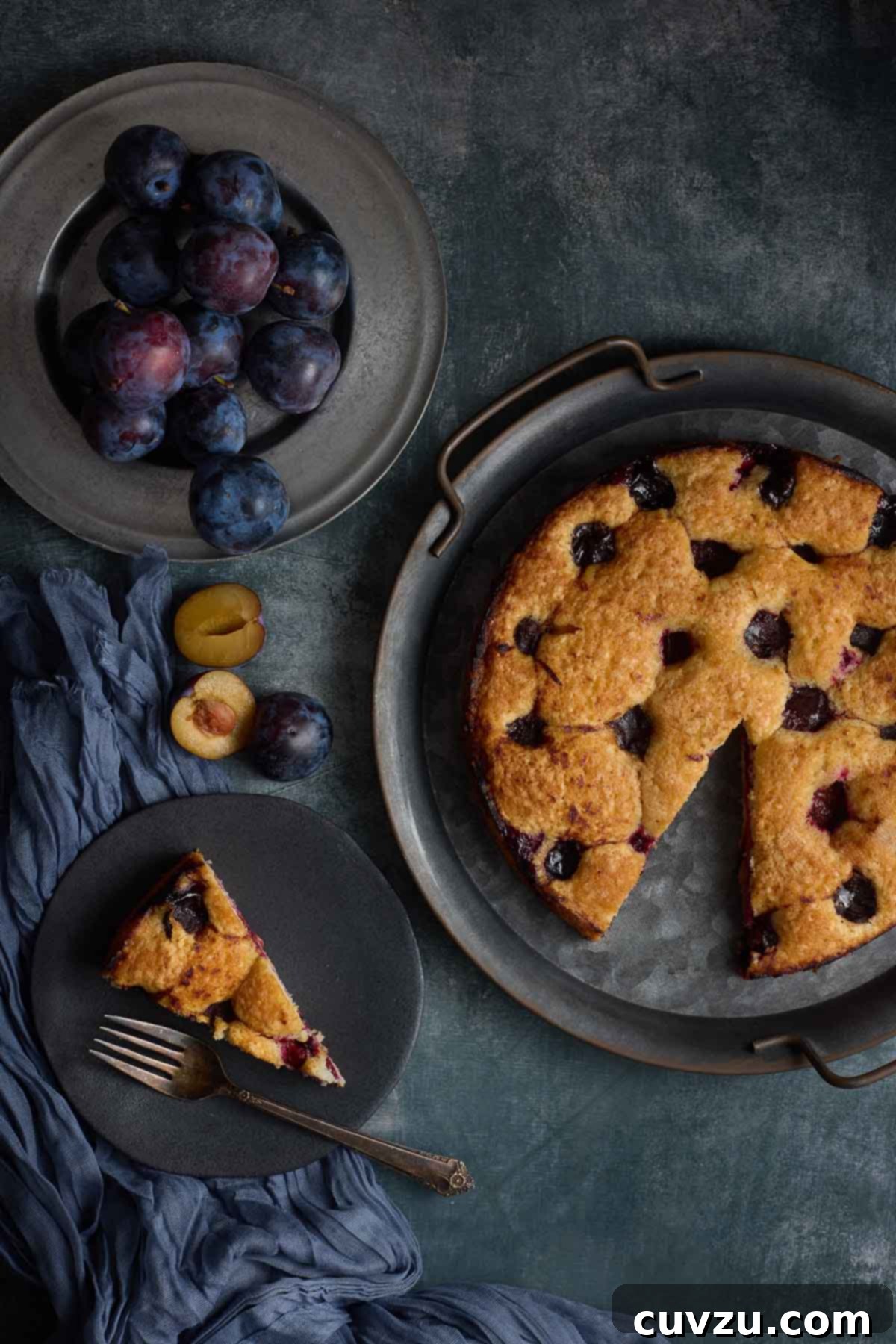
While this sensational plum torte is absolutely exquisite on its own—its buttery cake and jammy fruit a complete symphony of flavors—elevating it with a simple accompaniment can turn it into an even more decadent experience. A generous scoop of creamy, homemade vanilla ice cream creates a classic hot-and-cold contrast that is simply irresistible. For a touch of tropical flair, toasted coconut ice cream offers an unexpected yet harmonious pairing. And for those who prefer a lighter, airier complement, a dollop of freshly whipped cream adds a cloud-like softness that beautifully balances the torte’s richness. In essence, it’s about “gilding the lily”—taking something already perfect and making it even more extraordinary.
Storing Your Plum Torte for Maximum Freshness
One of the many joys of the plum torte is how well it keeps, allowing you to savor its deliciousness for days or even months.
Room Temperature: For immediate enjoyment, your freshly baked plum torte can be stored, covered loosely with plastic wrap or aluminum foil, on your kitchen counter for up to 5 days. Its dense, buttery nature helps it maintain its moistness and flavor. For best results, avoid direct sunlight and excessive humidity.
Freezer: To extend the life of your plum cake, it freezes beautifully! Once completely cooled, wrap individual slices (or the whole torte, if you prefer) tightly in plastic wrap, then place them into a freezer-safe bag or airtight container. It will keep wonderfully in the freezer for up to 3 months. When you’re ready to indulge, simply unwrap the frozen slices and let them thaw at room temperature for a few hours. A quick gentle reheat in a warm oven can also refresh the crust and warm the fruit beautifully, bringing it back to almost freshly baked glory.
Explore More Must-Bake Stone Fruit Dessert Recipes
Roasted Plums
25 mins
Plum Almond Cake
1 hr 30 mins
Fresh Peach Pie
1 hr
Plum Kuchen
4 hrs 30 mins
If you’re feeling particularly posh and want an elegant conclusion to a refined dinner, why not try your hand at beautifully roasted plums? These sophisticated delights transform simple fruit into a luxurious experience. Or, if you find yourself with an abundance of plums and a desire for another moist and tender cake perfect for sharing, dive into this easy almond cake studded with plums. For those evenings when only a generous slice of cozy nostalgia will do, there’s nothing quite like a rustic Southern peach pie—pure comfort baked into a pan. And should you still have a delightful surfeit of ripe plums and an insatiable hankering to continue your baking adventures, allow me to introduce you to this charming crumb cake-like plum kuchen. Happy baking, my little plums!
Plum Crazy About This Recipe? Share Your Thoughts!
If you’ve made this beloved Marian Burros plum torte recipe, I’d be absolutely delighted to hear from you! Please consider leaving a review, a star rating, and even sharing your best photo in the comments section below. Your feedback and culinary creations truly inspire me. –David 🀢
Featured Review
“This plum torte is insanely delicious and wonderfully easy and quick to make! I grated the zest of half of a lemon into the batter, and prefer only 1/4 teaspoon of cinnamon. Definitely a keeper!!”
— Heather
Plum Torte
David Leite
Print Recipe
Dessert
American
8
servings
272
kcal
15 minutes
1 hour
15 minutes
1 hour
30 minutes
Equipment
-
9-inch (23-cm) springform pan
-
Offset spatula
Ingredients
For the Cake
-
1 cup all-purpose flour -
1 teaspoon baking powder -
large pinch salt -
1 stick (4 oz) unsalted butter, room temperature, plus more for the pan -
3/4 to 1 cup granulated sugar, more or less, depending on the tartness of the plums -
2 large eggs -
12 Italian purple plums, halved and pitted, or 6 red plums, pitted and sliced into thick quarters
For the Topping
-
2 tablespoons granulated sugar -
1 teaspoon ground cinnamon -
1/2 teaspoon ground ginger, (optional) -
1/2 lemon
Instructions
-
1. Preheat your oven to 350°F (176°C). Generously butter a 9-inch springform pan, line the bottom with parchment paper, and butter the parchment as well.
-
2. In a large bowl, whisk together the 1 cup all-purpose flour, 1 teaspoon baking powder, and a large pinch of salt. Set aside.
-
3. In the bowl of a stand mixer fitted with the paddle attachment, or with a handheld mixer, beat the 1 stick (4 oz) unsalted butter and 3/4 to 1 cup granulated sugar (adjusting the amount based on your plums’ tartness) until the mixture is light in color and fluffy, about 3 to 5 minutes. Scrape down the sides of the bowl as needed.
-
4. Gradually add the prepared flour mixture to the butter-sugar mixture, mixing on low speed until just combined. Then, beat in the 2 large eggs, one at a time, mixing until each is fully incorporated and the batter is smooth. Be careful not to overmix.
-
5. Spoon the thick batter evenly into the prepared springform pan. Use an offset spatula to smooth the top. Arrange the 12 Italian purple plum halves (or red plum quarters), skin side up, on top of the batter. Place them in a visually appealing pattern.
-
6. In a small bowl, combine the 2 tablespoons granulated sugar, 1 teaspoon ground cinnamon, and the optional 1/2 teaspoon ground ginger. Sprinkle this spice-sugar mixture evenly over the plums.
-
7. Squeeze the juice from the 1/2 lemon generously over the top of the fruit and batter. Adjust the amount of lemon juice to complement the natural tartness of your specific plums.
-
8. Bake the plum torte for 50 to 60 minutes, or until the cake is golden brown, a wooden skewer inserted into the cake portion comes out clean, and the plums are tender and bubbling beautifully. Cool the torte on a wire rack before carefully unmolding and slicing.
Notes for Success
- Plum Perfection: If your plums are not top-tier in flavor, try this trick: lightly sprinkle the cut sides of the plums with salt and let them sit for 30 minutes before arranging them on the batter. This simple step helps to draw out and concentrate their natural sweetness.
- Dealing with Juicy Fruit: Extra ripe or particularly juicy plums may release more moisture, potentially making the cake seem underbaked in the center. If this happens, extend the baking time by an additional 5-10 minutes until a toothpick inserted into the cake comes out clean.
- Thick Batter Alert: Don’t be alarmed by the batter’s consistency—it’s meant to be thick! Just ensure you spread it evenly into the pan, making sure the top is smooth before adding the plums.
- Customize Your Spices: This plum cake is incredibly adaptable. Feel free to add warm spices like nutmeg, cardamom, allspice, or a splash of vanilla extract directly into the batter for an extra layer of flavor.

Adapted From
The Essential New York Times Cookbook
Buy On Amazon
Nutrition Facts
Calories: 272 kcal
Carbohydrates: 37 g
Protein: 4 g
Fat: 13 g
Saturated Fat: 8 g
Monounsaturated Fat: 4 g
Trans Fat: 0.5 g
Cholesterol: 77 mg
Sodium: 25 mg
Fiber: 1 g
Sugar: 24 g
Nutrition information is automatically calculated and should be used only as an approximation.
Tried this recipe?
Mention @leitesculinaria or tag #leitesculinaria!
Hear From Our Recipe Testers: Real Feedback on the Plum Torte
Don’t just take my word for it! Our dedicated team of recipe testers have put this plum torte through its paces, and their rave reviews speak volumes. Read their honest feedback, tips, and experiences below.
Elizabeth and Lena Alvarez
“We absolutely adore this Italian plum torte! The preparation, from measuring ingredients to prepping the plums and following the method, took a mere 20 minutes – incredibly fast. We decided to use 2 teaspoons of lemon juice, as our beautiful plums, while lovely, weren’t as intensely flavorful as we’d hoped.
After baking for about 45 minutes, the plums looked perfectly jammy and bubbly. However, upon testing, the cake interior was still a bit ‘gloppy,’ so we popped it back in for another 7 minutes. All the while, our home was filled with the most intoxicating aroma of cinnamon, plums, and baking cake goodness. Watching the batter puff up so beautifully around the plums as it baked was pure joy.
This is undeniably a delicious and quick summer cake. Whether served warm with a dollop of cream or a scoop of ice cream, or simply enjoyed on its own, this dessert is an absolute delight. It’s a definite keeper in our rotation!”
Daniela Trapani
“Every single person who tried this plum torte exclaimed, ‘MMMMmmm!’ It was an enormous hit! The plums delivered a wonderfully tart burst of flavor, perfectly complementing the moist and sweetly tender cake. Even one of my testers, who typically claims ‘doesn’t like plums,’ devoured it enthusiastically. This recipe is absolutely a keeper.
It came together so quickly and easily, which is always a bonus. I used about 5 large red plums. My initial instinct for a plum tart would usually be prune plums, but since they weren’t available, I opted for the larger, round red plums, and they cooked up deliciously! I cut them into small wedges and arranged them in beautiful concentric circles, which made for a stunning presentation.
I decided to omit the lemon juice as my plums were already quite tart, and I’m glad I did; the final torte achieved a perfect balance of sweet and tart without it. For the cinnamon-sugar topping, I sprinkled it as instructed, but next time I think I’ll pre-mix the cinnamon and sugar more thoroughly before sprinkling. The visible brown cinnamon on top, while delicious, wasn’t quite as aesthetically appealing as a uniform blend would be. This recipe’s versatility means it would be fantastic with almost any kind of fruit you have on hand, making it a must-have for summer baking.”
Jessica Berndt
“This was my very first time making a plum dessert, which is rather surprising given that my husband absolutely adores plums! But without a doubt, this dessert will be making repeat appearances in our kitchen. It was shockingly easy to prepare.
Even with the task of cutting and pitting the plums, I think it took me only about 15 minutes to assemble everything before it went into the oven. When I finally took it out, it was a beautiful golden brown with the fruit bubbling enticingly. And the aroma? Absolutely heavenly. We enjoyed it for dessert last night, and both of us were so thrilled with how incredibly delicious it turned out! Its appearance is certainly rustic—I wouldn’t call it a ‘pretty’ dessert in the traditional sense, but it possesses a charming beauty all its own.
I truly crammed as much fruit as I possibly could into the pan, but I still couldn’t fit more than 6 plums. For the topping, I sprinkled the cinnamon through a sieve, and an extra half teaspoon covered the entire torte beautifully.
All that said, I absolutely loved the end result and will happily make this delightful torte again and again!”
Allison J.
“This plum torte has officially earned a permanent spot in my summer dessert rotation! We indulged in the torte while it was still warm from the oven, and it was perfectly delicious just as it was. However, I must confess, I especially enjoyed the leftover cake after it had been refrigerated, topped with a dollop of light vanilla yogurt – that was an absolute treat!
It proved to be the perfect solution for using up 8 rather rock-hard plums I had on hand. I was initially quite concerned they wouldn’t soften sufficiently, but after a good 55 minutes of baking, they were absolutely perfectly tender. (I also found myself needing to use a total of 2 tablespoons of sugar on top of the plums because they were so underripe and tart, which worked out perfectly.)
After experiencing this success, my mind immediately began buzzing with all the fun variations I can’t wait to try in the future. I’m particularly looking forward to baking this recipe with fresh apricots next time – I imagine it will be just as delightful!”
Pam Henderson
“This might just be my new favorite plum cake! It really is that good. It’s absolutely perfect for after dinner, wonderful as an afternoon snack with a cup of tea, or even a delightful treat for breakfast – truly versatile and satisfying at any time of day.
I don’t own a 9-inch springform pan, so I simply used parchment paper to line a regular 9-inch round cake pan, allowing the paper to extend a bit over the sides. Then, I just lifted the torte right out once it cooled. It worked absolutely perfectly and made for such an easy transfer!
It’s worth noting that my plums were on the smaller side, and I managed to fit them in just right. If you have larger plums, you might need to get a little creative with how you arrange them, perhaps slicing them thinner or quartering them. Either way, I promise it will be delicious! The plums I used were perfect in their natural sweetness, in my opinion, so I decided to omit the lemon juice entirely and only used about 1/2 cup of sugar in the batter. The result was pure perfection.”
Henry Tsai
“Utilizing ingredients you’re likely to already have in your pantry, this plum torte recipe is refreshingly simple and incredibly fast to assemble. The batter itself is remarkably versatile, allowing for the plums to be easily swapped out for other seasonal stone fruits, making it a truly adaptable dessert.
The most challenging aspect, honestly, is the waiting game – first for the relatively long bake time, and then for the torte to cool once it’s out of the oven. But I can assure you, the wait is definitely worth every single minute.
The torte is absolutely delicious by itself, offering a delightful balance of sweet cake and jammy fruit. However, for those looking to elevate the experience, pairing it with a dollop of freshly whipped cream or a scoop of your favorite vanilla ice cream truly takes it to the next level of indulgence.”
Sarina Mohanty
“A wonderfully simple and utterly delicious stone fruit recipe. The torte came out marvelously moist and hit just the right note of sweetness – not too overpowering, but perfectly balanced.
I decided to experiment and substituted 1 1/2 cups of fresh blueberries for the plums and also opted to eliminate the lemon juice given the blueberries’ natural sweetness. The texture of my batter was quite unique, resembling a pate choux dough, so I spread it with a spatula until it was about an inch thick. It continued to spread beautifully and fill the pan once it was in the oven, creating a lovely even cake.
While you might be able to get 8 to 10 servings from this, I suspect you’ll likely find yourselves handing out seconds! So, if you’re planning for a larger crowd, don’t count on feeding more than 4 to 6 people generously. It’s simply too good to resist a second slice!”