Mastering the Art of Roasting Bell Peppers: Grill, Oven, and Stovetop Techniques
Learning how to roast bell peppers is an invaluable culinary skill that will elevate your everyday cooking and add a touch of gourmet flavor to countless dishes. Whether you prefer the smoky char of a grill, the steady heat of an oven, or the direct flame of a stovetop, achieving perfectly roasted bell peppers is simpler than you might imagine. This comprehensive guide will walk you through each method, ensuring you master this essential technique and unlock a world of delicious possibilities in your kitchen.
Knowing how to roast bell peppers is akin to learning fundamental life lessons – as indispensable as tying your shoelaces or remembering polite expressions. You can roast them on the grill, over a gas burner, or in the oven, and the delicious, versatile results are consistently superb, making them an essential addition to your cooking repertoire. Dive in and discover how to transform ordinary peppers into extraordinary culinary ingredients.
Why Roasted Bell Peppers Are a Culinary Game-Changer
Roasted bell peppers are more than just a vegetable; they’re a flavor powerhouse that can transform ordinary meals into something special. Here’s why this simple preparation technique deserves a permanent spot in your kitchen:
- Intensified Sweetness and Depth: Roasting caramelizes the natural sugars in bell peppers, bringing out a profound sweetness that raw peppers simply can’t match. This process also adds a complex, smoky depth of flavor that is incredibly appealing.
- Versatile Ingredient: Once roasted and peeled, bell peppers become incredibly versatile. They can be puréed into sauces, chopped into salads, layered onto sandwiches, blended into dips, or added to pasta dishes, omelets, and casseroles. Their soft texture and rich flavor complement a wide array of cuisines.
- Enhanced Texture: Roasting softens the pepper flesh to a silky, tender consistency while creating a beautifully charred exterior. This contrast in texture makes them a delight to eat.
- Nutritional Boost: Bell peppers are packed with vitamins (especially C and A) and antioxidants. Roasting helps to break down the cell walls, potentially making some nutrients more accessible and digestible, while retaining their healthy properties.
- Easy to Prepare: Despite their gourmet appeal, roasted bell peppers are remarkably easy to make with minimal hands-on time, regardless of the method you choose.
Choosing the Best Bell Peppers for Roasting
While any bell pepper can be roasted, selecting the right ones ensures the best flavor and texture. Here’s what to look for:
- Color Matters (for flavor): Red, orange, and yellow bell peppers are sweeter than green ones due to being fully ripened. Green peppers have a more pungent, slightly bitter flavor, which can also be delicious when roasted, offering a different profile. Choose the color based on your desired flavor outcome.
- Firmness and Freshness: Select peppers that are firm to the touch, with smooth, shiny skin. Avoid any with soft spots, wrinkles, or blemishes, as these indicate they are past their prime.
- Weight: Heavier peppers tend to be juicier and thicker-walled, which is ideal for roasting as they retain more flesh after charring.
- Size and Shape: Look for peppers that are relatively uniform in size for even cooking. Oddly shaped peppers are fine, but might require more attention during turning to ensure even charring.
Essential Equipment for Roasting Bell Peppers
You don’t need fancy gadgets to roast bell peppers, but a few basic tools will make the process smoother and safer:
- Long-Handled Tongs: Indispensable for safely turning peppers over a flame, on a grill, or under a broiler without burning your hands.
- Baking Sheet (for oven/broiler): A sturdy baking sheet lined with foil or parchment paper makes cleanup easier.
- Grill Grates (for grilling): Ensure they are clean and well-oiled to prevent sticking.
- Brown Paper Bag or Heatproof Bowl with Plastic Wrap: Crucial for the steaming process after roasting, which helps loosen the skins for easy peeling.
- Paring Knife and Cutting Board: For deseeding, deribbing, and peeling the peppers.
Roasting Methods: A Detailed Guide
Each method imparts a slightly different character to the roasted peppers, from intense smokiness to a more subtle, sweet char. Choose the one that best suits your equipment and preference.
Method 1: Roasting Bell Peppers on the Grill
Grilling provides a wonderful smoky flavor that’s hard to replicate with other methods. This is often the preferred choice for a deep, rich char.
- Prepare the Grill: Preheat your grill to high heat. Ensure the grates are clean.
- Place Peppers on Grill: Place the whole bell peppers directly on the hot grill rack, over the direct flame.
- Char and Turn: Cook, turning frequently with long-handled tongs, until the peppers are entirely blistered, softened, and blackened on all sides. This process typically takes 8-15 minutes, depending on the grill’s heat and pepper size. Don’t be afraid of the black char – it’s crucial for flavor and makes peeling easier.
- Remove and Steam: Once thoroughly charred, carefully remove the peppers from the grill.
Method 2: Roasting Bell Peppers in the Oven (Broiler)
The broiler method is excellent for achieving a quick, intense char similar to grilling, without needing an outdoor setup.
- Preheat Broiler: Adjust an oven rack so the bell peppers will be a few inches (about 3-6 inches) from the heating element. Preheat your broiler to high.
- Prepare Peppers: Place the whole bell peppers directly on a baking sheet.
- Broil and Turn: Place the baking sheet under the hot broiler. Cook, turning frequently with tongs, until the bell peppers are blistered, softened, and blackened on all sides. This usually takes 10-20 minutes, varying with your broiler’s intensity. Keep a close eye on them to prevent burning.
- Remove and Steam: Once charred, carefully remove the peppers from the oven.
Alternative Oven Method (Conventional Roasting): If you prefer a less charred, more uniformly soft pepper, you can roast them at a higher conventional oven temperature (e.g., 400°F / 200°C) for 30-45 minutes, turning occasionally, until soft and slightly collapsed. While this method still produces delicious results, it may not create the same distinct smoky flavor or easy-to-peel skin that direct charring methods do.
Method 3: Roasting Bell Peppers on the Stovetop
For those without a grill or broiler, or when roasting just one or two peppers, a gas stovetop burner is a surprisingly effective method.
- Prepare Burner: Turn a gas stovetop burner to high.
- Roast Single Peppers: Grasp a single bell pepper with long-handled tongs and hold it directly over the flames.
- Char and Turn: Continuously turn the pepper, allowing the flames to blister and blacken its skin on all sides. This is a quicker process, typically taking 5-10 minutes per pepper.
- Remove and Steam: Once fully charred, carefully move the pepper away from the flame.
The Crucial Steaming and Peeling Process
This step is essential for achieving smooth, tender roasted peppers by loosening the charred skin.
- Steam the Peppers: Immediately after roasting, transfer the hot, charred bell peppers into a brown paper grocery bag. Roll the top of the bag tightly several times to seal it. Alternatively, place the peppers in a heatproof bowl and cover it tightly with plastic wrap.
- Rest and Steam: Let the bell peppers steam for approximately 10 to 15 minutes. The trapped steam will help to sweat the peppers and loosen their skins.
- Prepare for Peeling: Once cooled enough to handle, remove the peppers from the bag or bowl. Grab a small paring knife and a cutting board.
- Halve and Clean: Halve each bell pepper lengthwise. Carefully cut out and discard the stem, seeds, and any white ribs from the interior. These parts are bitter and fibrous.
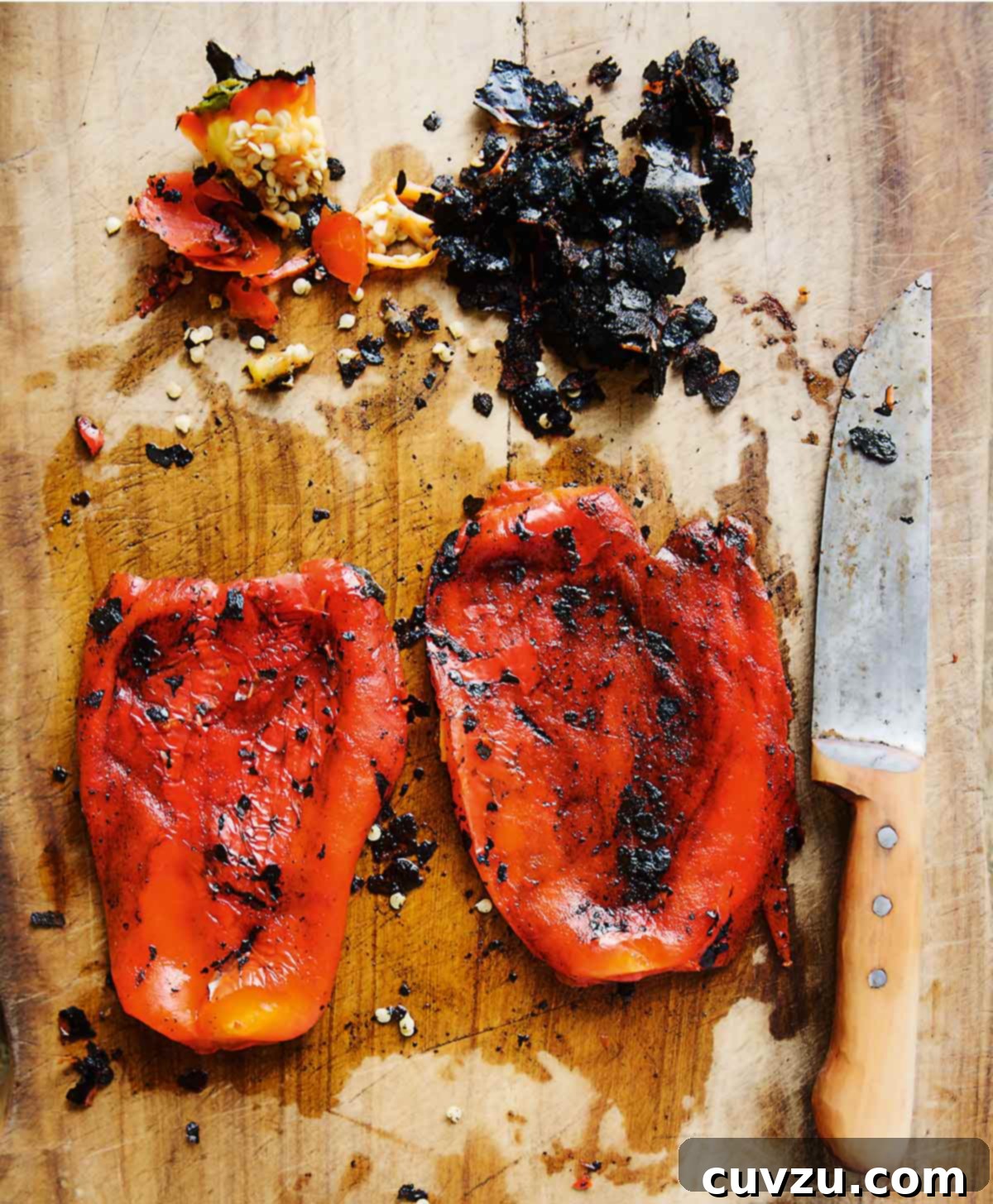
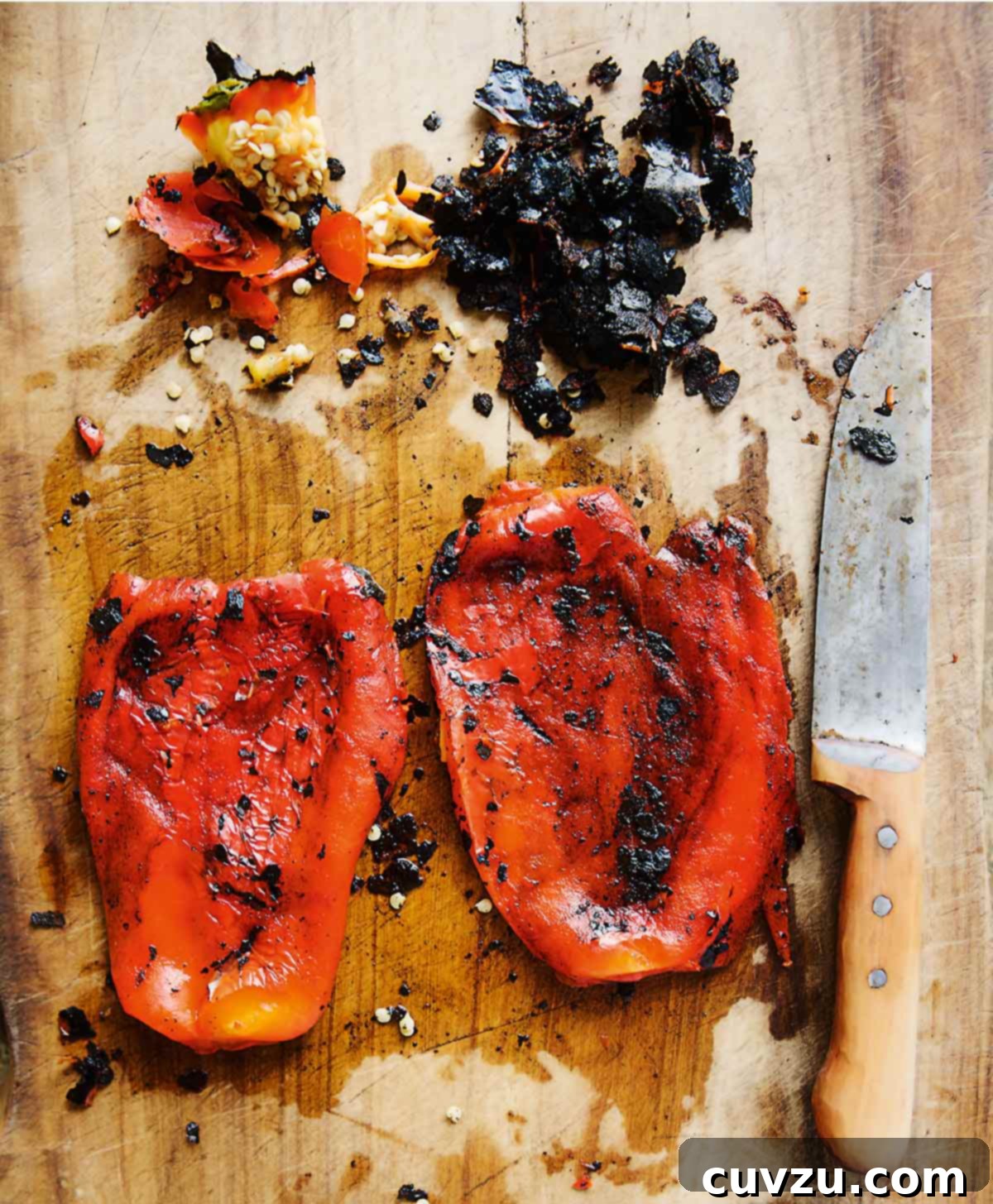
- Flatten and Peel: Place the bell pepper, interior side down, on your cutting board. Gently flatten it with the palm of your hand. Using your fingers, pull the charred peel off. For stubborn patches, use the sharp edge of your paring knife to gently scrape or cut them away. It’s perfectly fine, and even desirable, to leave some small bits of black char on the pepper for an added layer of smoky flavor. Avoid rinsing the peppers under water, as this washes away some of the delicious roasted essence.
Ingredients for Roasted Bell Peppers
This simple technique requires minimal ingredients, allowing the natural flavor of the peppers to shine.
- Bell Peppers: Any color (red, yellow, orange, green) will work beautifully. Choose fresh, firm peppers.
- Olive Oil (optional): A drizzle of olive oil can be used before roasting for a slightly richer flavor and to help with charring, or after roasting for preservation.
Storage and Preservation
Once roasted, bell peppers can be stored for later use, making them an excellent meal prep ingredient.
- Refrigeration (Short-Term): Store peeled and deseeded roasted bell peppers in an airtight plastic container in the refrigerator for up to 1 week.
- Preserving in Olive Oil: For extended flavor and a slightly longer shelf life (still refrigerated), pack the roasted bell peppers into a clean jar and cover them completely with olive oil. This infused oil can also be used in dressings or other dishes. Ensure all peppers are submerged to prevent spoilage. Store in the refrigerator for up to 2-3 weeks.
- Freezing (Long-Term): For longer storage, spread roasted and peeled bell pepper strips or halves on a baking sheet and freeze until solid. Then transfer them to freezer-safe bags or containers. They will keep in the freezer for several months, ready to be added to soups, stews, or sauces.
Creative Uses for Your Homemade Roasted Bell Peppers
The culinary possibilities for roasted bell peppers are vast. Here are just a few ideas to get you started:
- Sauces: Purée them into a vibrant romesco sauce, a rich pasta sauce, or a flavorful spread for bruschetta.
- Salads: Chop and toss them into green salads, grain salads, or potato salads for a burst of color and flavor.
- Sandwiches and Wraps: Layer strips onto sandwiches, paninis, or wraps for added sweetness and moisture. They pair wonderfully with cheeses, grilled chicken, or hummus.
- Dips and Spreads: Blend into creamy dips like muhammara (walnut and roasted pepper dip) or add to hummus for a roasted red pepper hummus.
- Pizza and Pasta Toppings: A classic addition to homemade pizzas, flatbreads, or tossed with hot pasta, garlic, and fresh herbs.
- Omelets and Frittatas: Add diced roasted peppers to eggs for a quick and flavorful breakfast or brunch.
- Soups and Stews: Incorporate into vegetable soups, chilis, or stews for a deeper, more complex base flavor.
- Antipasto Platters: Serve them simply dressed with a little olive oil, garlic, and herbs as part of an elegant appetizer spread.
Tips for Perfect Roasted Bell Peppers Every Time
- Don’t Overcrowd: Whether on the grill, in the oven, or on the stovetop, ensure peppers have enough space. Overcrowding can steam them rather than char them.
- Embrace the Char: The blackened skin is key. It’s where much of the smoky flavor comes from, and it’s essential for easy peeling. Don’t worry if they look “burnt.”
- Steam Thoroughly: The steaming step is non-negotiable. Allow sufficient time for the skin to loosen. If skins are difficult to remove, steam for a few more minutes.
- Avoid Rinsing: Rinsing peeled peppers under water can wash away precious flavor and smoky oils. Scrape off stubborn bits instead.
- Experiment with Colors: Different colored peppers offer slightly different flavor profiles. Try roasting a mix of red, yellow, and orange peppers for a visually stunning and flavorful blend.
How to Roast Bell Peppers
Knowing how to roast bell peppers on the grill, in the oven, or on the stovetop is going to level up your everyday cooking game. It’ll also connect you with your inner culinary master. Here’s how to prepare delicious roasted bell peppers.
Author: David Leite
Recipe Details
- Course: Condiments
- Cuisine: American
- Servings: 4 servings (approx. 1 pepper per serving)
- Calories: 13 kcal per serving
- Prep Time: 25 minutes
- Total Time: 25 minutes
Equipment
- Long-handled tongs (optional, but highly recommended)
Ingredients
- Bell peppers (any color), as many as you’d like to roast
- Olive oil (optional, for flavor or storage)
Instructions
- Preheat a grill or a gas stovetop burner on high heat. If using a broiler, preheat it to high and adjust the oven rack so the bell peppers are a few inches from the heating element.
-
If using a grill: Toss the whole bell peppers onto the grill rack, directly over the heat, and cook, turning frequently with tongs, until blistered and blackened on all sides.
If using a gas stovetop burner: Roast a single bell pepper at a time by grasping it with tongs and holding it over the flames of a gas burner turned on high, turning occasionally, until blistered and blackened on all sides.
If using a broiler: Place bell peppers on a baking sheet. Cook under the broiler, turning frequently with tongs, until blistered and blackened on all sides. - Once charred, immediately transfer the hot bell peppers to a brown paper grocery bag and tightly close the bag by rolling the top over several times. Alternatively, place the charred bell peppers in a bowl and cover it tightly with plastic wrap. Let the bell peppers steam for about 10 to 15 minutes.
- Once cooled enough to handle, retrieve a paring knife and halve each bell pepper lengthwise. Cut out and discard the stem, seeds, and ribs (the white membranes). Place the bell pepper, interior side down, on a cutting board and flatten it with the palm of your hand. Gently pull the charred peel off with your fingers, using a sharp knife to scrape or to cut off any patches that don’t readily come off. It’s recommended to leave some small bits of black char for enhanced flavor. Avoid rinsing.
- Use the roasted peppers immediately in your recipes, or store them as described in the storage section above. If desired, you can pack the roasted bell peppers in olive oil to cover them completely for preservation.
Notes
Can I use this method on other peppers?
Absolutely! This roasting method is highly adaptable to various types of peppers. You’ll need to adjust the cooking time for smaller or more thin-skinned varieties. Most peppers benefit from a smoky, roasted flavor. For thin-skinned peppers, you might even find that they don’t need to be peeled at all after steaming, as their skins can become tender enough to eat. Use your judgment; smaller peppers often become tender enough to leave unpeeled.
Adapted From
Country Cooking of Italy
Buy On Amazon
Nutrition
Serving: 0.25 pepper
Calories: 13 kcal
Carbohydrates: 2 g
Protein: 1 g
Fat: 1 g
Saturated Fat: 1 g
Sodium: 2 mg
Fiber: 1 g
Sugar: 2 g
Nutrition information is automatically calculated, so should only be used as an approximation.