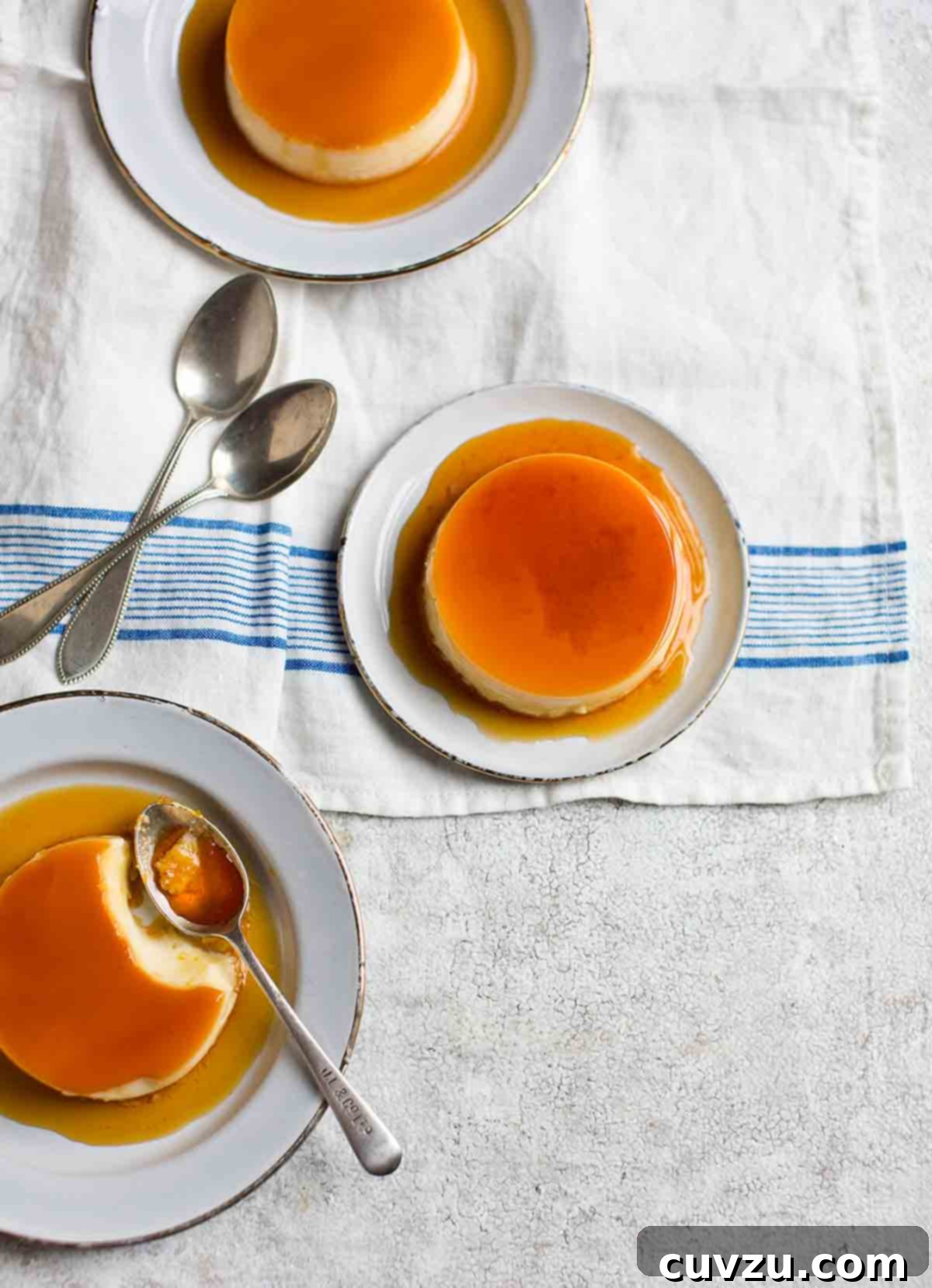
This easy crème caramel, with its delicate, silky texture, is as simple to prepare as it is sophisticated to enjoy. A true classic of French patisserie, it embodies elegance and timeless appeal, often reminiscent of its Spanish counterpart, flan.
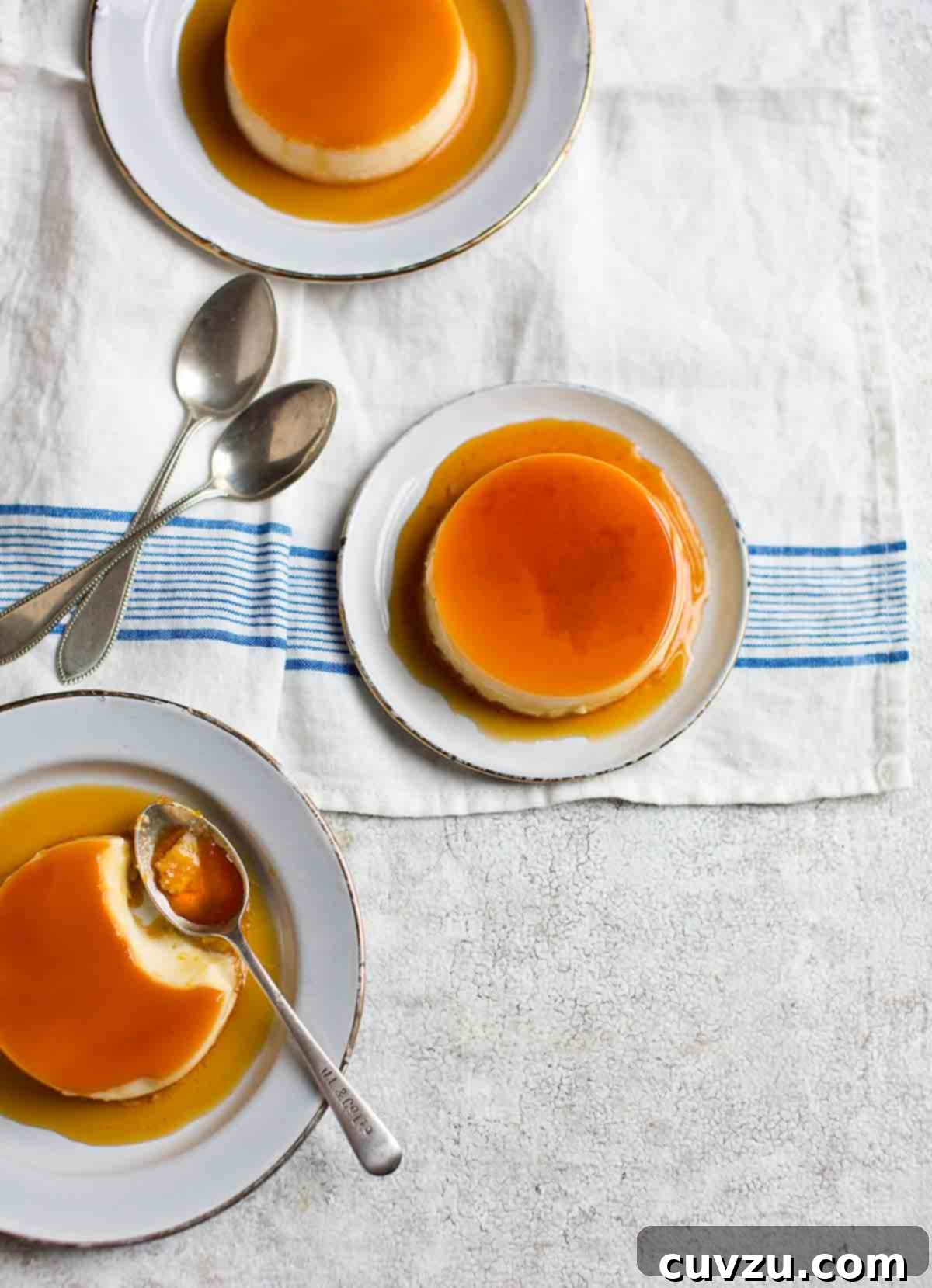
“I find this dessert such a simple comfort,” remarks author Edd Kimber, perfectly capturing the essence of this delightful treat. “Perhaps it is the fond memories of eating it as a child, or maybe it’s the incomparable texture that truly captivates.”
Indeed, the allure of crème caramel is multifaceted, combining nostalgic charm with a refined simplicity. Its silken mouthfeel and the exquisite interplay of delicate vanilla-infused custard with a luscious, flowing caramel topping create an unforgettable culinary experience that transcends mere dessert. One taste, and we are confident you will wholeheartedly concur with its widespread adoration.

Why Our Testers Raved About This Crème Caramel Recipe
Our dedicated recipe testers were absolutely enchanted by this creamy, classic French dessert. Their feedback consistently described its texture as “perfect“—a harmonious balance of firm yet yielding, wonderfully smooth and exquisitely silken. Beyond the impeccable mouthfeel, the testers particularly adored the exquisite fusion of caramel and vanilla flavors, which gracefully infused the rich custard, creating a truly memorable and aromatic taste profile.
As Chiyo Y. eloquently put it in her comment, “Simple, elegant, and delicious—if you haven’t had crème caramel in a while, you’ll enjoy being reintroduced to this unassuming classic.” Her sentiment perfectly encapsulates the enduring and captivating appeal of this dessert, a testament to its timeless quality.
The Enduring Charm of Crème Caramel: A Timeless French Dessert
Crème caramel, often affectionately referred to as caramel custard or even flan in various cultures, stands as a testament to the elegance of French pastry. This classic dessert, with its shimmering layer of golden caramel cascading over a delicate vanilla-infused custard, embodies both simplicity and profound sophistication. Its universal appeal lies in its comforting familiarity and its ability to evoke a sense of refined indulgence without requiring overly complex culinary techniques.
The origins of crème caramel are somewhat debated, with culinary historians tracing similar custard preparations back centuries across Europe. However, it was in France that the dessert was perfected into the iconic form we know today, emphasizing smooth custard and a translucent caramel glaze. While often associated with French culinary traditions, variations of this baked custard dessert can be found across the globe, from Spanish flan to Latin American “flan de leche,” each regional iteration showcasing the versatility of the core concept. This particular easy crème caramel recipe aims to simplify the preparation process, making it accessible even for novice bakers, while ensuring a truly authentic and delicious result that invites everyone to experience the joy of mastering a patisserie classic at home.
Mastering the Ingredients: Key Notes for a Flawless Crème Caramel
Achieving the perfect crème caramel starts with a precise understanding of the role each ingredient plays in creating its signature texture and flavor. This recipe prioritizes quality and thoughtful preparation to ensure a silky-smooth custard and a rich, amber caramel topping that will impress every time.
- Superfine Sugar: The Secret to Smoothness. Also known as caster sugar, superfine sugar is distinguished by its finely granulated texture. This characteristic allows it to dissolve significantly more quickly and evenly than regular granulated sugar. This property is crucial for two reasons: firstly, it helps in creating a perfectly smooth caramel without any gritty residue, and secondly, it ensures the sugar integrates seamlessly into the custard base, preventing any unwanted crystallization or graininess. If superfine sugar isn’t readily available at your local supermarket, don’t despair! You can easily create your own by pulsing regular granulated sugar in a food processor or a high-speed blender for a few seconds. The goal is a fine, uniform consistency, similar to coarse sand, but be careful not to over-process it into powdered sugar, as this can affect its behavior in the recipe.
- Vanilla: The Heart of the Flavor Profile. The subtle yet profound aroma and taste of vanilla are absolutely paramount in crème caramel. For the most authentic, complex, and intense flavor, incorporating a whole vanilla bean is highly recommended. To do this, simply slice the bean lengthwise down the middle and use the back of a knife to scrape out the tiny, fragrant black seeds. These seeds should be infused directly into the milk and cream mixture. As an excellent alternative, a high-quality vanilla bean paste offers a comparable depth of flavor and often contains visible vanilla specks, which add an appealing gourmet touch to the finished dessert. While regular vanilla extract can be used as a last resort, be aware that its flavor will be notably milder and less nuanced, potentially diminishing the custard’s characteristic warmth and complexity.
- Eggs: The Custard’s Essential Foundation and Thickener. Eggs are not merely an ingredient; they are the primary structural component and setting agent for this delicate custard. The proteins within both the egg whites and yolks coagulate gently during the controlled baking process, transforming the liquid milk and cream mixture into a firm yet wonderfully wobbly custard. For consistently reliable results, it is absolutely vital to use large or extra-large eggs as specified in the recipe. Substituting with smaller eggs can lead to an unset or overly delicate custard due to an insufficient amount of protein to properly thicken the mixture. Additionally, ensuring your eggs are at room temperature aids in better emulsification with the other ingredients, contributing significantly to a smoother final product and a more uniform texture.
- Whole Milk & Heavy Cream: For Unparalleled Richness and Silky Texture. The thoughtful combination of whole milk and heavy cream provides the ideal balance of richness and luxurious texture to the crème caramel custard. Whole milk contributes to the classic, familiar custard base, while the higher fat content of heavy cream adds an unparalleled silkiness and depth of flavor. This fat content is crucial in preventing the custard from becoming rubbery or overly firm, instead promoting that desirable melt-in-your-mouth quality. Opt for good quality dairy products to ensure the best flavor, as these simple ingredients are the stars of the show.
Step-by-Step Guide to Making Easy Crème Caramel
Follow these detailed, easy-to-understand instructions to create a truly irresistible crème caramel. Precision and patience are your allies for mastering this elegant classic French dessert.
- Prepare Your Baking Environment: Begin by precisely preheating your oven to a gentle 300°F (150°C). This relatively low, consistent temperature is absolutely crucial for the slow and even cooking of the delicate custard in a water bath, which prevents it from curdling or developing an undesirable porous texture. Carefully arrange four 3 1/2-inch ramekins (or other heatproof custard cups of a similar size and capacity) neatly inside a larger roasting pan. This setup is essential for creating the water bath, also known as a bain-marie.
- Crafting the Perfect Caramel: In a small, heavy-bottomed saucepan, combine the measured superfine sugar and cold water. Place the pan over medium-high heat, stirring gently only until the sugar completely dissolves and the liquid becomes perfectly clear. Once the sugar is dissolved, it is imperative to *resist the urge to stir further*, as introducing a spoon can encourage sugar crystals to form, leading to a grainy caramel. Allow the syrup to simmer undisturbed, watching it carefully as it progresses from clear to a pale gold, then gradually to a rich, dark copper color. This transformation typically takes anywhere from 4 to 7 minutes, but watch vigilantly. The very moment it achieves that deep amber hue, immediately remove the pan from the heat. Carefully and swiftly pour the hot caramel evenly into the bottom of each prepared ramekin. Be quick, as caramel sets rapidly. Allow these caramel-lined ramekins to cool and set completely while you proceed with making the custard.
- Infusing the Milk and Cream with Vanilla: If you are using a whole vanilla bean, take a sharp knife and slice it lengthwise down the middle. Use the dull side of the knife to scrape out the tiny, fragrant black seeds. Place these scraped seeds (or the vanilla bean paste if using) into a medium saucepan. Now, add the whole milk and heavy cream to the pan. Heat the mixture gently over medium-low heat. The goal is to bring it to a hot, steaming state, just shimmering with heat, but crucially, not boiling. This slow and gentle heating process allows the vanilla flavors to deeply infuse into the dairy, creating a more aromatic and flavorful custard. Aim for approximately 5 to 7 minutes of gentle heating to achieve optimal infusion.
- Assembling the Silken Custard Base: While the milk mixture is gently warming on the stove, combine the remaining superfine sugar and the large or extra-large eggs in a separate mixing bowl. Whisk them together thoroughly until the mixture becomes pale yellow and slightly frothy. Once the milk and cream mixture has reached the desired temperature, remove it from the heat. Begin to slowly pour the hot milk mixture into the egg mixture in a thin, steady stream, whisking constantly and vigorously. This critical technique, known as tempering, gradually raises the temperature of the eggs, preventing them from scrambling and ensuring a smooth, cohesive custard base. Continue whisking until all ingredients are fully combined and the mixture is perfectly smooth.
- Baking to Perfection in a Water Bath: Using a ladle, carefully divide the tempered custard mixture equally among the caramel-lined ramekins. Next, place the roasting pan containing the ramekins into the preheated oven. Carefully pour enough hot water (some testers prefer cold water to minimize oven temperature fluctuations, but hot water generally speeds up the process slightly) into the roasting pan so that it reaches halfway up the sides of the ramekins. This water bath (bain-marie) creates a gentle, moist, and incredibly even heat environment around the custards, which is essential for ensuring they bake slowly and develop their signature smooth, creamy texture without developing cracks or becoming rubbery. Bake for approximately 30 to 45 minutes, or until the edges of the custards are set, but the very centers still exhibit a slight, delicate wobble when gently shaken. An instant-read thermometer inserted into the center should ideally register between 170°F and 175°F (76°C to 79°C).
- Cooling and Chilling for Optimal Set: Once baked to perfection, carefully remove the roasting pan from the oven. Using heat-resistant tongs or sturdy oven mitts, meticulously lift each ramekin out of the water bath and place them onto a wire rack to cool completely to room temperature. This gradual cooling prevents any sudden temperature changes that could affect the custard’s texture. Once entirely cool, cover each ramekin tightly with plastic wrap and transfer them to the refrigerator to chill thoroughly, ideally overnight. This extended chilling period is absolutely essential for the custard to fully set, firm up, and for the caramel at the bottom to liquify and transform into its signature runny, syrupy consistency.
- Flawless Unmolding and Serving: To serve your beautifully chilled crème caramel, and for a pristine presentation, gently run a thin, sharp knife around the entire inner edge of each ramekin, pressing lightly against the side to help loosen the custard from the mold. Next, place a serving plate upside down directly on top of the ramekin. Holding both the plate and ramekin firmly together, carefully but confidently invert them in one swift motion. The molded custard should gracefully “plop” out onto the plate. Allow a few moments for all of the luscious caramel syrup from the bottom of the ramekin to drizzle down and beautifully coat the top and sides of the custard before lifting the empty ramekin. This ensures you capture every last drop of that delicious, amber sauce. Serve immediately and savor every silky, sweet bite!
Common Questions About Crème Caramel
Absolutely! Crème caramel is an ideal make-ahead dessert, which makes it perfect for entertaining guests or for easy meal prepping. It can be baked, allowed to cool completely, and then refrigerated in its individual ramekins, tightly covered with plastic wrap, for up to 3 days before serving. In fact, chilling the crème caramel overnight is highly recommended for the best possible texture and flavor development, allowing the custard to fully set and the caramel to achieve its perfectly syrupy consistency. Always remember to keep them refrigerated until you are ready to unmold and present this delightful dessert.
While both are exquisite French custard-based desserts, crème caramel and crème brûlée have distinct characteristics that set them apart. Crème caramel features a layer of liquid caramel syrup that is poured into the bottom of the mold before the custard mixture is added and baked. When the dessert is inverted, this runny, golden syrup beautifully coats the top of the smooth, delicate custard, creating a glistening glaze. In contrast, crème brûlée (meaning “burnt cream” in French) is a rich custard served in a shallow dish, which is then topped with a layer of granulated sugar. This sugar is torched or broiled just before serving, causing it to melt and then caramelize into a hard, brittle, glass-like crust that cracks satisfyingly with the tap of a spoon. The caramel in crème caramel is made first and becomes a sauce, whereas the caramel on crème brûlée is created directly on top of the baked custard, providing a textural contrast.
Unmolding crème caramel for a pristine and elegant presentation is simpler than it seems, requiring just a few gentle steps. First, ensure the custard is thoroughly chilled, preferably overnight, as this extended cooling period significantly helps it firm up and release cleanly from the ramekin. To begin, gently run a thin, sharp knife around the entire inner edge of each ramekin, pressing lightly against the side to loosen the custard without marring its surface. Next, place your chosen serving plate upside down directly on top of the ramekin. Using both hands, carefully but confidently invert the plate and ramekin together in one swift motion. The molded custard should gently “plop” out onto the plate. Allow a moment for all of the luscious caramel syrup from the bottom of the ramekin to fully drizzle down and elegantly coat the custard before carefully lifting the empty ramekin. This ensures you capture every precious drop of that delicious, amber sauce, making for a truly beautiful presentation.
Expert Tips and Troubleshooting for Crème Caramel Success
Even for experienced bakers, making crème caramel can present a few challenges. Here are some expert tips to ensure your dessert turns out perfectly every time, along with effective solutions for common issues you might encounter.
- Caramel Caution: Don’t Burn It! The caramel-making stage is arguably the most critical and demands your undivided attention. Once the sugar syrup begins to color, the process accelerates incredibly rapidly. The moment it achieves a beautiful dark copper, almost mahogany hue, immediately remove the pan from the heat. Caramel can transition from perfectly amber to burnt and irredeemably bitter in mere seconds. If it smells acrid or looks black, it’s always best to discard it and start fresh rather than compromising the entire dessert. Have your ramekins ready and pour the caramel quickly to prevent it from overcooking in the hot pan after removal from the heat.
- Preventing Caramel Crystallization: To effectively prevent unwanted sugar crystals from forming in your caramel, ensure the sugar is fully dissolved in the water before the syrup begins to boil vigorously. Once it starts boiling, it is crucial to avoid stirring the mixture. If you happen to observe any sugar crystals forming on the sides of the pan, you can gently brush them down into the boiling syrup using a pastry brush dipped in cold water.
- Ensuring a Silky-Smooth Custard: For the absolute silkiest and most refined texture, many professional chefs highly recommend straining the prepared custard mixture through a fine-mesh sieve before pouring it into the ramekins. While this particular recipe notes that this step can be skipped, straining effectively removes any tiny bits of cooked egg, undissolved sugar, or specks from the vanilla bean, guaranteeing an impeccably smooth and uniform custard free of imperfections.
- The Undeniable Importance of the Water Bath (Bain-Marie): Baking in a water bath is not merely a suggestion but an essential technique for custards. It creates a gentle, moist, and incredibly even heat environment around the ramekins, which is vital for preventing the edges of the custard from overcooking and becoming rubbery before the center sets. This method also significantly helps prevent the custard from cracking on the surface. Ensure the water in your roasting pan reaches at least halfway up the sides of your ramekins. As noted by some testers, using hot water in the bath from the start can help to minimize variations in baking time, though cold water is also effective.
- Spotting the Perfect Set: Resist the common urge to overbake your custards. The crème caramel is ideally done when the edges are set and firm, but the very center still retains a slight, delicate wobble when gently shaken. This delicate wobble is a good indication that the custard will continue to firm up beautifully as it cools and chills. An internal temperature of 170-175°F (76-79°C) is generally considered ideal for custard doneness. Overbaking can lead to a tough, porous, or curdled texture, so trust the wobble and your thermometer.
- The Overnight Chill is Key: While it may be tempting to serve your crème caramels sooner, allowing them to chill in the refrigerator overnight is absolutely crucial. This extended cooling period is essential for the custard to fully set and achieve its optimal firm-yet-creamy texture. Furthermore, it allows the hardened caramel at the bottom of the ramekin to completely liquify into its signature luscious, syrupy sauce, which is a hallmark of this classic dessert.
- Optimal Storage Practices: To maintain their freshness, perfect texture, and prevent them from absorbing any refrigerator odors, keep your prepared crème caramels in their individual ramekins, tightly covered with plastic wrap, in the refrigerator for up to 3 days. This makes them an excellent and convenient make-ahead dessert for any occasion.
- Naturally Gluten-Free: This delectable crème caramel recipe is naturally suitable for gluten-free diets, as it contains no flour or other gluten-containing ingredients. It offers a delicious and worry-free dessert option for those with gluten sensitivities or dietary preferences.
Explore More Delectable Dessert Recipes
If you’ve fallen in love with the classic appeal and elegant simplicity of crème caramel, you’ll surely enjoy exploring other sophisticated yet approachable dessert recipes from our extensive collection. Expand your culinary repertoire with these delightful treats that promise to impress your family and friends!
👇
Share Your Experience: Write a Review
We love to hear about your culinary adventures and successes! If you make this exquisite Crème Caramel recipe, or any other delightful dish from Leite’s Culinaria, please consider taking a moment to leave a review. Share your valuable thoughts, assign a star rating, and even upload your best photo in the comments section below. Your feedback and beautiful culinary creations truly inspire our community! –David
Crème Caramel
“I find this dessert such a simple comfort. It might be the most basic of baked custards, but it really is heaven on a plate. Perhaps it is the memories of eating it as a child, or maybe it’s the texture. Either way, it is a delicious, classic dessert that deserves to be brought back from the annals of “retro” and “old-fashioned” to sit proudly on our dinner tables once again.”
David Leite
Equipment
- Deep-fry, candy, or instant-read thermometer
- Four 3 1/2-inch ramekins (approx. 6 oz capacity each)
- Roasting pan (for water bath)
- Small, heavy-bottomed saucepan (for caramel)
- Medium saucepan (for milk mixture)
- Mixing bowls and whisk
- Fine-mesh sieve (optional, for an extra smooth custard)
- Wire rack (for cooling)
Ingredients
For the caramel
- 1/2 cup superfine sugar (or granulated sugar blitzed in a blender until finely ground but not powdery)
- 3 tablespoons cold water
For the custard
- 1 vanilla bean (split and scraped) or 2 teaspoons vanilla bean paste
- Generous 1 1/2 cups whole milk
- 3 1/2 tablespoons heavy cream
- 4 large or extra-large eggs
- Scant 2/3 cup superfine sugar
Instructions
Prepare the oven and ramekins
- Preheat the oven to 300°F (150°C). Place four 3 1/2-inch ramekins (or heatproof containers of a similar size) in a roasting pan.
Make the caramel
- Put the sugar and water in a small pan over medium-high heat, stirring occasionally, until the sugar has dissolved. Once the syrup is clear, stop stirring (this can cause crystallization) and let the pan remain over the heat, without touching it, until the sugar caramelizes, which may take anywhere from 4 to 7 minutes. The second that you have a caramel with a dark copper color, remove the pan from the heat and immediately pour it evenly among the prepared molds. (Be careful that the caramel doesn’t cook too far as it can burn easily.) Let the caramel puddles sit while you make the custard.
Make the custard
- Cut the vanilla bean, if using, in half and scrape out the seeds. Place the seeds or vanilla bean paste in a medium pan and add the milk and cream. Heat gently over medium-low heat until the mixture is hot but not boiling, 5 to 7 minutes.
- Meanwhile, place the eggs and sugar in a bowl and beat together until pale. Once the milk mixture has come to temperature, remove the pan from the heat and slowly pour the mixture over the eggs, stirring constantly.
- Using a ladle, divide this custard equally between the prepared ramekins. Put the roasting pan in the oven and add enough cold water so that it reaches halfway up the sides of the molds.
- Bake for 30 to 45 minutes, until the custards have set around the outside but still have a wobble in the center and register 170°F to 175°F (76°C to 79°C) on a deep-fry or candy or instant-read thermometer.
- Carefully remove the roasting pan from the oven. Lift out the custards and put them onto a wire rack to cool. Cover each ramekin with plastic wrap then transfer them to the refrigerator to chill overnight.
- To serve, use a knife to gently loosen the custards from the ramekins. Place a serving plate on top of each ramekin and invert it to turn the custards out. Make sure all the caramel drains from the ramekin onto the custard. Serve.
Notes
- Don’t burn the caramel: Immediately remove the pan from the heat when it turns a dark copper color. Caramel can burn very quickly, becoming bitter and unusable.
- Storage: Crème caramel can be stored in their ramekins, in the refrigerator, covered, for up to 3 days. This makes them an excellent make-ahead dessert for convenience.
- Dietary: This recipe is naturally suitable for gluten-free diets, offering a delicious option for those with gluten sensitivities.
- Custard Texture: For an exceptionally silky-smooth custard, consider straining the prepared custard mixture through a fine-mesh sieve before pouring it into the ramekins.
Adapted From
Patisserie Made Simple
Buy On Amazon
Nutrition Information (Approximate)
Serving: 1 serving
Calories: 336 kcal
Carbohydrates: 64 g
Protein: 3 g
Fat: 8 g
Saturated Fat: 5 g
Monounsaturated Fat: 2 g
Cholesterol: 30 mg
Sodium: 40 mg
Sugar: 65 g
Nutrition information is automatically calculated and should only be used as an approximation. Individual results may vary based on specific ingredients used and preparation methods.
Tried this recipe?
Mention @leitesculinaria or tag #leitesculinaria on Instagram! We’d love to see your delicious creations!
What Our Recipe Testers Had to Say: In-Depth Reviews
Our team of dedicated recipe testers rigorously evaluates each dish, and their invaluable insights provide real-world perspectives on how this Crème Caramel recipe performs in various home kitchens. Read their detailed feedback below to understand why this recipe is a true standout.
Linda Pacchiano
Having made crème caramel countless times throughout my culinary journey, I can confidently assert that this particular recipe stands out as one of the finest versions I’ve had the pleasure of preparing and tasting. Its apparent simplicity ingeniously belies its remarkably sophisticated results.
For my batch, I utilized standard 3-inch ramekins and was delighted to find that the recipe generously yielded six perfectly portioned servings. The texture of the custard was, without exaggeration, pretty much perfect. It struck that ideal, elusive balance of being firm enough to elegantly hold its inverted shape, yet wonderfully creamy and melt-in-your-mouth smooth. The delicate vanilla flavoring permeated the custard impeccably, offering a subtle yet profound aromatic note that truly elevated the entire dessert experience.
A crucial tip I must emphasize, based on my extensive experience, is to be exceptionally vigilant when making the caramel. Remove the pan from the stove the instant the caramel achieves that desired dark copper hue. Hesitate for even a few extra seconds, and it can quickly overcook, resulting in a bitter, unusable batch that would compromise the entire dessert. Furthermore, to halt the cooking process immediately and prevent any further darkening or setting, pour the hot caramel into the ramekins without delay.
I chose to serve my crème caramel with a generous dollop of freshly made whipped cream, which complemented its richness beautifully without overpowering it. During the vibrant berry season, I envision adding a scattering of fresh blueberries or sliced strawberries to the plate for a delightful burst of color and a touch of tartness, providing a wonderful contrast. The recipe specified large eggs, and I can confirm they worked absolutely fine, contributing significantly to the custard’s excellent and consistent set.
Ralph Knauth
This is a truly classic crème caramel recipe, remarkably straightforward and easy to prepare, making it accessible to bakers of all skill levels. Its inherent requirement for advance preparation is actually a huge convenience in my opinion; it eliminates any last-minute dessert stress when entertaining, allowing you to focus entirely on the main course. The end result is absolutely delicious—a definite keeper for my personal recipe collection.
I can confirm that regular large eggs worked perfectly for this recipe, yielding a well-set and creamy custard. For infusing the vanilla, I opted for a whole vanilla bean, carefully adding both the scraped seeds and the split pod to the milk and cream mixture. I allowed the mixture to come to a gentle simmer for approximately 5 minutes, then removed it from the heat and steeped it for an additional 15 minutes to fully infuse the rich vanilla flavor. Before proceeding with the custard assembly, I poured the mixture through a coarse sieve to efficiently catch and remove the vanilla pod and any lingering solids.
One notable observation during the baking process was that my custards took slightly longer to set than the time stated in the recipe’s general guidelines. After 30 minutes, they were still quite liquid in the center. It was only around the 40-minute mark that they began to show signs of setting, and I ultimately pulled the molds from the oven after approximately 50 minutes to achieve the desired consistency. I suspect that using hot water in the water bath from the very beginning, instead of cold water, might help to standardize baking times, as it would reduce the initial time the oven spends heating the water bath before it truly begins cooking the custards. This is a practical tip I will certainly consider for my next attempt.
When it came to the moment of serving, I experienced no problems whatsoever in effortlessly unmolding the crème caramel. A simple slide of a small knife along the rim of the ramekin was all it took to loosen them. Upon inverting, they came out cleanly and effortlessly, revealing plenty of rich, golden caramel sauce to flow generously over the smooth custard. A truly delightful and stress-free serving experience, making this dessert a pleasure from start to finish!
Chiyo Ueyama
This crème caramel recipe is simply superb: simple, elegant, and utterly delicious. If it’s been a while since you last enjoyed this classic French dessert, you are most definitely in for a delightful reintroduction with this unassuming yet utterly perfect version. The harmonious layered sweetness emanating from both the caramel and the custard, combined with the wonderfully fragrant aroma of vanilla, creates a truly delightful and comforting combination that is hard to resist.
What I particularly appreciate about this specific crème caramel recipe is its streamlined and efficient approach. It judiciously skips two steps that are typically found in many traditional flan recipes: first, the process of straining the liquid custard through a sieve, and second, the step of pre-boiling water for the roasting pan. The remarkable and gratifying thing is that the final results did not suffer in the slightest from these omissions, proving the recipe’s exceptional efficiency without compromising on the high quality of the end product.
The custard baked beautifully and evenly in my oven, taking precisely 40 minutes to set to perfection. It emerged from the oven perfectly silky and wonderfully smooth, a testament to the recipe’s excellent balance of ingredients and technique. For successful and clean unmolding, once you invert the ramekin onto a serving plate, hold it firmly and give it a gentle jiggle; the crème caramel will then release easily and cleanly, leaving a perfect presentation. I used extra-large eggs, which contributed significantly to its excellent structure and rich texture.
My ramekins, which measure 3 1/2 inches in diameter and 1 3/4 inches high with a capacity of 6 ounces each, were filled almost to the very top with the custard mixture. This initially caused a momentary concern, as I feared potential spillage during baking. However, it turned out to be perfectly fine, as the custard did not increase significantly in volume during the baking process, resulting in no messy overflows. It did, however, make the delicate task of moving them into the oven a bit more challenging due to their fullness.
As noted earlier, the custard required 40 minutes to set in my oven. At this point, a thin, slightly drier layer had formed on the top (though it was not hard or crusty), and I observed only a very slight wobble in the center, which was less pronounced than some recipes might suggest for flan. A quick cross-reference confirmed that the ideal internal temperature for flan is typically between 170°F and 175°F. My custards registered precisely 172°F when I removed them from the oven, and the resulting texture of the custard was, indeed, absolutely perfect—creamy, smooth, and utterly delightful.
Elsa M. Jacobson
Growing up, my mother always spoke of crème caramel with a reverence that positioned it as the epitome of classy desserts, a stark contrast to how the author here describes it as perhaps the most basic of baked custards. Despite this interesting difference in perspective, its reputation for elegance and sophistication always stuck with me.
When this recipe first made its appearance, I must confess that my initial reaction was to dismiss it as somewhat old-fashioned and perhaps a bit dated. However, these fleeting thoughts were quickly and powerfully overshadowed by a comforting wave of classy, nostalgic, and homey memories intrinsically associated with this delightful dessert. Compelled by these strong sentiments, I decided to set aside any reservations and proceed to give the recipe a thorough try.
Knowing that with only a few key ingredients, the quality of each component would truly count, I meticulously sourced and used the best available. I used fine superfine sugar, a beautiful plump vanilla bean, superior-quality whole milk and heavy cream, and generously sized extra-large eggs. I also made sure to use precisely the 3 1/2-inch ramekins called for in the instructions, believing that adhering to these minute details would yield the absolute best possible outcome and do justice to the classic. Everything was carefully measured and prepared.
After allowing the custards to chill overnight in the refrigerator, the moment of truth arrived with the eagerly anticipated taste test. It was, to my absolute delight, an unanimous success—truly heavenly! This recipe undeniably succeeds in resurrecting the timeless charm of crème caramel, proving beyond a doubt that some desserts are enduring classics for a very good reason. My mother would have been immensely proud of the results, and my long-held nostalgic cravings for this particular dessert were more than perfectly satisfied. This is a recipe I will undoubtedly be making again and again.