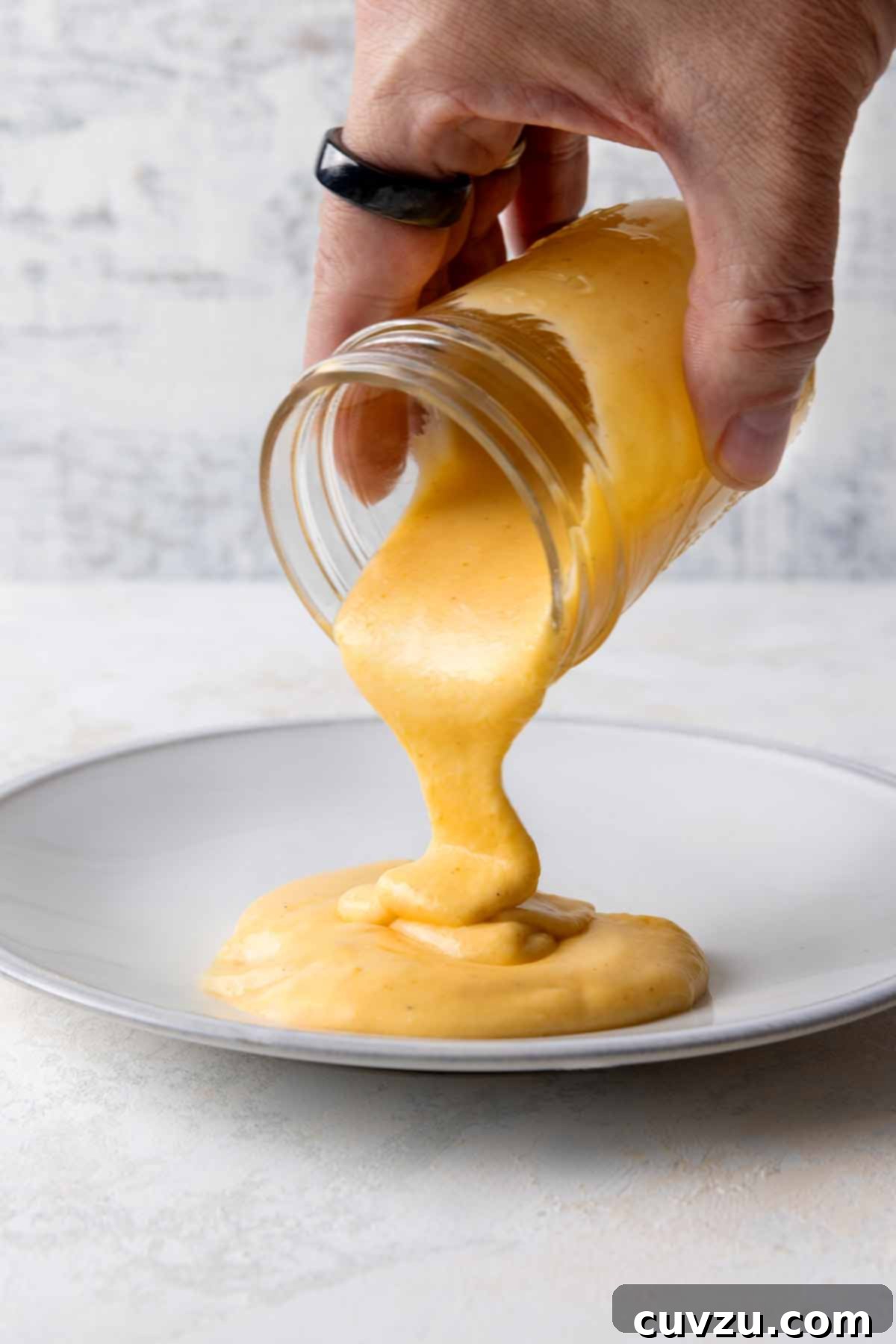
Cheddar cheese sauce is more than just a condiment; it’s a culinary cornerstone, an indispensable homemade staple that elevates countless dishes from ordinary to extraordinary. This velvety, rich, and incredibly versatile sauce deserves a permanent place in your recipe collection, ready to transform everything from mundane weeknight dinners to festive gatherings. Whether you’re topping juicy burgers, crispy tater tots, nutrient-rich broccoli, hearty chili, loaded nachos, tender cauliflower, or fluffy baked potatoes, this sauce promises a spectacular, gooey finish. We’ve meticulously improved, re-tested, and updated this recipe to ensure it’s foolproof and delivers consistently delicious results every time.
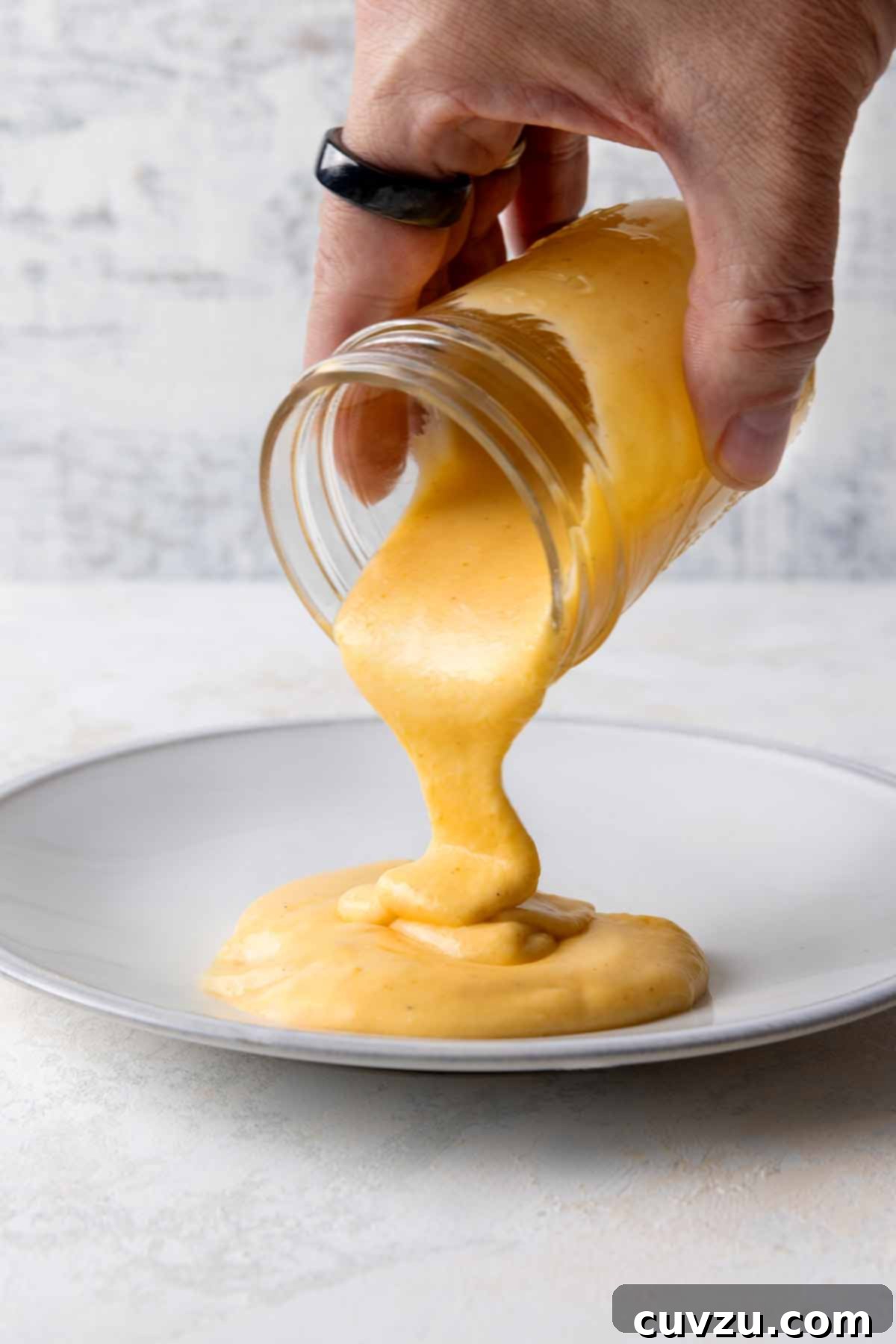
This cheddar cheese sauce is a game-changer, creating a topping so sumptuously rich, exquisitely gooey, and wonderfully adaptable that you’ll find yourself reaching for the ladle to douse almost everything. Seriously, when we say everything, we mean it. Imagine it cascading over a ridiculously indulgent Chili and Cheddar Burger, adding a luscious layer to a steaming bowl of chili, transforming a simple baked potato into a gourmet experience, or turning ordinary fries into a decadent treat. It’s equally divine drizzled over roasted sweet potatoes, fresh steamed broccoli, classic macaroni, crunchy nachos, or delicate cauliflower. Even humble homemade tater tots find new life under its cheesy embrace. The possibilities are truly endless, limited only by your imagination.
There’s an undeniable comfort and satisfaction that comes with warm, oozing cheese, and this homemade sauce delivers that sensation in spades. It’s a recipe you’ll cherish, consistently producing a creamy, flavorful sauce that’s always a good idea. Amen to that!
Why Homemade is Always Best
While store-bought options exist, nothing truly compares to the unparalleled taste and texture of homemade cheddar cheese sauce. Crafting it yourself means you control every ingredient, ensuring a fresh, vibrant flavor without any artificial additives or preservatives. You can customize the sharpness of the cheese, the kick of cayenne, and the overall consistency to perfectly match your preferences. Beyond the superior taste, making your own cheese sauce is often more economical and incredibly satisfying. The process is simpler than you might think, and the reward is a sauce that not only tastes incredible but also feels inherently wholesome and lovingly prepared. It’s the difference between a mass-produced product and a culinary creation tailored to your desires.

What Our Testers Raved About
Our team of dedicated testers consistently praised the incredible versatility of this easy cheese sauce, noting its endless applications across various meals. They were particularly impressed by how quickly and effortlessly it came together, making it an ideal choice for busy weeknights. A standout feature for many was its ability to reheat beautifully, maintaining its smooth texture and rich flavor. Kristin K. affectionately dubbed it a “miraculous sauce,” a testament to its exceptional quality and ease.
Ingredient Insights for the Perfect Sauce
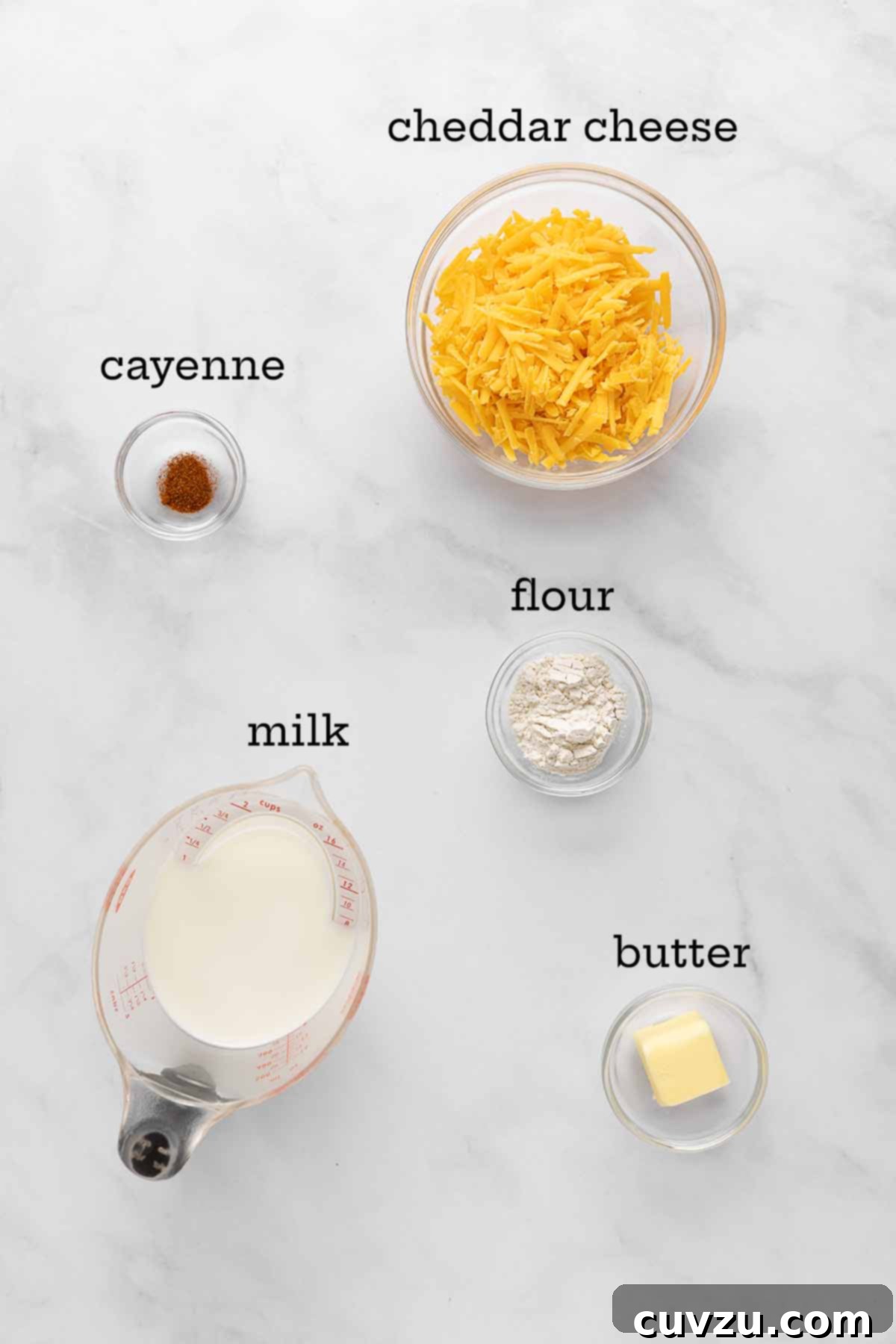
- Whole Milk: For an undeniably rich and incredibly creamy cheese sauce, whole milk is our top recommendation. Its higher fat content contributes significantly to the luxurious mouthfeel and depth of flavor. While you can substitute with reduced-fat milk, be aware that it may result in a slightly thinner sauce with less pronounced richness. For the ultimate indulgence, some even opt for a splash of heavy cream, though it’s typically not necessary for this recipe’s inherent creaminess.
- Cheddar Cheese: The secret to the smoothest, most delectable cheese sauce lies in your choice and preparation of cheddar. Always opt for full-fat cheddar cheese and, crucially, grate it yourself from a block. Pre-shredded cheeses often contain anti-caking agents like cellulose, which can prevent them from melting properly, leading to a grainy or clumpy sauce. For this classic cheese recipe, we wholeheartedly recommend fresh grating. Don’t be shy about experimenting with the type and age of Cheddar; a mild cheddar offers a subtle, comforting flavor, while sharp or extra-sharp cheddar delivers a more assertive, complex profile. You can also explore white or yellow cheddar, which will mainly affect the sauce’s color. Consider blending different ages of cheddar for a nuanced taste.
- Unsalted Butter & All-Purpose Flour (The Roux): These two simple ingredients are the foundation of our creamy sauce, forming what’s known as a roux. The roux is a thickening agent that creates a stable base, preventing a watery or separated sauce. Using unsalted butter allows you to control the overall saltiness of the dish, adding salt to taste later. The flour is cooked with the butter to eliminate any raw flour taste and develop a nutty aroma, ensuring a silky-smooth texture when the milk is incorporated.
- Cayenne Pepper: A pinch of cayenne pepper or a dash of your favorite hot sauce is not just about heat; it’s a brilliant flavor enhancer. It provides a subtle warmth that deepens the cheese’s complexity and adds a tantalizing kick without overpowering the main flavor. If you’re sensitive to spice, feel free to reduce the amount or omit it entirely. However, even a tiny amount can make a significant difference in rounding out the sauce’s profile. You can also consider a touch of dry mustard powder for another layer of classic cheese sauce flavor.
- Salt and Freshly Ground Black Pepper: These fundamental seasonings are essential for balancing and amplifying the rich flavors of the cheese and milk. Always add them to taste at the end, as the saltiness of cheddar can vary. Freshly ground black pepper offers a more aromatic and robust flavor compared to pre-ground pepper.
Effortless Step-by-Step Instructions
Creating this perfect cheddar cheese sauce is a straightforward process. Follow these steps for a consistently smooth and delicious result:
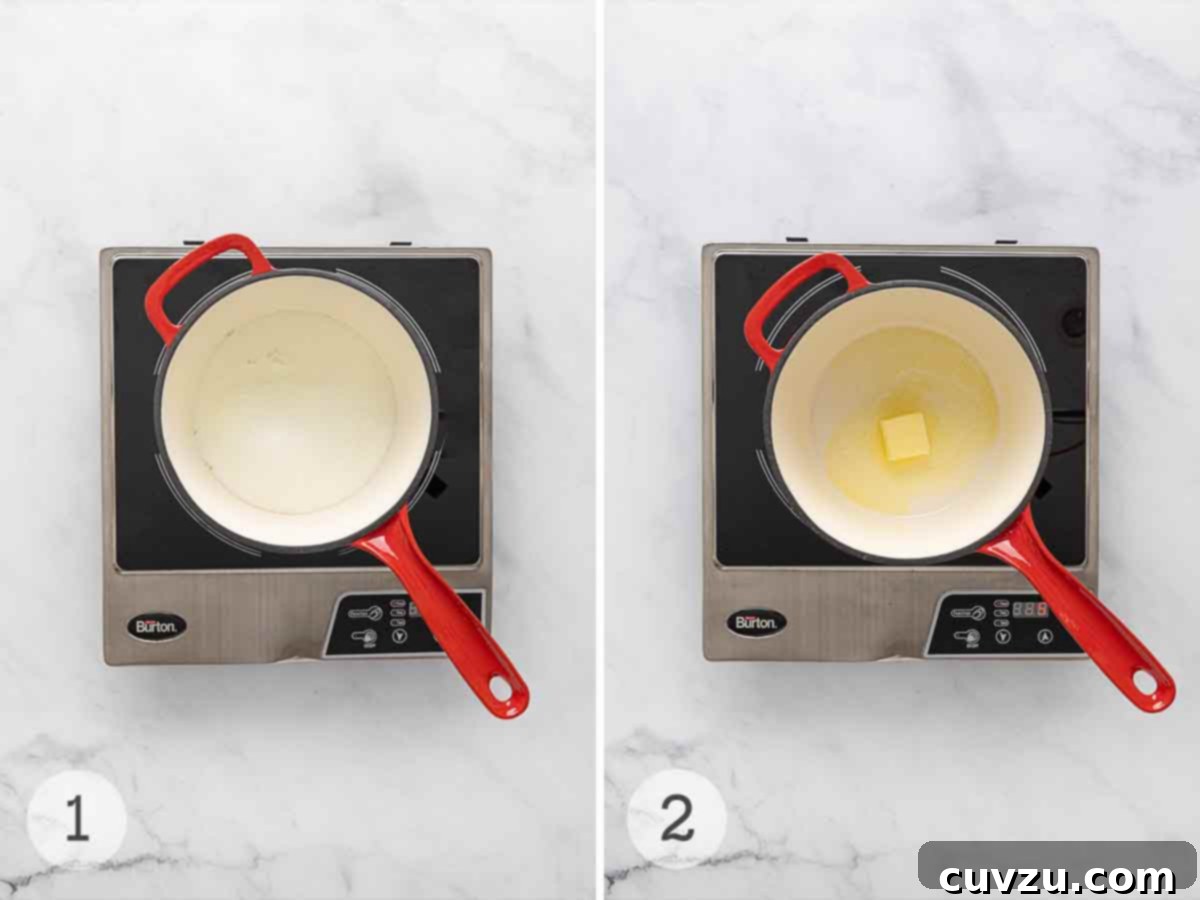
- Gently Heat the Milk: In a medium saucepan, warm the whole milk over medium heat. Keep a close eye on it, and remove it from the heat once small bubbles begin to form around the edges of the pot. Avoid letting it come to a rolling boil, as excessively hot milk can sometimes cause curdling when combined with other ingredients. This warming step ensures the milk incorporates smoothly into the roux without shocking it.
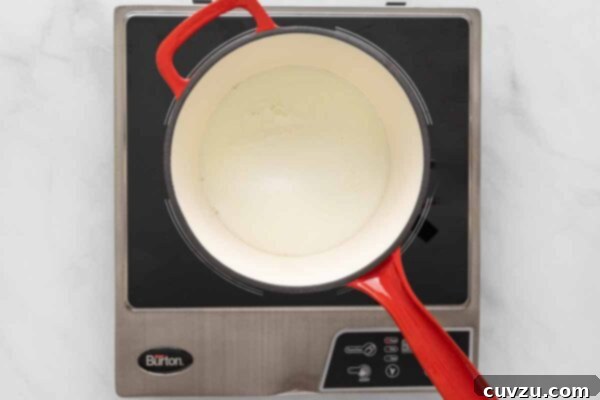
- Melt the Butter: In a separate, heavy-bottomed saucepan (preferably non-stick to prevent sticking), melt the unsalted butter over medium heat. Allow it to melt completely until it’s glistening and just starting to bubble slightly.
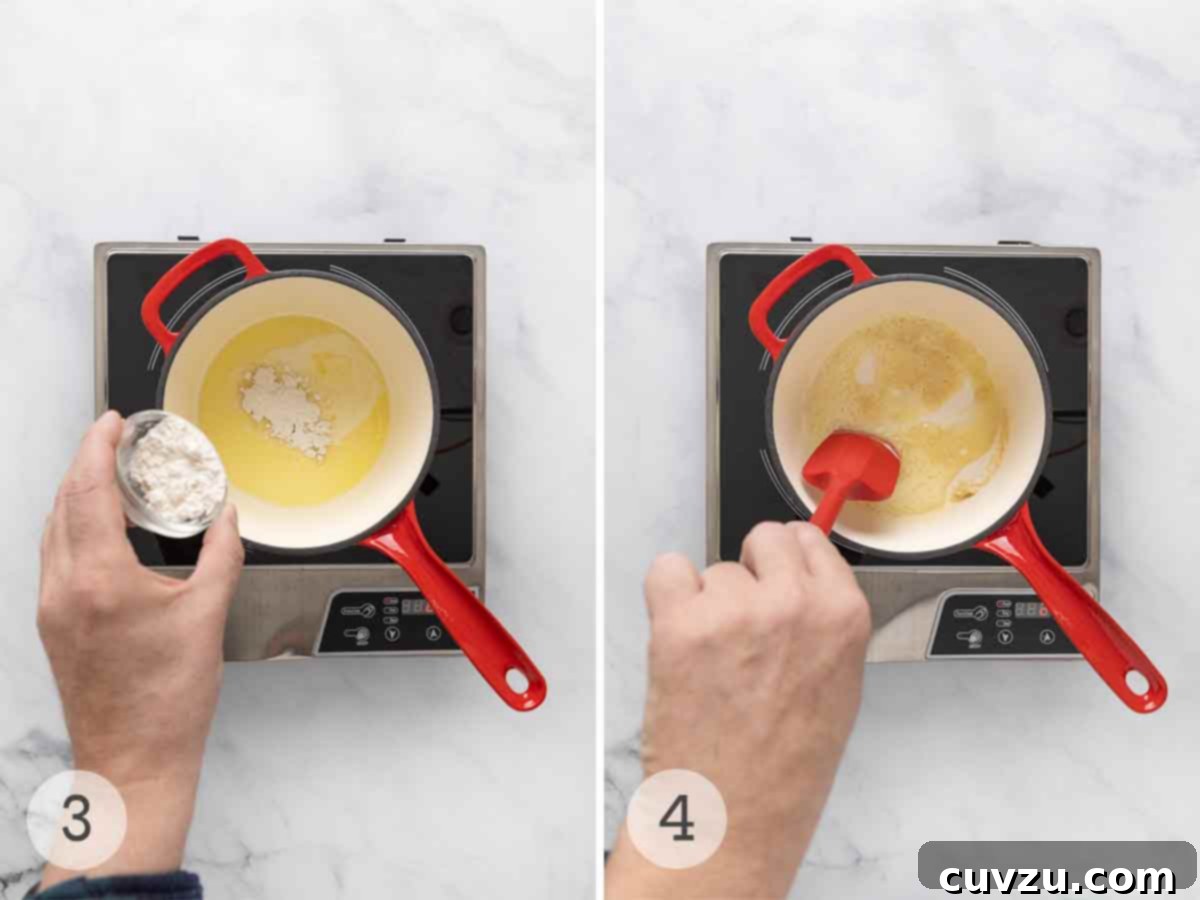
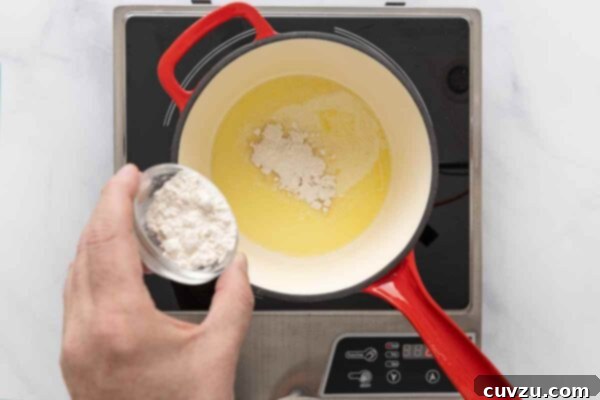
- Create the Roux: Once the butter is melted, sprinkle the all-purpose flour evenly over the bubbling butter in the saucepan. This forms the essential thickening agent for your sauce.
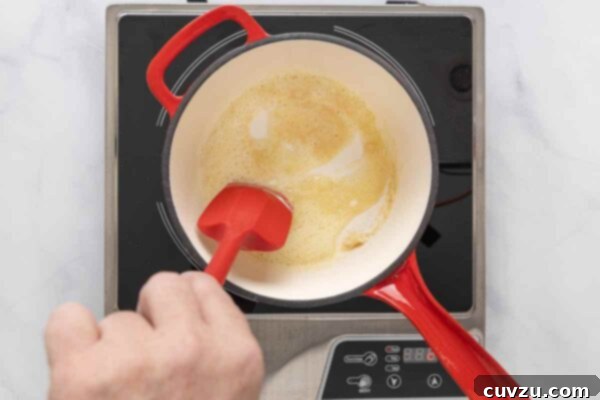
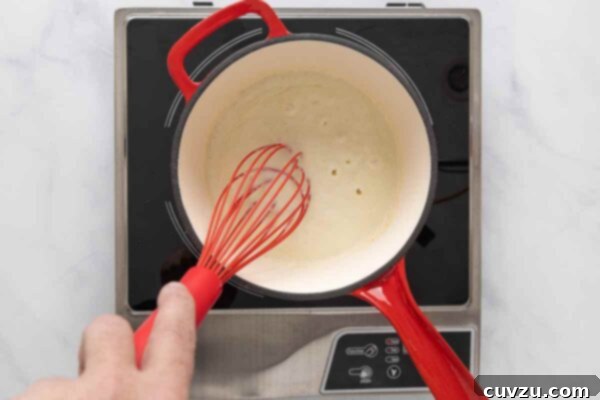
- Whisk Vigorously: Immediately begin stirring constantly with a whisk or a small silicone spatula. Continue stirring for 1 to 2 minutes until the mixture transforms into a thick, smooth paste. This is your roux. It should be a pale blond color; avoid browning it too much, as this is meant to be a light roux to ensure a white or light yellow sauce. Consistent stirring is key to preventing lumps and ensuring the flour is thoroughly cooked, removing any raw flour taste.
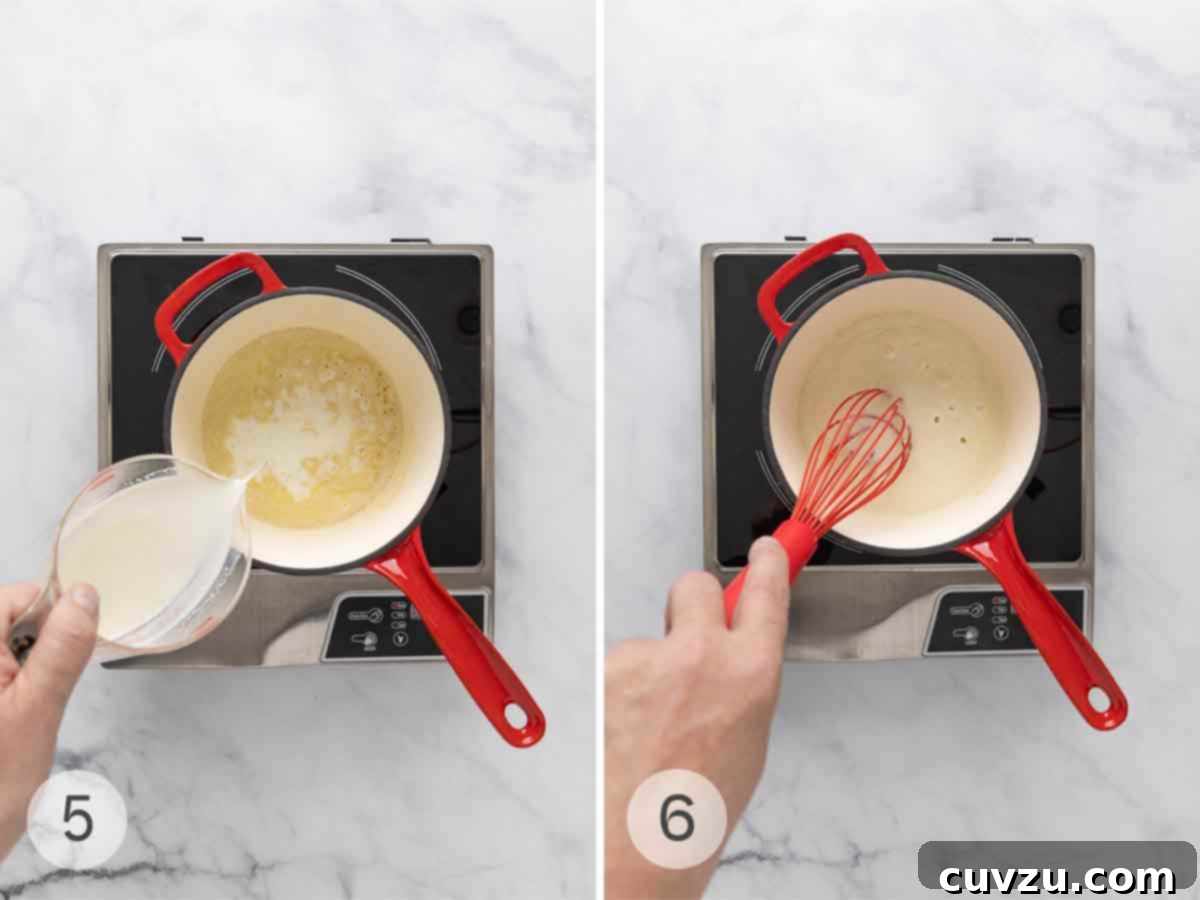
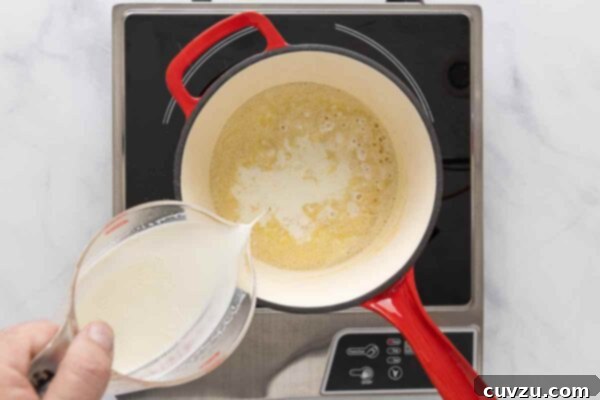
- Gradually Add Milk: With continuous whisking, slowly pour the warm milk into the flour-and-butter roux in a thin, steady stream. This gradual addition helps prevent lumps and allows the roux to seamlessly absorb the liquid, creating a smooth base. Keep whisking until all the milk is incorporated and the sauce starts to come together.
- Thicken the Sauce: Continue to cook the mixture over medium heat, whisking frequently, until it visibly thickens to your desired consistency. This process typically takes 3 to 5 minutes. The sauce should be thick enough to coat the back of a spoon but still pourable. Be attentive, as it can thicken quite quickly; reduce the heat if it seems to be cooking too fast.
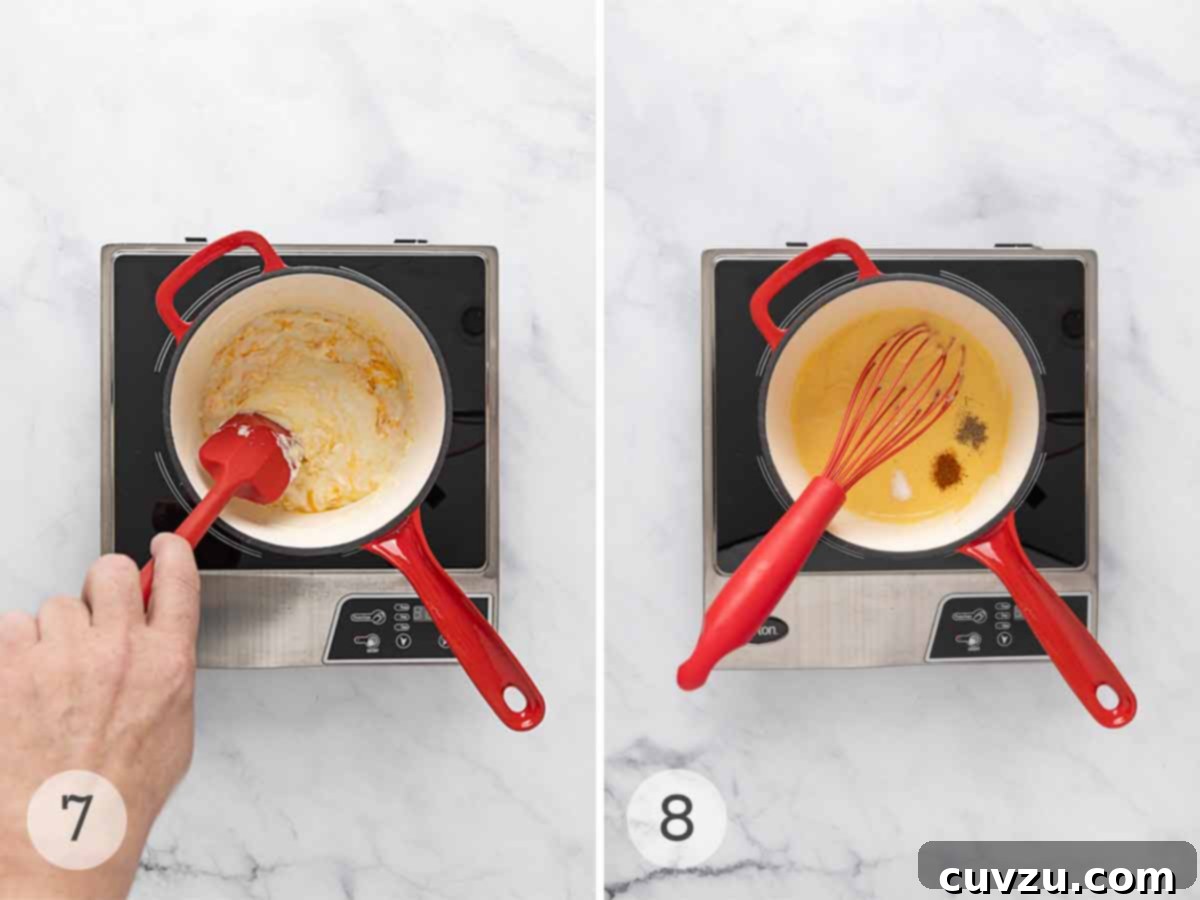
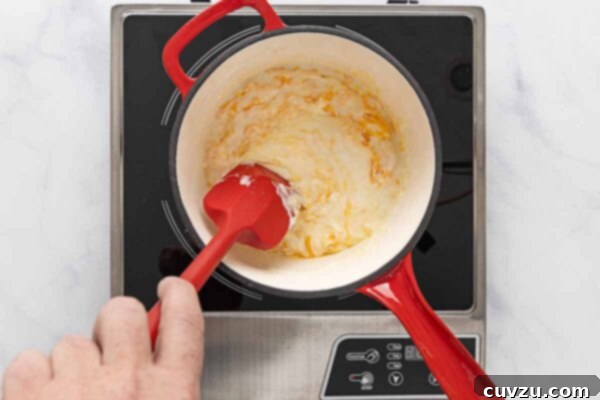
- Melt in the Cheese: Reduce the heat to very low, or even remove the saucepan from the heat entirely, before stirring in the grated cheddar cheese. This is crucial for a smooth sauce; high heat can cause the cheese proteins to seize up, leading to a grainy texture. Stir gently but continuously until the cheese is completely melted and fully incorporated into the sauce, creating a silky-smooth consistency.
- Season to Perfection: Season the sauce with the ground cayenne (or hot sauce), sea salt, and freshly ground black pepper to taste. Start with small amounts and adjust as needed, as the cheese itself contributes saltiness. Whisk well to ensure all seasonings are evenly distributed throughout the rich sauce.
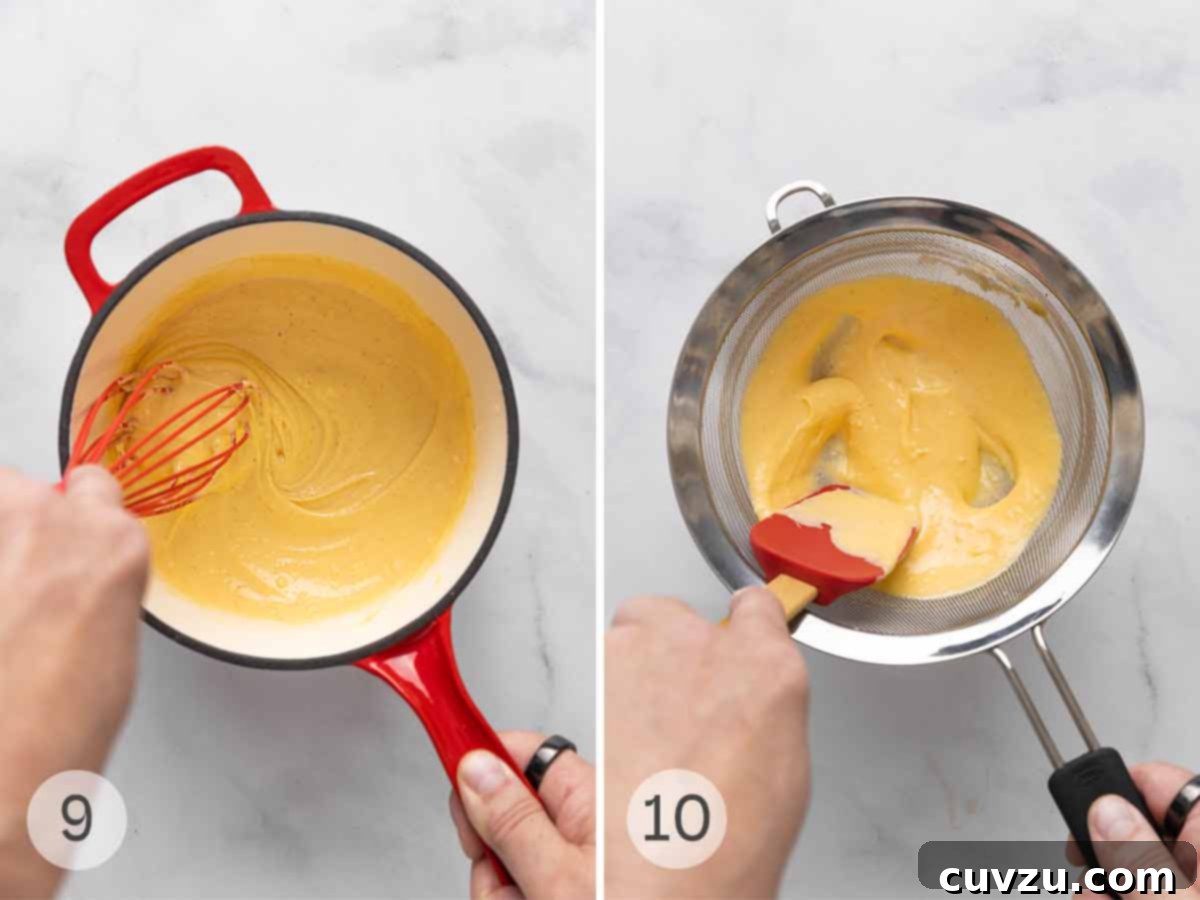
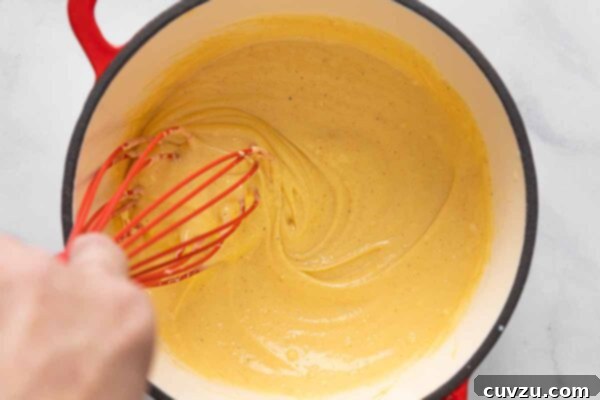
- Final Whisk: Give the sauce a final vigorous whisk to ensure it’s completely smooth and free of any lumps. The goal is a satiny, pourable consistency.
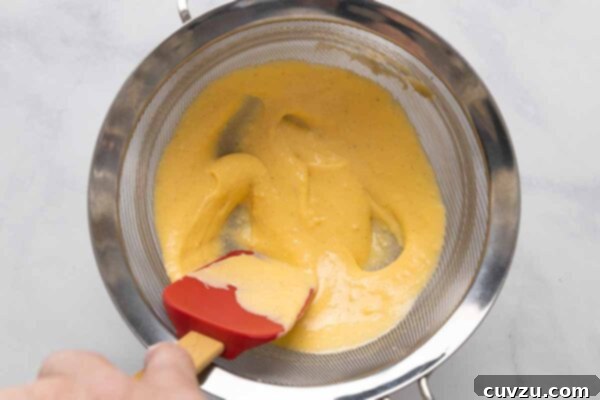
- Strain for Silky Smoothness (Optional but Recommended): For an absolutely immaculate and silky-smooth sauce, strain it through a fine-mesh sieve into a clean bowl or serving vessel. This step effectively removes any tiny lumps of flour or un-melted cheese, guaranteeing a restaurant-quality texture. While optional, it’s a detail that truly elevates the final product, especially if you consider yourself “the fussy sort.” Serve immediately for the best experience, as the sauce will continue to thicken as it cools.
Common Questions & Troubleshooting
Reheating cheese sauce can seem a bit daunting—that seemingly immovable mass of solidified dairy can be intimidating. But fear not! It absolutely can be done, and with excellent results. The best method for reheating is not in the microwave, which can often lead to an unevenly heated, rubbery, or separated sauce. Instead, opt for the stovetop. Transfer the cooled sauce to a small saucepan and reheat it slowly over very low heat, stirring frequently. As it warms, it will likely be quite thick; gradually add small amounts of milk (one tablespoon at a time) and whisk constantly until the sauce loosens up and returns to its original smooth, pourable consistency. Patience and gentle heat are key to ensuring a perfect sauce on the second day.
Yes, you can certainly adapt this recipe to be gluten-free. Many of our readers have successfully swapped the all-purpose flour for a gluten-free alternative. A common and effective substitution is an equal amount of almond flour, which can lend a slightly nutty flavor and a smooth texture. Alternatively, you can use a gluten-free all-purpose flour blend or even cornstarch. If using cornstarch, create a slurry with a small amount of cold milk before adding it to the heated butter (omitting the initial cooking step of a roux), then proceed with adding the rest of the milk and thickening. Be mindful that different gluten-free flours may affect the sauce’s final texture and thickening time slightly, so adjust as needed.
Grainy cheese sauce is a common culinary pitfall, but it’s entirely preventable with a few key techniques. The two biggest culprits behind a gritty texture are the temperature of your sauce and the type of cheese you use. When it’s time to add your grated cheese, ensure your sauce is over very low heat, or even better, pull the saucepan off the heat entirely. High heat causes the cheese proteins to tighten and separate from the milk fat, resulting in a grainy, oily mess. Stir the cheese in gently until it’s just melted and smooth. Additionally, avoid using low-fat or pre-shredded cheese. Low-fat cheese lacks the necessary fat content to melt smoothly, while pre-shredded varieties often contain starches and anti-caking agents that interfere with proper melting. Always stick with full-fat, hand-shredded cheddar for the silkiest results.
Pro Tips & Troubleshooting for a Flawless Sauce
- Avoid Boiling at All Costs: When heating the milk, aim for a gentle simmer with small bubbles around the edge; vigorous boiling can cause it to curdle, especially if you’re using reduced-fat milk. Even more importantly, *never* let the cheese sauce come to a boil once the cheese has been added. Boiling cheese sauce can cause the cheese to separate and become grainy or oily.
- Achieving Ultimate Smoothness: If, despite your best efforts, your sauce isn’t as smooth as you’d like, don’t despair! Simply strain it through a fine-mesh sieve before serving. This quick trick will remove any small lumps, ensuring a perfectly silky texture every time.
- Storage and Shelf Life: This versatile cheddar cheese sauce can be stored safely in a sealed, airtight container in the refrigerator for up to 3 days. For best results, allow it to cool completely before transferring it to the container.
- Adjusting Consistency: If your sauce is too thick after cooking or reheating, gradually whisk in a little more warm milk until it reaches your desired pourable consistency. If it’s too thin, you can gently simmer it for a few more minutes, stirring constantly, to allow it to reduce and thicken, or whisk in a very small slurry of cornstarch and cold water (1 tsp cornstarch mixed with 1 tsp cold water) and bring it back to a gentle simmer for a minute.
- Preventing Skin Formation: To prevent a skin from forming on the surface of your sauce if not serving immediately, press a piece of plastic wrap directly onto the surface of the warm sauce. This creates an airtight seal that keeps it smooth until ready to serve.
More Than Just a Dip: Creative Uses for Your Cheese Sauce
Once you master this easy cheddar cheese sauce, you’ll find countless ways to incorporate its creamy goodness into your meals. It’s truly a foundational recipe that invites culinary creativity:
- Elevate Your Veggies: Transform simple steamed or roasted vegetables like broccoli, cauliflower, asparagus, or green beans into irresistible side dishes. A generous drizzle of this warm cheese sauce makes even the pickiest eaters eager for their greens.
- The Ultimate Mac and Cheese: This sauce is the perfect base for an unbelievably creamy homemade macaroni and cheese. Simply cook your pasta, drain, and stir in the sauce for a comforting classic. Add a breadcrumb topping and bake for an extra layer of texture.
- Gourmet Burger and Hot Dog Topping: Move beyond plain ketchup and mustard. A ladleful of cheddar cheese sauce turns an ordinary burger or hot dog into a decadent experience. Add some pickled jalapeños for an extra kick.
- Loaded Baked Potatoes: Forget the meager shred of cheese. Slather your fluffy baked potatoes with this rich sauce, then add your favorite toppings like bacon bits, chives, and sour cream for an epic meal.
- Nacho Night Essential: This sauce serves as an incredible homemade alternative to store-bought nacho cheese. Pour it over tortilla chips, add ground beef or beans, salsa, and other toppings for a crowd-pleasing appetizer or meal.
- Breakfast Brilliance: Drizzle over scrambled eggs, breakfast burritos, or even serve alongside breakfast potatoes for a savory morning treat.
- Casserole Magic: Incorporate the sauce into cheesy potato casseroles, vegetable gratins, or even chicken and rice bakes for added creaminess and flavor.
- Welsh Rarebit Inspired: For a sophisticated twist, stir in a touch of Worcestershire sauce and a pinch of dry mustard to mimic the flavors of a classic Welsh Rarebit, perfect served over toast.
- Soup and Chili Thickener: Stir a few spoonfuls into a thinner soup or chili during the last few minutes of cooking to add richness, creaminess, and a delightful cheesy depth.
Share Your Experience: Write a Review
We love hearing from you! If you make this cheddar cheese sauce recipe, or any other dish featured on Leite’s Culinaria, please consider leaving a review, a star rating, and sharing your best photo in the comments below. Your feedback helps our community of home cooks, and we truly appreciate it. –David
I’ve made cheese sauces before, but this one is foolproof! I didn’t have to baby the roux much at all!
Melissa
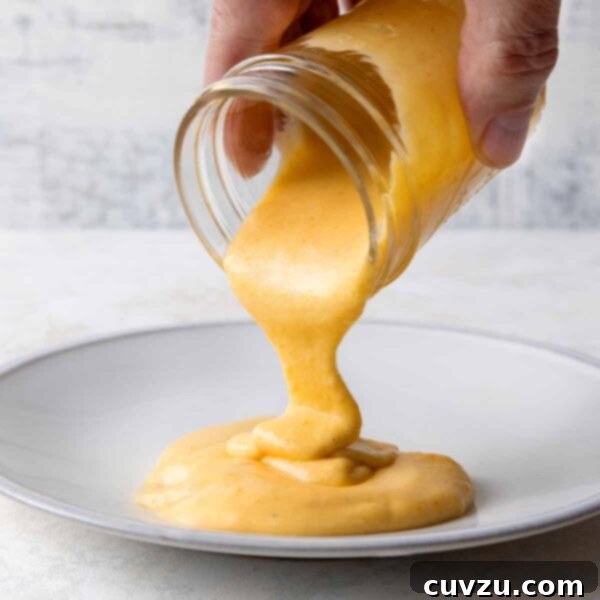
Cheddar Cheese Sauce
Ingredients
- 1 cup whole milk, more, if needed
- 2 tablespoons (1 oz) unsalted butter
- 2 tablespoons all-purpose flour
- 1 cup grated cheddar cheese
- 3/4 teaspoon ground cayenne or store-bought or homemade hot sauce, to taste
- Sea salt and freshly ground black pepper
Instructions
- Heat the milk in a large saucepan over medium heat until small bubbles ring the edge of the pan.

- Meanwhile, melt the butter in another saucepan over medium heat. Sprinkle the flour over the bubbling butter.
- Stir constantly until a thick paste, or roux, forms. It may become quite thick and almost paste-like. This is okay. And if it doesn’t become crazy thick, that’s okay, too. Expect this to take 1 to 2 minutes.
- Constantly whisking, slowly pour the warm milk into the flour and butter mixture in a steady stream.
- Continue cooking and whisking until the mixture thickens, 3 to 5 minutes. It should be thick but still spreadable and pourable.
- Stir in the cheese and whisk until completely melted.
- Season with the cayenne or hot sauce and salt and pepper to taste. Whisk until the sauce is smooth.
- If you’re the fussy sort (um, like me), strain the sauce through a sieve to remove any lumps before serving. The sauce will thicken even more upon cooling.
Notes
- Avoid Boiling–When heating the milk, avoid boiling, as this can cause it to curdle. Likewise, don’t let the cheese sauce boil after the cheese is added, or your sauce may be grainy.
- Storage–Cheese sauce can be stored in a sealed container in the fridge for up to 3 days.
- Reheating–Warm the sauce in a small saucepan over low heat until warmed through. Chances are you’ll need to add more milk to loosen it up.

Adapted From
The Good Stuff Cookbook
Buy On AmazonExplore More with AI
Nutrition
Nutrition information is automatically calculated, so should only be used as an approximation.
Recipe Testers’ Reviews
Aryn Snell
This cheddar sauce is easy to make and very flavourful. I thought the amount of cayenne would overpower it, but it didn’t. It had a nice kick.
I made this to serve over steamed broccolini, a classic combo, and it was perfect! My boyfriend preferred to dip Ruffles BBQ potato chips, but he loved it, too.
As per the instructions on the site, I did reheat it the next day, and it turned out perfectly! I actually thought the flavour was better the next day.
Terri Lyons
The cheese sauce’s flavour is lovely, and its thickness is perfect. I just don’t like having to wash more pans than necessary. When I make cheese sauce or any sauce that starts with a roux, I don’t heat the milk (or other liquid) and have never had any lumps. It may take a minute more to thicken the sauce, but I’d rather stir for another minute than wash another pot.
I used two-year-old sharp cheddar and half the amount of cayenne. This gave me a nice sharpness and just enough heat.
Kristen Kennedy
I usually mix shredded cheese into warmed cream/butter to make an oobleck-y sauce, so I was curious if this recipe would elevate my game. I cooked the roux for a bit longer than stated (4 to 5 minutes) until it smelled nutty, turned off the heat (I have electric), then added Tillamook shredded cheddar cheese and stirred until it was melted.
I suggest using a small silicone spatula instead of a whisk–I’ve tried whisks and ended up with what looks like a cheese-coated weapon. If you’re a zealous stirrer like me, make sure you’re scraping down the sides of the saucepan as you go (which is also easier with a small spatula).
This sauce was delicious and, it stored for a few days in the fridge without separating. I poured some over roasted broccolito hide its identity, and my 11-year-old squatter ate it. So, in summary, it’s kind of a miraculous sauce. It’s… Cheesus?
Irene Seales
Whether you are a fancy project cook or a harried weeknight warrior, having the basic proportions for a sauce in your toolkit will pay you back over and over. Not only can you make a wicked spiced pasta dish with this recipe, but you can also drizzle it over homemade nachos or steamed veggies all in fewer than 20 minutes.
Keep an eagle eye on the butter and then the roux, and drop the temp if it seems to be cooking too fast. (Save those deeply caramelized roux for gumbo). This one doesn’t need long to bubble up and thicken, and then it will likely thin a bit before you drizzle in the milk. The recipe timing is spot on, and the suggested spicing made a perfect topping for steamed cauliflower.
Add some mustard, and it nods towards a rarebit. Swap Gruyere for the cheddar, and you have another perfect pasta pairing. And if you use a combination of chicken or vegetable stock plus milk, you can deepen the savoury note for a gratin or croque monsieur.
Nancy Dutra
What I love most about this recipe is that it makes me feel like the culinary queen I’m not. Why? Because its simplicity makes it easy to execute and has made it so I’m the kind of person who can “whip up a cheese sauce” at the drop of a hat.
There’s something sophisticated and satisfying about whisking milk, butter, and flour to make a roux, and adding cheese and hot sauce makes the experience feel decadent.
This tasty, versatile, and reheatable sauce can top tater tot nachos, veggies, burgers, chicken wings, and anything else you deem worthy of being slathered in cheese. (Or, if you’re like my kid, you’ll want to eat the “cheese soup” on its own with a spoon.)