Authentic Portuguese Coconut Custard Tarts: A Sweet Journey into Tradition (Pastéis de Coco)
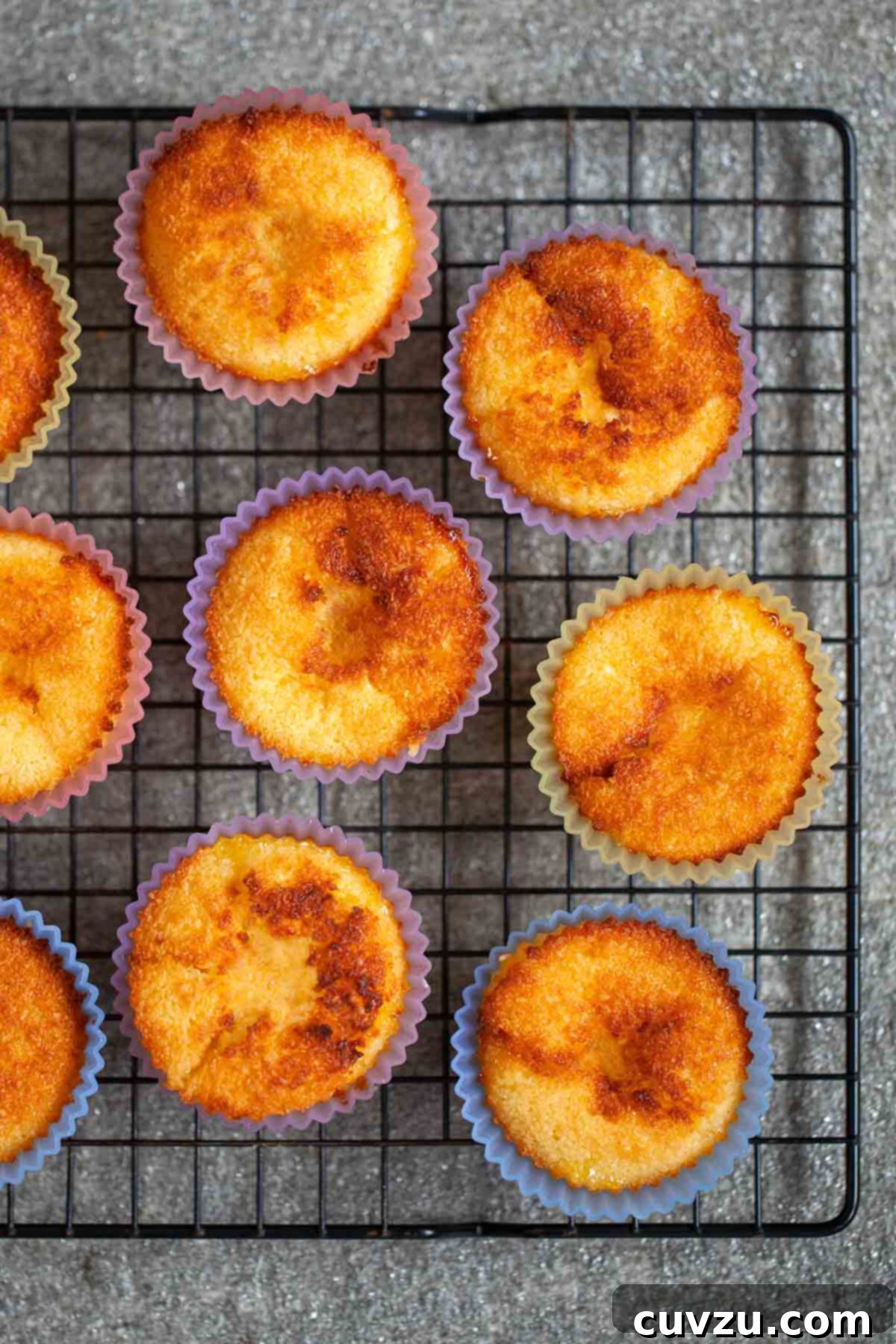
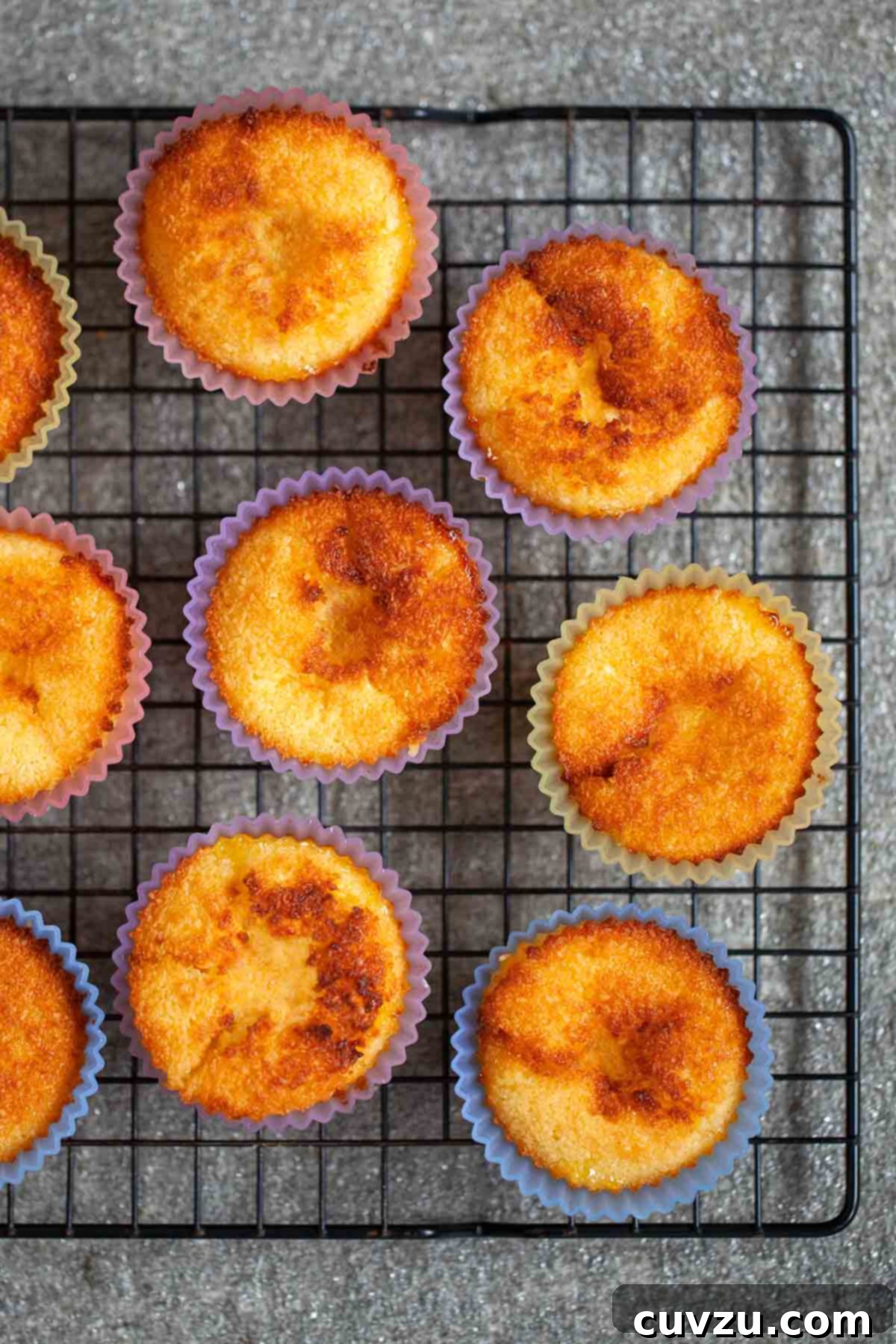
Embark on a culinary adventure to Portugal with these irresistible Portuguese coconut custard tarts, lovingly known as Pastéis de Coco. These delightful pastries, resembling charming individual cupcakes, beautifully encapsulate the essence of Portuguese dessert craftsmanship. They achieve a remarkable balance, expertly blending the rich, velvety texture of a creamy milk custard with the wonderfully chewy, eggy consistency of a classic macaroon. More than just a simple sweet, Pastéis de Coco are a cherished staple, standing proudly alongside other national treasures like the famed Pastel de Nata, yet offering their own distinct, coconut-infused allure. Each golden-brown tart is a testament to generations of baking tradition, providing a comforting and uniquely Portuguese taste experience that will enchant your palate.
My Aunt Exaltina’s Portuguese coconut custard tarts have been a beloved fixture at our family gatherings for as long as I can recall. Her recipe, steeped in tradition and family history, invariably sparks a lively and good-humored debate among us: are these exquisite treats more akin to a creamy, delicate custard, or do they lean towards the dense, chewy texture of an eggy macaroon? Or perhaps, as many argue, are they a sublime fusion of both, a culinary masterpiece that defies simple categorization? For over thirty-five years, this delicious enigma has added an extra layer of charm to every family feast, with no definitive answer ever truly agreed upon. Each person, spoon in hand, savors their tart, contemplating its unique character and adding their voice to the ongoing discussion. Now, we invite you to take a bite and cast your own vote in this delicious, decades-long family debate!
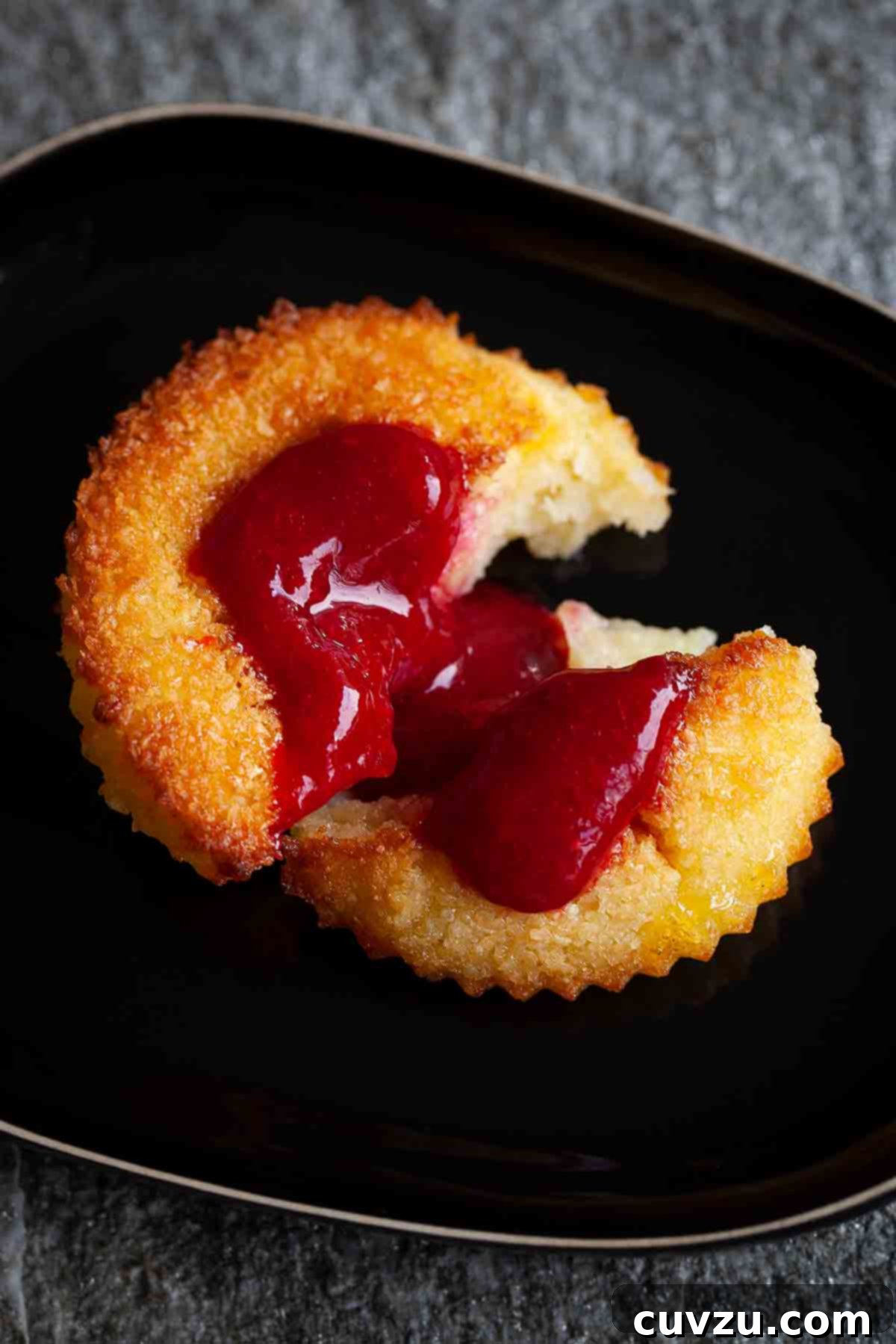
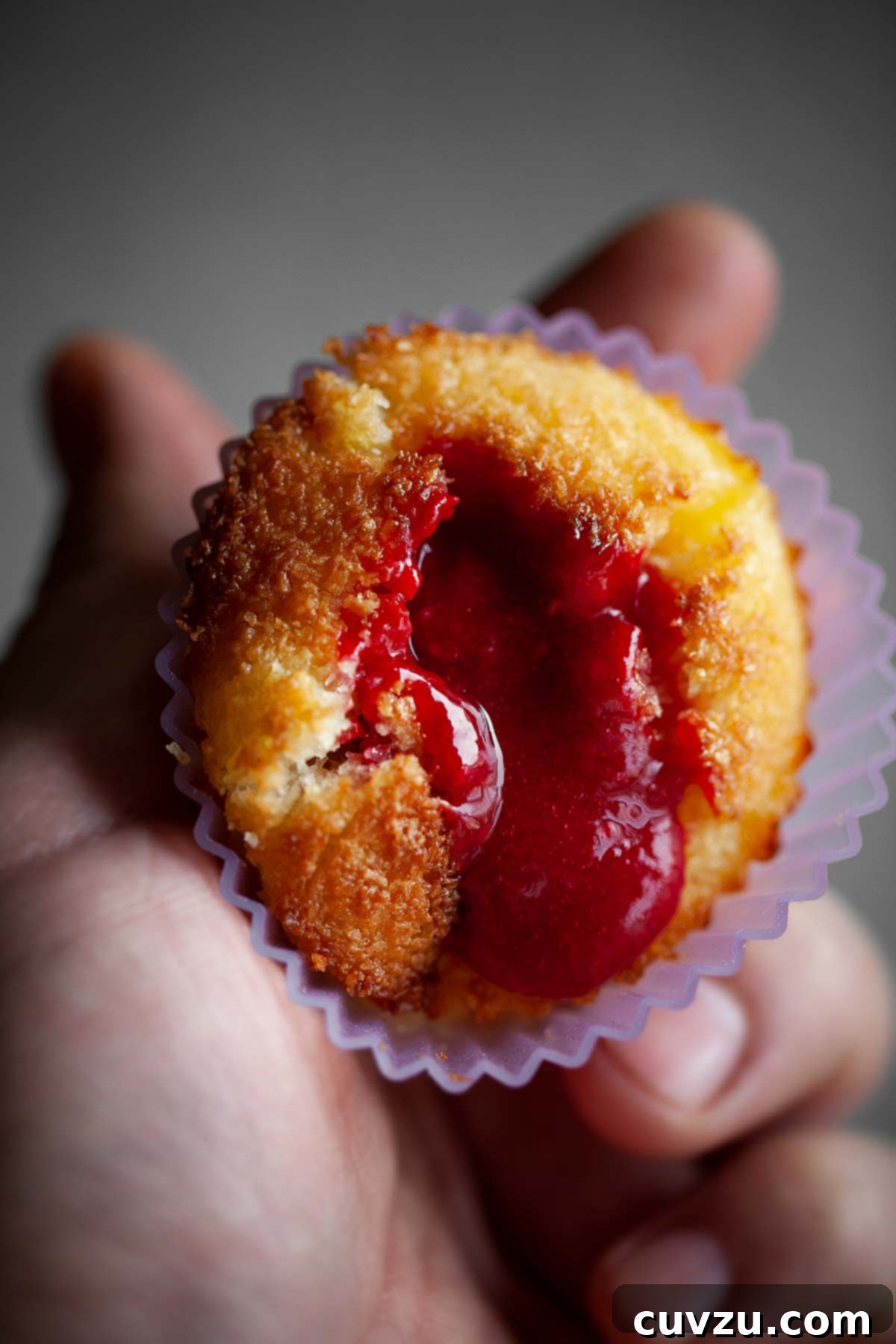
Our late friend, Lois Sparks, held a particularly deep affection for these Pastéis de Coco. She had a unique and transformative ritual for enjoying them: a delicate spoon of vibrant raspberry coulis, carefully drizzled into the slight, inviting crater that naturally forms on the tart’s golden-brown surface. Lois firmly believed this tart, fruity counterpoint provided the perfect balance to the rich, inherent sweetness of the coconut custard, creating an unforgettable symphony of flavors. I must confess, I was initially hesitant, perfectly content with the tarts in their pristine, unadorned state. However, one memorable evening, Lois insisted I experience them her way. The moment the bright, tangy essence of the raspberry harmonized with the sweet, creamy depth of the coconut, I was utterly captivated. It was, without a doubt, a dream team combination – a testament to how a thoughtful and simple addition can elevate an already classic dessert to astonishing new heights.
Storage and Reheating Tips: Ensuring Lasting Freshness for Your Pastéis de Coco
If you find yourself in the enviable position of having leftover Portuguese coconut custard tarts after their initial enjoyment – a rare feat, indeed – it’s crucial to know how to store them properly to maintain their exquisite flavor and texture. The answer is a resounding yes: these delightful pastries absolutely require refrigeration. Once completely cooled, ensure they are covered tightly to prevent them from drying out, then place them in the refrigerator. While they are perfectly enjoyable when chilled, I personally find that their true magic shines through when they are served warm, allowing the creamy custard to soften and the toasted coconut aroma to bloom fully.
To bring your chilled tarts back to their original, irresistible warmth and tender consistency, a simple reheating method is all it takes. Gently slip them into a toaster oven or a conventional oven preheated to a low setting, around 250-300°F (120-150°C), for approximately 10 to 15 minutes. Be careful not to overheat them, as this can dry out the custard. This gentle warming will restore their fresh-baked charm, making them taste as if they just came out of the oven. For optimal flavor and texture, these coconut dessert tarts are best consumed within a day or two of baking. However, given their addictive nature, they seldom linger in the fridge for long!
The Enduring Appeal of Portuguese Tarts: A Culinary History and Why They Captivate
The culinary landscape of Portugal is uniquely adorned with an array of pastries that tell tales of rich history, meticulous craftsmanship, and the clever utilization of simple, wholesome ingredients. While the iconic Pastel de Nata has garnered global fame, the Portuguese Coconut Custard Tart, or Pastel de Coco, holds an equally cherished, albeit perhaps more localized, place in the hearts of many. These particular tarts, much like many traditional Portuguese sweets, trace their origins back to the monastic life of centuries past. Monasteries and convents, with an abundance of egg yolks as a byproduct of clarifying wines (using egg whites), became ingenious centers of culinary innovation. It was within these sacred walls that many of Portugal’s most beloved, egg-rich desserts were born, a tradition that continues to delight palates today.
So, what is it about these coconut tarts that makes them so utterly captivating and enduringly popular? It’s a masterful interplay of textures and flavors. The delicate yet slightly dense creaminess of the custard harmonizes perfectly with the sweet, slightly chewy texture of the shredded coconut, creating a multi-layered sensory experience in every bite. Unlike their Nata counterparts, which are defined by their crisp puff pastry, Pastéis de Coco often present a more rustic, home-style charm, frequently baked in individual muffin liners. This simpler format allows the rich, flavorful filling to truly take center stage. The subtle addition of lemon extract, as featured in this recipe, is not merely an ingredient; it’s a bright, essential counterpoint that cuts through the sweetness, elevating the entire flavor profile and adding a classic Portuguese touch. These tarts are wonderfully versatile – humble enough for an impromptu snack, yet sophisticated enough to grace an afternoon tea spread or a festive gathering. Their relative ease of preparation also makes them a favorite among home bakers eager to infuse their kitchens with a taste of sunny Portugal.
Portuguese Coconut Custard Tarts
Recipe by David Leite
Ingredients
- Nonstick vegetable spray oil, (optional, but highly recommended for easy release)
- 2 tablespoons cornstarch
- 1 cup milk (divided into 1/4 cup and 3/4 cup portions)
- 1 cup sweetened shredded coconut (finely processed for best texture)
- 3 large eggs
- 1 cup granulated sugar (consider reducing for a less sweet tart, as suggested by testers)
- 2 tablespoons (1 oz) melted unsalted butter
- 1/4 teaspoon lemon extract (adds a vital bright, classic flavor)
- A pinch of salt (to enhance and balance the sweet flavors)
Instructions
-
Step 1: Preheat and Prepare. Begin by preheating your oven to a steady 375°F (190°C). Position an oven rack in the middle of your oven to ensure optimal heat circulation for even baking. Carefully line a standard 12-cup muffin tin with 11 paper cupcake liners. For an extra layer of non-stick assurance and significantly easier removal of the finished tarts, consider lightly coating the inside of each liner with a nonstick vegetable spray oil. This small step can make a big difference in presentation and enjoyment.
☞ TESTER TIP: To combat any potential sticking issues with paper liners, many experienced bakers, like our reader Olga DeMedeiros, highly recommend opting for foil cupcake liners. When sprayed with nonstick vegetable spray, foil liners virtually guarantee that your delicious tarts will slip out effortlessly, preserving their perfect shape and making cleanup a breeze.
-
Step 2: Create the Cornstarch Slurry. In a small, separate bowl, combine the 2 tablespoons of cornstarch with precisely 1/4 cup of the milk (from your total 1 cup). Whisk vigorously until the cornstarch is completely dissolved and no lumps remain, forming a smooth, uniform slurry. This mixture is essential for giving the custard its desired creamy thickness and stability.
-
Step 3: Process the Coconut. For a refined texture that integrates beautifully into the custard while still offering a delightful chew, transfer the 1 cup of sweetened shredded coconut into a food processor. Pulse for approximately 30 seconds. The goal is to achieve slightly finer, more uniform flakes, rather than a paste. This processing ensures the coconut is well-distributed and contributes to the overall silky-smooth mouthfeel of the tart.
-
Step 4: Combine the Custard Base. In a large mixing bowl, gently stir the 3 large eggs and 1 cup of granulated sugar together using a sturdy wooden spoon or a spatula until they are just combined. Avoid over-whipping to prevent too much air incorporation. Now, one by one, gradually add the prepared cornstarch mixture, followed by the remaining 3/4 cup of milk, the processed coconut, 2 tablespoons (1 oz) of melted unsalted butter, 1/4 teaspoon of bright lemon extract, and the pinch of salt. Ensure you stir thoroughly after each addition to fully incorporate the ingredients and create a homogenous, creamy batter.
-
Step 5: Fill the Muffin Cups. With your prepared muffin tin ready, carefully ladle the rich custard mixture into each lined paper cup. Fill them to about 1/4 inch from the very top, being mindful not to overfill, as the tarts will puff up slightly during baking. It is crucial to stir the custard mixture frequently between filling cups. This simple action prevents the coconut from settling at the bottom of the bowl, ensuring that every single tart receives an even and generous distribution of the delicious shredded coconut. This recipe is perfectly proportioned to fill approximately 10 to 11 individual liners.
-
Step 6: Bake to Perfection and Cool. Carefully transfer the muffin tin to your preheated oven. Bake for a total of 25 to 30 minutes. To promote even browning and a consistent texture, make sure to rotate the pan halfway through the baking time. Continue baking until the coconut topping achieves a beautiful, golden-brown hue and the custard appears set, though it might still have a very slight, gentle wobble in the center. Once baked to perfection, remove the pan from the oven. It is absolutely essential to allow the tarts to cool completely within the muffin tin before attempting to remove or serve them. This critical cooling period allows the custard to fully set and firm up, ensuring they hold their shape and are easily handled.

An LC Original
This Portuguese Coconut Custard Tart recipe is an original creation from the heart of Leite’s Culinaria. Crafted with dedication and rigorously tested by our team, we’re proud to share unique and delicious recipes that promise to bring joy and authentic flavors to your table. Explore more culinary treasures from our kitchen.
View More Original Recipes
Explore More with AI
Substitutions
Scale Recipe
Summarize Key Insights
Nutrition Information (Approximate)
Calories: 181 kcal
Carbohydrates: 27 g
Protein: 3 g
Fat: 7 g
Saturated Fat: 5 g
Monounsaturated Fat: 1 g
Trans Fat: 0.1 g
Cholesterol: 63 mg
Sodium: 55 mg
Fiber: 0.4 g
Sugar: 25 g
Nutrition information is automatically calculated and provided for informational purposes only. It should be used as an approximation.
Tried this recipe?
Mention @leitesculinaria or tag #leitesculinaria on Instagram! We love seeing your creations and hearing about your experience!
Insights from Our Recipe Testers: Real Experiences, Real Tips
Our dedicated team of Leite’s Culinaria recipe testers meticulously prepared and tasted these Portuguese Coconut Custard Tarts, offering invaluable feedback and practical tips to help you achieve perfect results in your own kitchen. Here’s what they had to say about their delicious experience with this recipe:
Gina M.
These Portuguese coconut custard tarts evoked a flood of cherished memories, instantly reminding me of a very similar dessert my own grandmother used to bake. It was a delightful surprise; I didn’t even realize the connection until the first bite transported me straight back to her kitchen. This recipe is wonderfully easy to follow, and the result is a gloriously sweet, rich, and utterly delicious treat. The combination of creamy custard and perfectly toasted coconut is simply heavenly.
Having developed a preference for less intensely sweet desserts as I’ve gotten older, I’m considering using unsweetened coconut for my next batch, or perhaps a balanced mixture of sweetened and unsweetened. This adjustment would undoubtedly appeal to those who prefer a slightly more tempered sweetness.
I managed to yield 11 tarts from this recipe, although my older muffin tin might have cups that are slightly smaller than today’s standard sizes. A key learning for me was that the tarts adhered quite a bit to the paper cupcake liners. For a smoother release, I will definitely use foil liners and spray them generously with nonstick vegetable spray next time. Despite the sticking, I quickly adapted and enjoyed them directly with a spoon – they were far too good to resist!
My initial bake for 25 minutes left the tarts feeling quite soft. After rotating the pan, an additional 5 to 7 minutes in the oven did the trick. The tops achieved a beautiful golden brown, while the insides remained wonderfully tender. To achieve a slightly firmer set, I would likely extend the total baking time to around 35 minutes in the future, always remembering that crucial halfway pan rotation. These tarts would make an exceptional Azorean recipe to bring to a potluck dinner, or simply to keep in the fridge for a delightful, quick snack or dessert.
Patricia Scalione
These charming little tarts share a delightful resemblance to the famous Pasteis de Nata, ubiquitous throughout Portugal, but with the distinct advantage of bypassing the time-consuming process of making puff pastry. The required ingredients are easily sourced, and the entire recipe comes together in a snap, making it a fantastic option for quick baking. The addition of coconut introduces a welcome layer of complexity to the creamy custard and contributes to the beautiful golden-brown, toasted topping that makes these tarts so visually appealing. The final product is a humble yet incredibly delicious pastry, perfectly suited as an accompaniment to afternoon tea or as a light dessert after any meal.
Because we baked them in paper muffin liners, we initially tried to eat them by hand. However, we discovered that the bottoms tended to stick to the paper, and some butter had seeped out, resulting in a somewhat messy experience. For a cleaner and more elegant serving, I would strongly recommend baking them in individual ramekins or foil liners next time, and serving them with a spoon. Furthermore, I believe the recipe could be improved by slightly reducing the sugar. The combination of a full cup of granulated sugar and sweetened coconut made for a very sweet tart; a slight cutback could create a more balanced flavor profile for many palates.
In our experience, one tart per person proved to be a perfectly satisfying serving size, offering just the right amount of sweetness and richness.
Adrienne Lee
This Portuguese coconut custard tarts recipe is truly exceptional. My daughter, who is usually quite willing to share, loved them so much that she flat-out refused to give any to our extended family – a clear indication of just how delicious they are! On the first day, we enjoyed them plain, waiting patiently for them to cool ever so slightly after coming out of the oven. Later that afternoon, we experimented by pairing some with a dollop of jam, which added a wonderful fruity zest. Over the next couple of days, my daughter continued to enjoy them, both with and without the jam, highlighting their versatility and universal appeal. Regardless of how they were served, these tarts were consistently fantastic. The unanimous verdict in our household is that this recipe is both straightforward to make and utterly delicious.
A key observation we made is that these tarts are significantly better when served slightly warm, rather than completely cold. The gentle warmth truly brings out the creamy texture of the custard and amplifies the rich, toasted notes of the coconut, making for an even more delightful experience.
Lisa K.
These pastries are a perfectly lovely springtime dessert, ideal for brightening any occasion. As they bake, the batter undergoes a charming transformation: it puffs up beautifully, then subtly separates into two distinct layers. The top layer develops into a wonderfully crispy, golden-toasted coconut crust, while underneath lies a lusciously sweet and smooth custard. As the tarts cool, their centers gently collapse, creating a natural, inviting nest. This little hollow offers a delightful opportunity for creative garnishing; for example, they would be absolutely charming if filled with small jelly beans or chocolate eggs for an Easter holiday treat, adding an extra festive touch.
During the baking process, I was tempted to remove the tarts from the oven at the 23-minute mark, as the coconut on those positioned at the back of the oven was already browning quite deeply. However, I decided to rotate the pan and leave them in for the full 25 minutes as the recipe suggested, and it proved to be the correct decision. They finished baking perfectly, demonstrating the importance of trusting the recipe’s timing while making minor adjustments like pan rotation to ensure uniform results.
Irene Seales
These coconut tarts come together with surprising ease, requiring no more effort than whipping up a batch of simple coconut haystacks. Yet, they deliver a far more sophisticated and beautifully presented little tart that is incredibly tempting – you’ll find it hard to stop at just one! Their flavor and texture are significantly more special and nuanced compared to my usual back-pocket cupcake recipes, offering a delightful complexity. If you already have sweetened shredded coconut on hand, you’re practically ready to begin baking right away, making this a wonderfully convenient dessert.
Almost as soon as these tarts are removed from the oven, their beautifully golden-brown top begins to gently sink, creating an appealing indentation. This naturally formed crater beautifully suggests a garnish: perhaps a scattering of fresh berries or a delicate dab of bright lemon curd would be a most welcome addition, adding a fresh, zesty contrast. The subtle inclusion of lemon extract in the recipe works exceptionally well, providing a bright, complementary note without ever overpowering the delicate coconut and custard flavors. It’s a perfect touch that truly elevates the tart to something special.
In a subsequent batch, I decided to experiment by reducing the granulated sugar by approximately 20%. The outcome was fantastic – my family and I unequivocally preferred this slightly less sweet version, finding that it enhanced the other flavors without sacrificing any of the wonderful texture of the tarts. This adjustment is highly recommended for those who appreciate a dessert with a more balanced, nuanced sweetness profile.