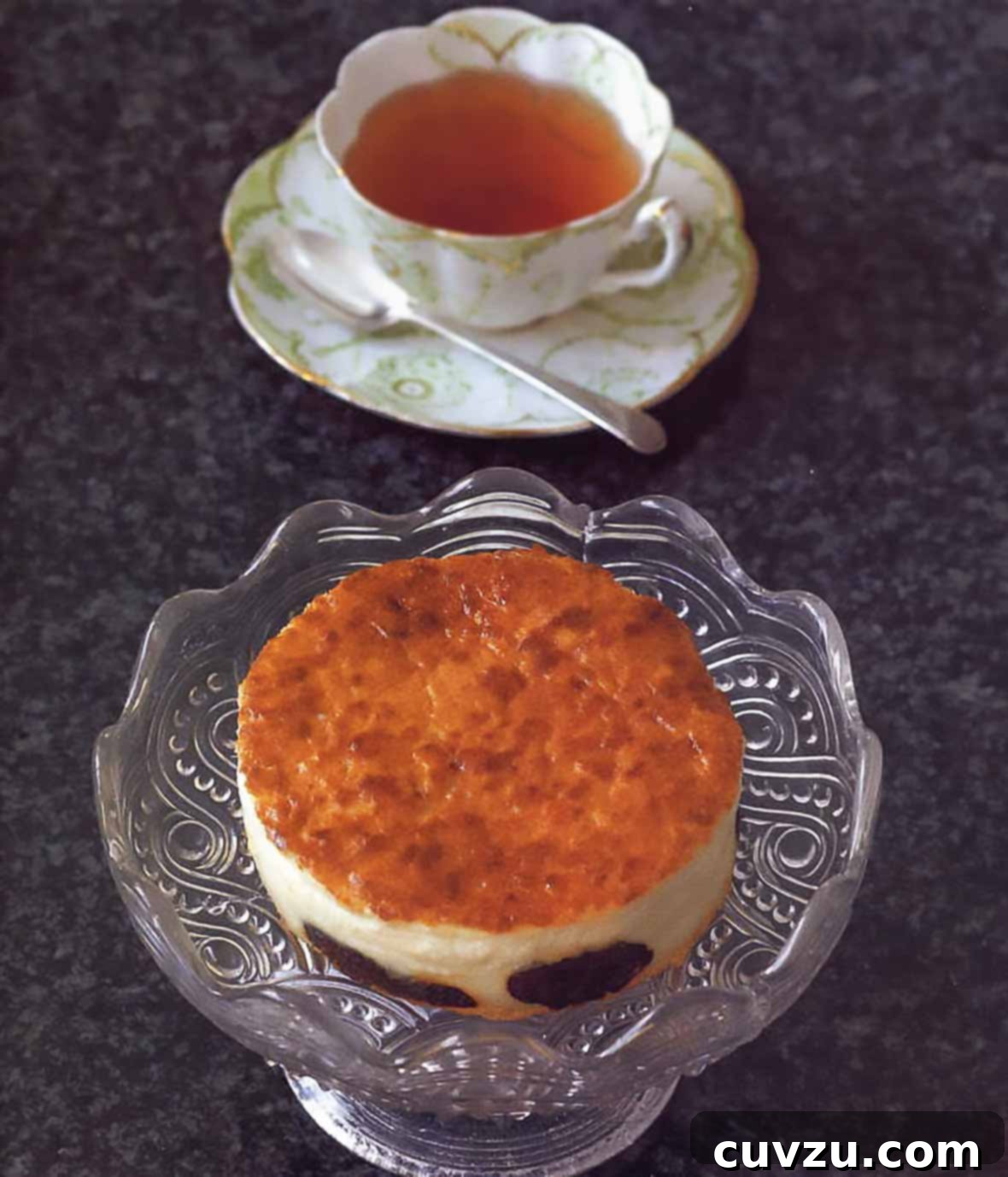
Far Breton: A Timeless French Custard Cake with Rum-Soaked Prunes
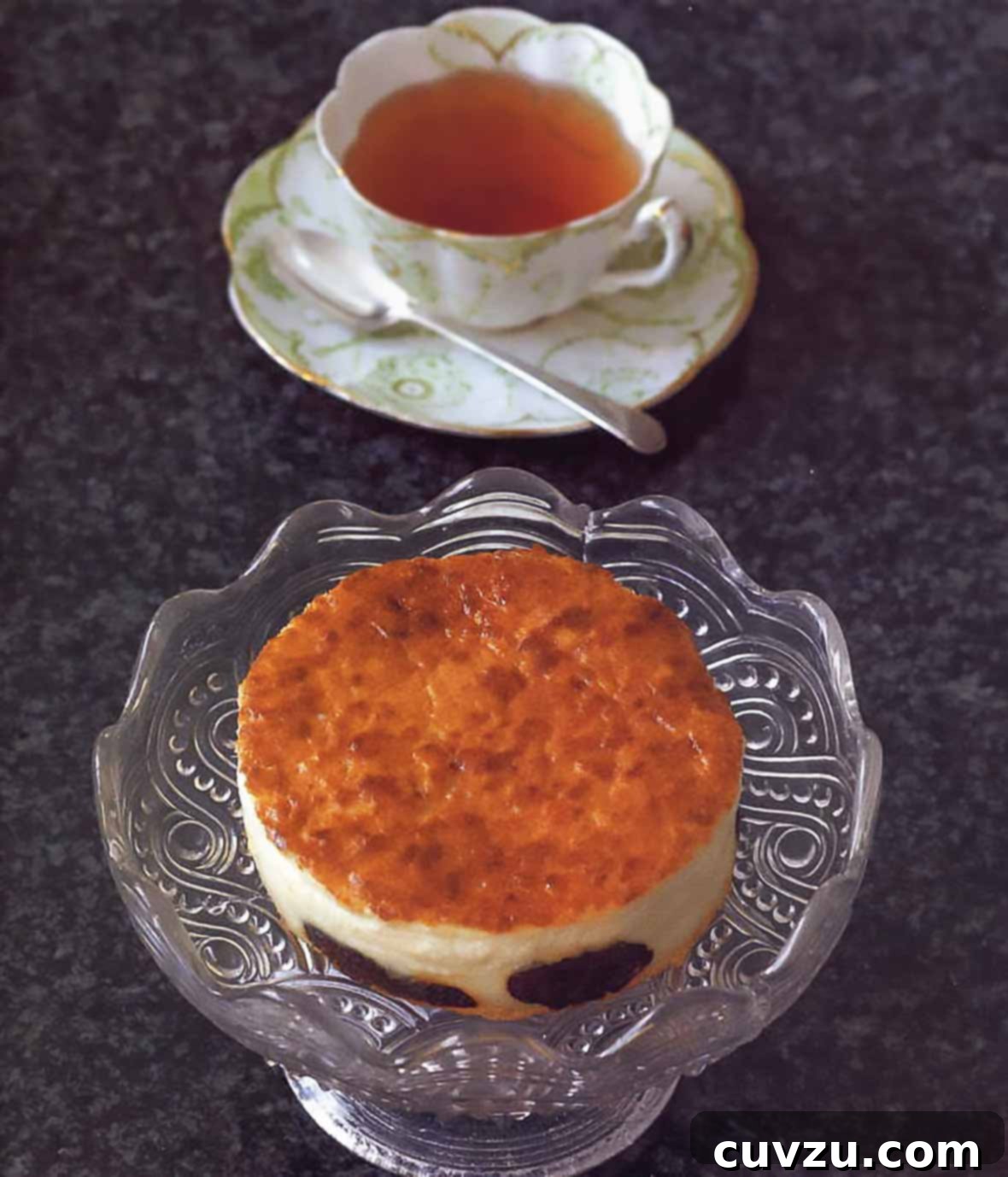
Originating from the picturesque region of Brittany, France, Far Breton is a delightful and rustic custardy cake that shares a kinship with the more widely known clafouti. What sets this regional specialty apart is its generous filling of plump, rum-soaked prunes, which infuse every bite with a deep, fruity sweetness and a hint of intoxicating warmth. Far Breton is not merely a dessert; it’s a comforting slice of French culinary tradition, making it an exquisite accompaniment to a quiet afternoon tea or a satisfying end to any meal.
According to acclaimed baker and cookbook author Richard Bertinet, this beloved, clafouti-like cake was originally a staple for farm workers in Brittany. It provided a hearty and sweet sustenance, a convenient and delicious lunch to carry into the fields. Indeed, the thought of enjoying such a sweet treat, studded with golden rum-soaked prunes, could make even the most arduous physical labor feel a little lighter. It’s a testament to the enduring appeal of simple, wholesome ingredients transformed into something truly special.
—Renee Schettler Rossi

Far Breton ~ French Custard Cake
Far Breton, a delightful specialty from Brittany, France, is a rich, custardy cake reminiscent of clafouti, generously studded with succulent rum-soaked prunes. It’s an ideal treat to share with friends and family, especially when served alongside a warm cup of tea or coffee.
Recipe by David Leite
Dessert
French
8 to 10 servings
391 kcal
25 minutes
35 minutes
1 hour
Ingredients
- 14 ounces prunes, pitted
- A scant 1/4 cup Armagnac, rum, or other brandy (such as Cognac)
- 3 1/2 tablespoons unsalted butter, melted, for greasing the baking dish
- 2/3 cup granulated sugar
- 8 ounces (shelled weight) egg, roughly equivalent to 4 large eggs
- 4 ounces (3/4 to 1 cup) all-purpose flour
- Pinch of salt
- 3 cups plus 3 tablespoons whole milk, cold
Instructions
- Prepare the Prunes: At least a few hours, and preferably the night before you plan to bake, place the pitted prunes in a bowl and cover them with the Armagnac, rum, or other brandy. Allow them to soak at room temperature until plump and infused with the liquor. This step is crucial for the Far Breton’s signature flavor.
- Preheat Oven and Prepare Dish: Preheat your oven to a robust 425°F (220°C). Select a deep-sided baking dish, approximately 8-by-10 inches, or an equivalent size oval or round dish. Generously brush the entire inside surface of the dish with the melted unsalted butter, ensuring no spot is missed to prevent sticking and encourage a beautiful crust.
- Mix the Batter: In a large mixing bowl, combine the granulated sugar and eggs. Whisk them together until well blended and light in color. Gradually add the all-purpose flour, mixing just until it is incorporated and no dry streaks remain. Be careful not to overmix. Stir in the pinch of salt. Finally, slowly and steadily whisk in the cold whole milk. Continue whisking until you have a smooth, thin batter, similar to a crêpe batter.
- Assemble and Bake: Spoon the soaked prunes, along with any remaining syrupy liquid from their soaking bowl, into the prepared buttered baking dish. Distribute them evenly. Place the dish in the preheated oven for just a few minutes to gently warm the prunes. This helps them release their flavors and prevents them from sinking to the bottom. Carefully remove the baking dish from the oven and pour the thin batter over the prunes. Return the dish to the oven and bake for 10 minutes at 425°F (220°C). After 10 minutes, reduce the oven temperature to 350°F (180°C) and continue baking for another 25 to 45 minutes. The exact baking time will depend on the dimensions and material of your baking dish.
- Check for Doneness and Cool: To determine if your Far Breton is ready, dip the blade of a sharp knife into cold water, then carefully insert it into the center of the cake. If the knife comes out clean, the Far Breton is cooked through. You’ll also notice that the sides of the cake will begin to pull away from the edges of the dish. Once done, remove the Far Breton from the oven and let it cool completely in the dish on a wire rack. For the best flavor and texture, cover the cooled cake and refrigerate it overnight before slicing and serving. This chilling period allows the flavors to meld and the custard to fully set. Serve chilled slices, preferably with a fresh cup of tea.
Adapted From
This recipe for Far Breton is adapted from the acclaimed cookbook:
Crust: Bread to Get Your Teeth Into by Richard Bertinet
Buy On Amazon
Nutrition Facts
Approximate nutrition information per serving:
- Serving Size: 1 slice
- Calories: 391 kcal
- Carbohydrates: 64 g
- Protein: 9 g
- Fat: 11 g
- Saturated Fat: 6 g
- Monounsaturated Fat: 3 g
- Trans Fat: 1 g
- Cholesterol: 128 mg
- Sodium: 81 mg
- Fiber: 4 g
- Sugar: 40 g
Note: Nutrition information is an automatic calculation and should be used only as an approximation. Actual values may vary.
The Enduring Charm of Far Breton: More Than Just a Dessert
Far Breton, with its unique blend of simplicity and sophistication, offers more than just a sweet ending to a meal. Its history as a practical, energy-giving food for laborers speaks volumes about its wholesome nature. Unlike many elaborate pastries, Far Breton relies on humble ingredients—milk, eggs, flour, sugar, and prunes—transformed by classic French technique into something truly memorable. The magic lies in the subtle interplay of textures: the silky, dense custard, the tender bite of the boozy prunes, and the slightly caramelized edges that often form a delicate crust. This combination ensures a comforting and deeply satisfying experience with every spoonful or slice.
While often compared to clafouti, another French baked fruit dessert, Far Breton distinguishes itself with a denser, more pudding-like consistency. Clafouti typically features cherries and a thinner, more crêpe-like batter. Far Breton, on the other hand, embraces a richer, more substantial custard, making it a heartier option. The addition of spirits like Armagnac or rum for soaking the prunes is a signature element, adding an adult depth of flavor that is both intriguing and delightful. This makes Far Breton a versatile treat, equally at home at a casual brunch, an elegant afternoon tea, or as a sophisticated dessert.
Tips for Perfecting Your Far Breton
The Importance of Prune Soaking
The success of a truly authentic Far Breton heavily relies on the prunes. Using high-quality, pitted prunes, often referred to as “pruneaux d’Agen” in France, is the first step. The soaking process in Armagnac, rum, or brandy is not merely about rehydrating them; it’s about infusing them with a complex, aromatic depth that balances the sweetness of the custard. Overnight soaking is ideal, allowing the prunes to fully absorb the liquor and become incredibly tender and flavorful. If you’re short on time, a few hours will still yield good results, but the longer they soak, the more pronounced and wonderful the flavor will be. Don’t discard the syrupy liquid left after soaking; a little bit added to the baking dish further enhances the cake’s richness.
Choosing the Right Baking Dish
As our recipe testers noted, the choice of baking dish is more critical than one might initially think for Far Breton. A deep-sided dish is paramount to accommodate the generous volume of custard and prunes. While an 8-by-10-inch oval or rectangular dish is suggested, a springform pan can also work wonderfully, particularly if its bottom is reinforced with foil to prevent leaks, ensuring a deep and impressive final presentation. A 9-by-13-inch baking dish could also be used for a slightly thinner but still delicious cake. If your chosen dish isn’t quite deep enough, don’t fret! Any excess batter can be baked in small ramekins to create individual custard cups, a delightful bonus treat.
Achieving the Ideal Custard Texture
The hallmark of Far Breton is its smooth, flan-like custard. To achieve this, several factors are key. First, ensure your milk is cold when whisking it into the batter; this helps create a smoother consistency without prematurely thickening the flour. Second, avoid overmixing the flour once it’s added; mix just until combined to prevent gluten development, which can lead to a tougher cake rather than a tender custard. The initial higher baking temperature helps set the exterior and encourage a subtle crust, while the reduced temperature ensures the interior cooks gently and evenly, developing that desirable silky texture.
The Magic of Chilling Overnight
Patience is truly a virtue when it comes to Far Breton. While tempting to dig in immediately, allowing the cake to cool completely in its dish and then chilling it overnight in the refrigerator is highly recommended. This crucial step permits the custard to fully set, firming up to an ideal sliceable consistency, and, more importantly, allows all the flavors—the sweet custard, the rich prunes, and the subtle liquor notes—to meld and deepen. The result is a more harmonious and satisfying dessert that truly shines when served cold.
Real-World Baking: Insights from Our Recipe Testers
To provide a comprehensive view of this classic recipe, we gathered feedback from our dedicated recipe testers. Their experiences offer valuable tips and observations for anyone embarking on their own Far Breton journey.
Elizabeth and Lena Alvarez
Elizabeth and Lena found this Far Breton to be “delicate and subtle,” noting that it “slices like a dream.” They particularly enjoyed it with a good cup of tea, although some of their tasters expressed a desire for a crunchy element like a cookie or a crust to accompany it. The prune layer was likened to the caramel on a flan, suggesting a rich, sweet, and slightly sticky consistency.
They rigorously followed the instructions, soaking their prunes overnight at room temperature. The next day, they observed “very little liquid left,” which had transformed into a fragrant syrup—a clear sign of successful infusion. They ensured to add both the prunes and this precious syrup to the buttered pan.
Adhering strictly to the gram measurements, with the slight adjustment of using 750 ml plus 3 tablespoons of milk, they confirmed that the batter came together “quickly and easily.” A crucial takeaway from their test was the importance of using a deep dish. Despite using an “extra deep 9-inch pie pan,” they found it wasn’t quite sufficient and had to quickly butter three ramekins for the leftover batter. They wisely recommended a cheesecake pan with a foil-reinforced bottom for future attempts.
Their final, emphatic advice: “It’s even better if you can allow 24 hours for it to chill,” reinforcing the idea that patience yields the best results for this dessert.
Patty Fabian
Patty Fabian described the texture of her Far Breton as “very smooth and flan-like,” complemented by “moist, Cognac-infused prunes.” Her experience also highlighted the challenge of dish size. Using her 8-by-10-inch Emile Henry oval baking dish, she still ended up with “1 cup leftover batter,” suggesting that the recipe might be better suited for a deeper vessel like a springform pan or a larger 9-by-13-inch baking dish. This confirms the observations of other testers regarding the volume of batter.
She soaked her prunes for five hours in Cognac, noting that they “definitely soaked up the liquid.” The initial warming step in the oven further infused them with the flavor, creating a more cohesive taste experience. Patty found her batter to be “very thin, like the consistency of an egg and milk mixture used for French toast,” and did not require any additional milk, indicating the recipe’s intended fluidity.
Patty’s baking time extended beyond the suggested range, taking “50 minutes baking at the lower temp before my knife came out clean.” This variation underscores the importance of the knife test for doneness, as oven performances can differ. Upon completion, she allowed the Far Breton to cool completely in the pan, reporting that “the slices released cleanly and easily from the dish,” an important detail for presentation.
![Two pictures of a far Breton, a French custard cake with prunes, one photo is of a the far Breton in a casserole, the other ] is of a slice](https://cuvzu.com/wp-content/uploads/2025/11/img_3714_6.jpg "Far Breton Rustic French Custard 4")
Nadine Bonda
Nadine Bonda approached the Far Breton with a slight reservation, stating that “prunes are not my first go-to ingredient for a dessert.” However, she and her friends were “pleasantly surprised to find that we enjoyed this dessert.” Her review highlighted the harmonious interplay of textures: “The custard was a wonderful thick consistency that held its own against the somewhat chewy texture of the prunes. The edges of the custard formed a bit of a crust that provided a combination of three delightful textures: the smooth custard, the chewy prunes, and the drier edge.” This detailed sensory description truly captures the essence of a well-made Far Breton.
Interestingly, much of the conversation around Nadine’s dessert revolved around potential fruit substitutions. “Candidates were raspberries, black raspberries, kiwi, blueberries and apricots,” all of which she and her friends thought “might be delicious.” This opens up exciting possibilities for customization, though the classic prune version holds its own. Nadine also considered adjusting the prune quantity for a future bake: “If I were to make it again, I might cut back the prunes to 9 ounces from the 14 ounces specified. This would allow the custard to shine through a bit more.”
She confirmed that “the ratio of the egg, sugar, and flour to the milk made a perfect thin consistency.” For her oven, the custard cake required “45 minutes to have my wet knife come out clean in the middle of the cake.” A practical tip she shared was to “immediately ran my knife around the edge of the baking dish to loosen it” as soon as it came out of the oven, likely aiding in cleaner removal after cooling.
Variations and Serving Suggestions for Your Far Breton
Creative Fruit Swaps
While prunes are the undisputed classic for Far Breton, the adventurous home baker might consider experimenting with other fruits, as suggested by our testers. Plump dried apricots, rehydrated in a complementary liqueur like Cointreau, could offer a brighter, tangier profile. Cherries, fresh or frozen (pitted), or even a mix of berries like raspberries or blueberries, could transform the cake into a seasonal delight. For a truly Breton twist, consider apples, perhaps lightly sautéed in butter and a touch of Calvados before being added to the batter. Remember that fresh fruits may release more moisture, potentially requiring a slight adjustment to baking time.
Enhancing Flavor with Aromatics
Beyond the fruit, simple additions can elevate your Far Breton. A teaspoon of vanilla extract, added to the batter with the milk, can deepen the overall sweetness and aroma. A hint of citrus zest, particularly orange or lemon, can provide a beautiful counterpoint to the richness of the custard and prunes. For those who enjoy a touch of spice, a pinch of cinnamon or nutmeg could add a warm, comforting note, especially appealing during cooler months.
Serving with Panache
While delightful on its own, Far Breton can be dressed up for various occasions. A light dusting of confectioners’ sugar just before serving adds an elegant finish. For a more indulgent treat, offer it with a dollop of crème fraîche or a scoop of vanilla bean ice cream. A drizzle of caramel sauce or a berry coulis can also add an extra layer of flavor and visual appeal. And, of course, the traditional pairing with a robust cup of hot tea or a strong coffee remains an unbeatable classic, perfectly balancing the cake’s sweetness.