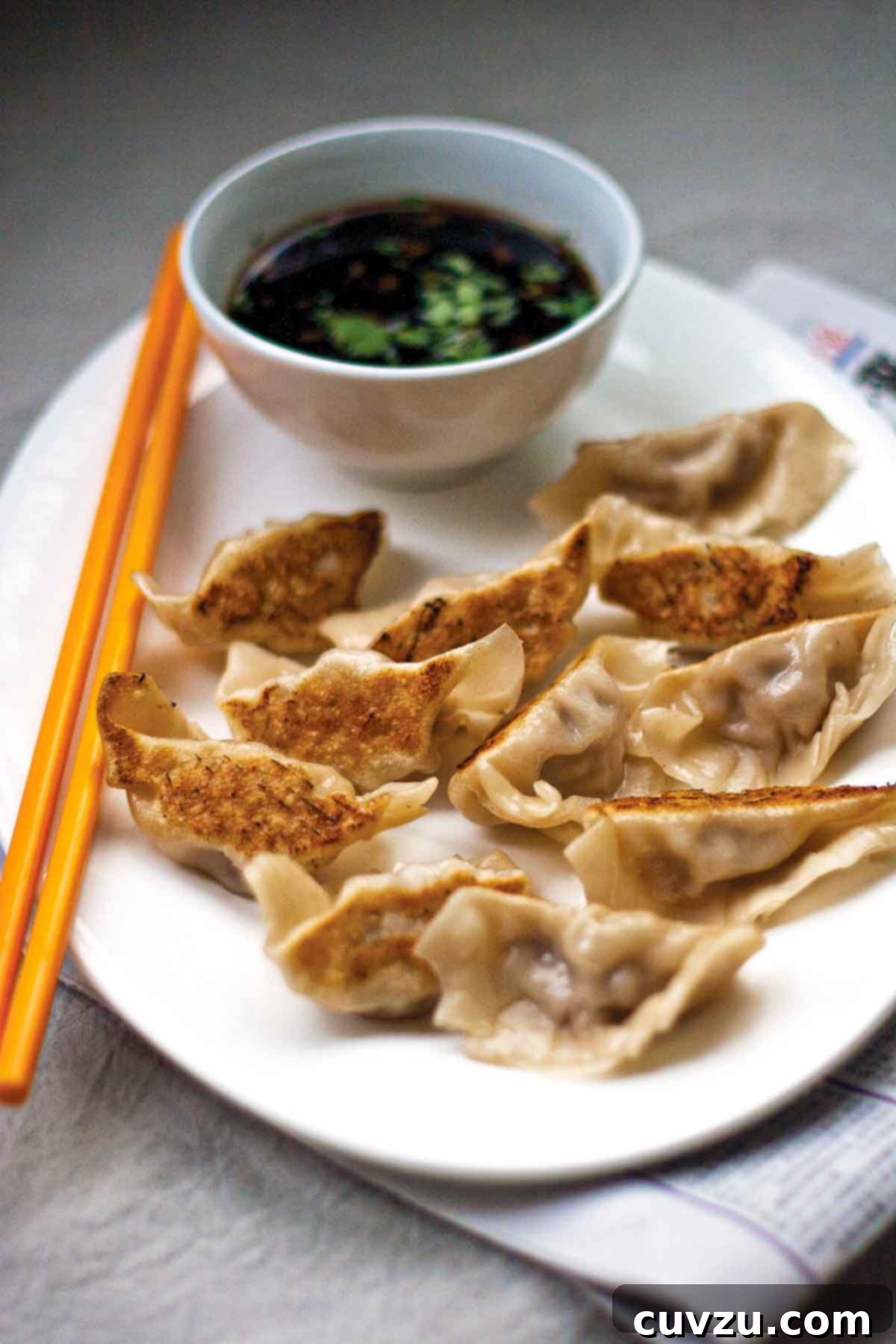
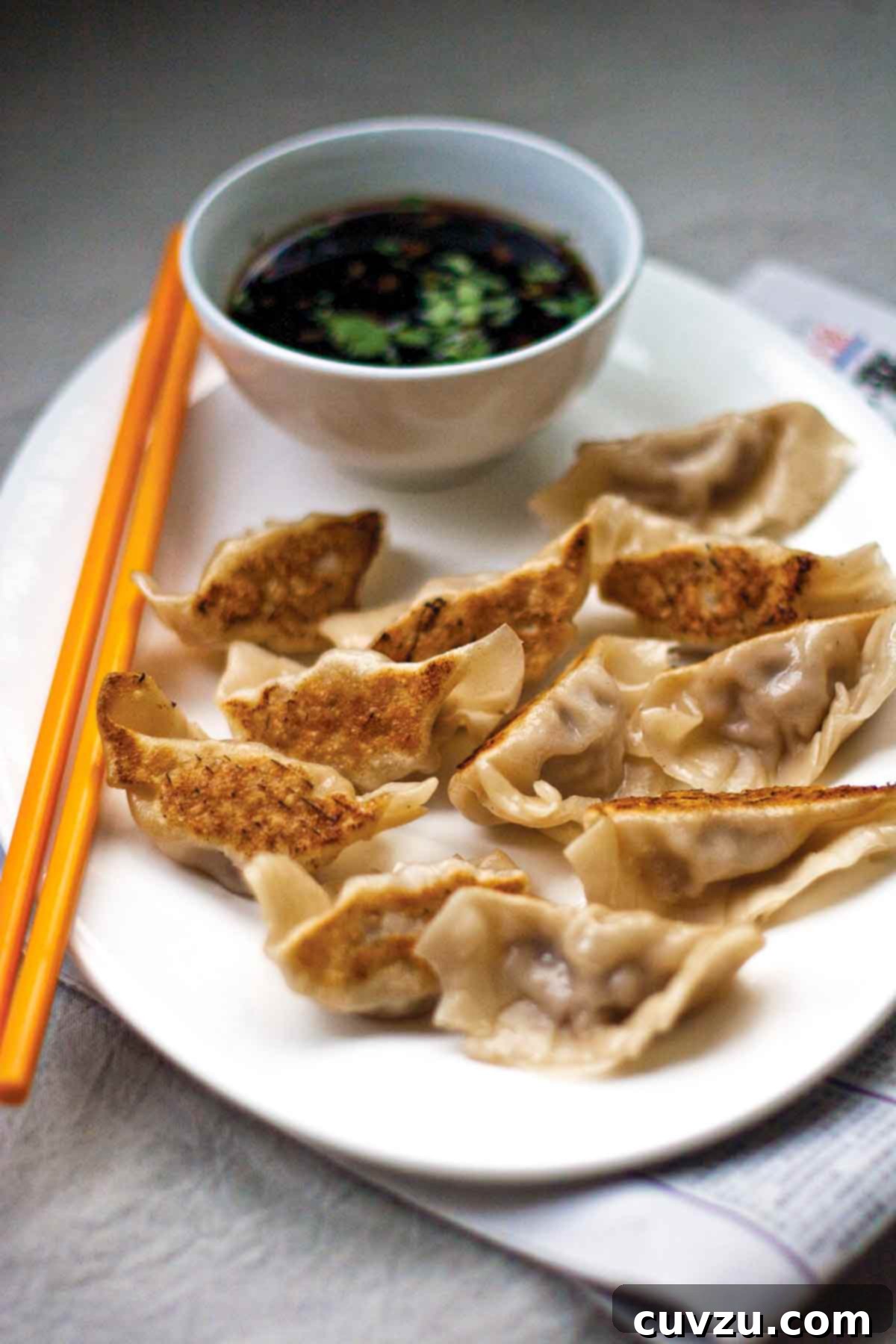
Delight in the irresistible charm of homemade pot stickers, also known as guotie, a quintessential Asian appetizer that promises a symphony of flavors and textures. These pan-fried dumplings, meticulously filled with a savory mixture of ground pork or beef, aromatic scallions, pungent ginger, and umami-rich soy sauce, are renowned for their perfectly crisp, golden-brown bottoms and tender, juicy interiors. Served alongside a vibrant black vinegar-soy dipping sauce, they offer a culinary experience that is both comforting and exhilarating.
The name guotie, a Mandarin Chinese term, translates quite literally to “pot stick,” a charming and accurate descriptor that perfectly encapsulates their unique preparation method. As cookbook authors Nate Tate and Mary Kate Tate eloquently explain, these dumplings earn their name from a specific cooking technique: “Chinese cooks first steam guotie in giant flat-bottomed iron pans. When all the water is absorbed by the dumplings, they’re left in the pan to crisp and stick to the pan.” This clever method ensures a dual texture—a soft, steamed top, and a wonderfully crispy, caramelized bottom, making them distinct from other dumpling varieties. It’s a testament to the simplicity and ingenuity of traditional Chinese cooking, where a humble pan can transform ingredients into a culinary masterpiece. This adherence to authentic preparation highlights the depth and rich history embedded in every bite of these beloved dumplings. The tradition of creating that perfect “stick” on the pan is what truly defines the pot sticker experience, making them a unique and highly sought-after dish.
The Versatility of Pot Stickers: When and How to Serve Guotie
Asking when it’s appropriate to serve pot stickers is like asking when it’s a good time for joy – the answer is always! These delightful dumplings boast incredible versatility, making them a perfect fit for nearly any occasion. Whether you’re planning a casual lunch, an elegant dinner party, or simply need a quick, satisfying snack, pot stickers rise to the occasion with unwavering charm. They excel as a sophisticated hors d’oeuvre, easily passed around at gatherings and sure to impress guests with their intricate folds and tantalizing aroma. For family meals, they can serve as a captivating appetizer or even a light main course, especially when paired with a fresh salad or stir-fried vegetables.
Pot stickers are also a parent’s secret weapon during those “oh-shit-the-kid-is-melting-down-because-he’s-hungry” moments. Their inherent “dunkability” into a flavorful sauce makes them an instant hit with children, who love the interactive element. And let’s be honest, adults are just as enthusiastic about dipping these savory parcels. But the magic of guotie doesn’t end there. Leftover pot stickers transform beautifully into a gourmet breakfast. Simply chop them up and sizzle them in a skillet until they are piping hot and crispy again. Tuck them into fluffy omelets for an unexpected Asian-inspired twist, or stir them into scrambled eggs for a hearty and flavorful start to your day. They even make a fantastic addition to bento boxes, offering a delicious and easy-to-eat component that holds up well. Indeed, from celebratory feasts to comforting late-night cravings, pot stickers are always an appropriate and welcome addition to any table.
As for appropriate utensils, while a fork will certainly do the job, the traditional and most enjoyable way to savor pot stickers is with chopsticks. The delicate act of grasping a dumpling, dipping it into the sauce, and bringing it to your mouth enhances the overall dining experience, connecting you to the rich culinary traditions from which they originate. So, grab your chopsticks, prepare your dipping sauce, and get ready to enjoy one of Asia’s most beloved culinary treasures.
Pot Stickers ~ Guotie: Authentic Pan-Fried Dumplings
David Leite
Ingredients
For the Dipping Sauce
- 1 cup Chinese black vinegar (look for varieties with real ingredients, avoiding “caramel coloring” for best flavor)
- 1/2 teaspoon minced ginger
- 1 teaspoon toasted sesame oil
- 1 tablespoon minced cilantro leaves
- 1/4 cup light soy sauce
- 1 tablespoon granulated sugar
For the Dumplings
- 12 ounces ground beef or ground pork (preferably not lean, as fat adds flavor and moisture)
- 1 tablespoon light soy sauce
- 1 tablespoon cornstarch
- 1 teaspoon minced ginger
- 3/4 cup minced scallions (light green and white parts)
- 1/2 teaspoon granulated sugar
- 2 teaspoons toasted sesame oil
- Pinch salt (adjust to taste, keeping in mind soy sauce also adds saltiness)
- About 36 (3-inch) round dumpling wrappers (store-bought or homemade, ensuring they are fresh and pliable)
- 1 1/2 to 3 tablespoons mild vegetable oil (for pan-frying)
Instructions
Prepare the Dipping Sauce
-
In a small bowl, whisk together the Chinese black vinegar, minced ginger, toasted sesame oil, fresh minced cilantro, light soy sauce, and granulated sugar until well combined. Allow the sauce to sit at room temperature for at least 15 minutes to let the flavors meld and deepen. This simple step is crucial for developing the complex, tangy, and aromatic profile of the dipping sauce.
Assemble the Dumplings
-
In a medium-sized bowl, combine the ground meat (pork or beef), light soy sauce, cornstarch, minced ginger, minced scallions, granulated sugar, toasted sesame oil, and salt. Stir the mixture gently in one direction with a chopstick or spoon until all ingredients are just incorporated. Overmixing can make the filling tough, so stop as soon as it comes together.
-
Set up your dumpling assembly station: a small bowl of cold water, your dumpling wrappers, and the prepared filling. To form each dumpling, hold a wrapper flat in the palm of your hand. Place one heaping teaspoon of filling directly in the center of the wrapper. Dip your finger in the cold water and run it around the entire edge of the wrapper; this creates a better seal. Carefully fold the wrapper in half over the filling, creating a half-moon shape. Pinch only the very center of the top edge to seal it. Now, starting from one end of this sealed center, use your thumb and forefinger to create small, overlapping pleats along the edge of the wrapper closest to you. Press each pleat firmly into the opposite edge of the wrapper and pinch tightly to seal. Continue this pleating motion all the way to the other end until the dumpling is completely sealed, forming a beautiful, standing crescent with a flat bottom. This pleating technique ensures the dumpling remains upright during cooking. Repeat this process with the remaining filling and wrappers. If you’re not cooking them all immediately, uncooked dumplings can be frozen for several months (see Notes below for detailed freezing instructions).
Cook the Pot Stickers
-
Heat 1/2 to 1 tablespoon of mild vegetable oil in a large nonstick skillet over medium-high heat. Arrange approximately 12 dumplings, pleat side up, in a single layer in the skillet. Ensure they are just barely touching each other, but not crowded, to allow for even browning. Cover the skillet tightly with a lid and cook for 1 minute. This initial minute of covered cooking begins to steam the dumplings.
-
Reduce the heat to medium-low. Carefully pour 1/4 cup of water into the skillet (be cautious, as the hot oil may spatter). Immediately cover the skillet again and continue to cook until all the water has been absorbed by the dumplings and their bottoms have developed a beautifully crusty, golden-brown finish. This typically takes 8 to 10 minutes. The steaming action cooks the filling thoroughly, while the final few minutes of pan-frying create that signature crisp bottom.
-
Once cooked, carefully transfer the pot stickers to a serving plate. Repeat this entire cooking process, adding more oil and water as needed, with the remaining batches of dumplings. This ensures each batch achieves the same perfect texture.
Serve
-
Serve the hot, crispy pot stickers immediately on a large platter or in a traditional bamboo steamer to keep them warm. Present the prepared dipping sauce alongside, allowing everyone to customize their culinary experience. Enjoy the delightful contrast of textures and the rich, savory flavors!
Notes
Make-Ahead & Freezing Pot Stickers
Pot stickers are excellent candidates for making ahead and freezing, offering convenience for future meals. To freeze uncooked dumplings, arrange them in a single layer on a baking sheet that has been lightly oiled. It’s crucial that the dumplings do not touch each other to prevent them from sticking together during freezing. Place the baking sheet in the freezer for at least 30 minutes, or until the pot stickers are firm and almost frozen. Once solid, gently transfer the dumplings into a large, resealable plastic freezer bag or an airtight container. They can be stored in the freezer for up to 3 months, ready whenever a craving strikes.
When you’re ready to cook your frozen pot stickers, there’s no need to defrost them. Cook them directly from their frozen state, following the instructions for fresh dumplings exactly. The only adjustment you’ll need to make is to add approximately 3 minutes to the cooking time after you’ve poured the water into the skillet during the steaming phase. This extra time allows the frozen dumplings to fully steam and cook through before their bottoms become perfectly crisp. This method ensures that even frozen pot stickers emerge from the pan with the same delectable texture and flavor as their freshly made counterparts.

Adapted From
Feeding the Dragon
Buy On Amazon
Nutrition Information
Calories: 59 kcal
Carbohydrates: 5 g
Protein: 3 g
Fat: 3 g
Saturated Fat: 1 g
Monounsaturated Fat: 1 g
Trans Fat: 0.1 g
Cholesterol: 7 mg
Sodium: 129 mg
Fiber: 0.2 g
Sugar: 0.5 g
Nutrition information is automatically calculated and should be used as an approximation. Individual results may vary based on exact ingredients and preparation methods.
Tried this recipe?
Mention @leitesculinaria or tag #leitesculinaria!
Insights from Our Recipe Testers
Our dedicated team of recipe testers put this pot sticker recipe to the test, offering their invaluable feedback and personal experiences. Their reviews highlight the recipe’s reliability, delicious results, and offer practical tips for home cooks looking to master guotie.
Kristen Kennedy
Kristen Kennedy enthusiastically declared these pot stickers “insanely delicious” and an enormous hit with her entire family. She appreciated the make-ahead aspect, confirming that freezing them for later enjoyment is a convenient option. Kristen used a mix of ground beef and pork (6 ounces of each) for her filling, finding it perfectly balanced. Unable to locate traditional dumpling wrappers, she successfully substituted wonton wrappers, demonstrating the recipe’s adaptability. Her cooking times aligned perfectly with the recipe: 1 minute for frying and 8 minutes for steaming. She stressed the importance of the dipping sauce, stating, “The dipping sauce is a wonderful accompaniment—don’t skip it!” Her experience highlights the recipe’s success and flexibility for home cooks.
Lori Widmeyer
Lori Widmeyer, a first-time pot sticker maker, initially harbored concerns about the intricacy of shaping the dumplings and potential filling spillage. Much to her pleasant surprise, her worries were unfounded. She found the hands-on time for making and shaping the dumplings to be less than the estimated 45 minutes, dispelling any intimidation. Lori used a large nonstick pan, efficiently completing all the dumplings in just two batches. Despite her initial concern that the bottoms might be overcooked due to their deep brown appearance, they turned out “perfect—a little crunchy brown on the bottom but not too crunchy and soft on top.” She praised the pork filling’s standalone flavor, noting it was even better with the dipping sauce. Lori rarely finds a recipe she wouldn’t tweak, but declared this one “perfect as written,” solidifying its status as a keeper she plans to make and freeze again.
Cindi Kruth
Cindi Kruth found the dumpling filling “a cinch” to prepare and “tasty.” As avid ginger lovers, she and her family plan to increase the ginger next time, along with a bit more salt, noting that “a pinch” can be subjective. The dumplings cooked and browned to perfection. Lacking Chinese black vinegar, Cindi bravely diverged from the “no substitution” rule for the sauce. She created her own version using the remaining ingredients mixed with half reduced balsamic vinegar and half rice vinegar. While she couldn’t compare it to the original, her improvisation worked “well, anyhow,” proving the recipe’s resilience to minor adjustments. Her experience encourages home cooks to trust their instincts and adapt when necessary.
Jill R.
Jill R. acknowledged that while this recipe requires some time for assembly, it is “well worth it.” She found the filling quick to prepare and the dipping sauce easy, emphasizing that the effort to find Chinese black vinegar is indeed justified (though she only found one local store that carried it). Having used ground beef for her pot stickers, Jill noted the taste was different from the pork versions she was accustomed to, leading her to plan on using pork next time for a perfect “10” rating. She admitted that the pleating instructions were “a little confusing” for her, a common challenge for those new to dumpling making. Despite this, she deemed the recipe “a keeper,” indicating its overall quality and her desire to refine her technique.
Dawn English
Inspired by the recipe, Dawn English swiftly embarked on making these “yummy little treats” for lunch. She confirmed that both the filling and the dipping sauce were “quite simple to make.” Using store-bought dumpling wrappers significantly streamlined the assembly process for her first attempt at Chinese dumplings. Dawn utilized the linked how-to pictures as a guide for sealing and folding, which proved invaluable. Declaring the recipe “a huge success,” she vowed to make them again. After her initial batch, Dawn did “tweak the ingredients” slightly, adding another tablespoon of soy sauce, a splash of sherry vinegar, and a pinch of white pepper to the meat mixture for extra spice. She even made two batches, one with ground pork and another with ground chicken, showcasing the recipe’s versatility for different protein choices.
Ellen Fuss
Ellen Fuss was thoroughly impressed, noting the stark difference between these homemade pot stickers and their prepackaged frozen counterparts, receiving “rave reviews” from her diners. Although initially intimidated by the shaping of the pot stickers, she found the entire process came together “very quickly” after consulting the how-to photos. Her biggest challenge was sourcing black vinegar, eventually giving up and creating her own dipping sauce version. Ellen followed the instruction to stir the filling with a chopstick in one direction, humorously questioning its scientific basis but adhering to tradition. She used ground beef and store-bought wrappers, achieving beautiful results. Significantly, Ellen successfully froze some leftovers and cooked them from a frozen state the next day, confirming they “cooked up beautifully.” Determined to find black vinegar, she plans to try the authentic dipping sauce next time, offering a strong recommendation: “Make a lot of these. They taste great and will disappear quickly!”